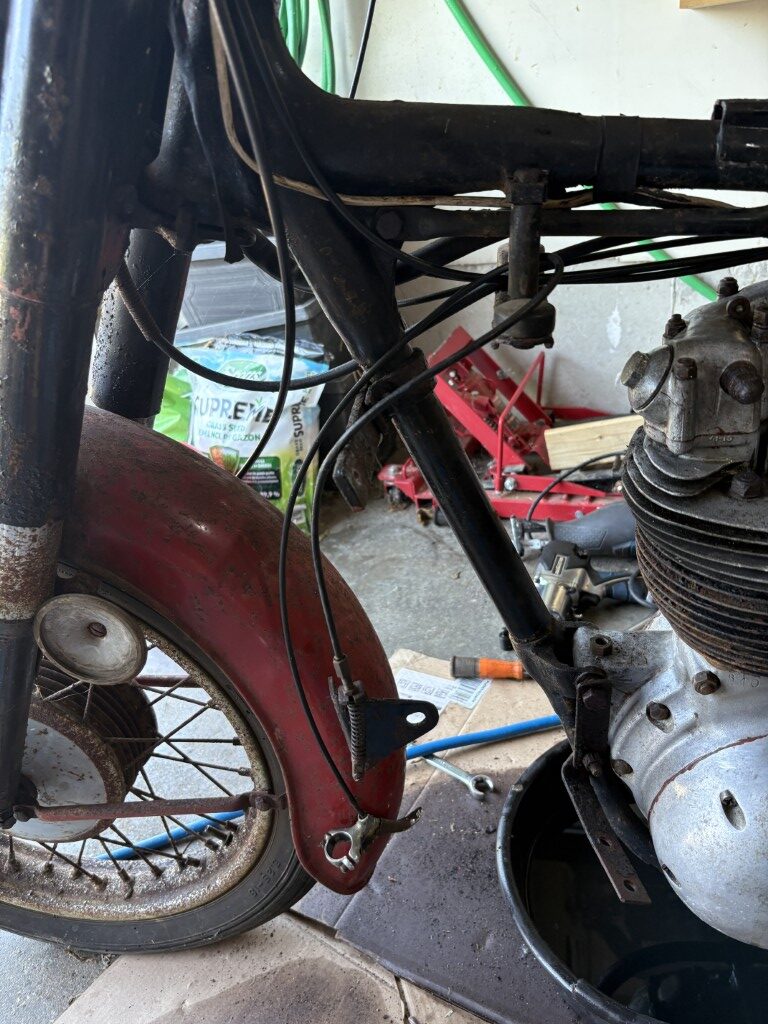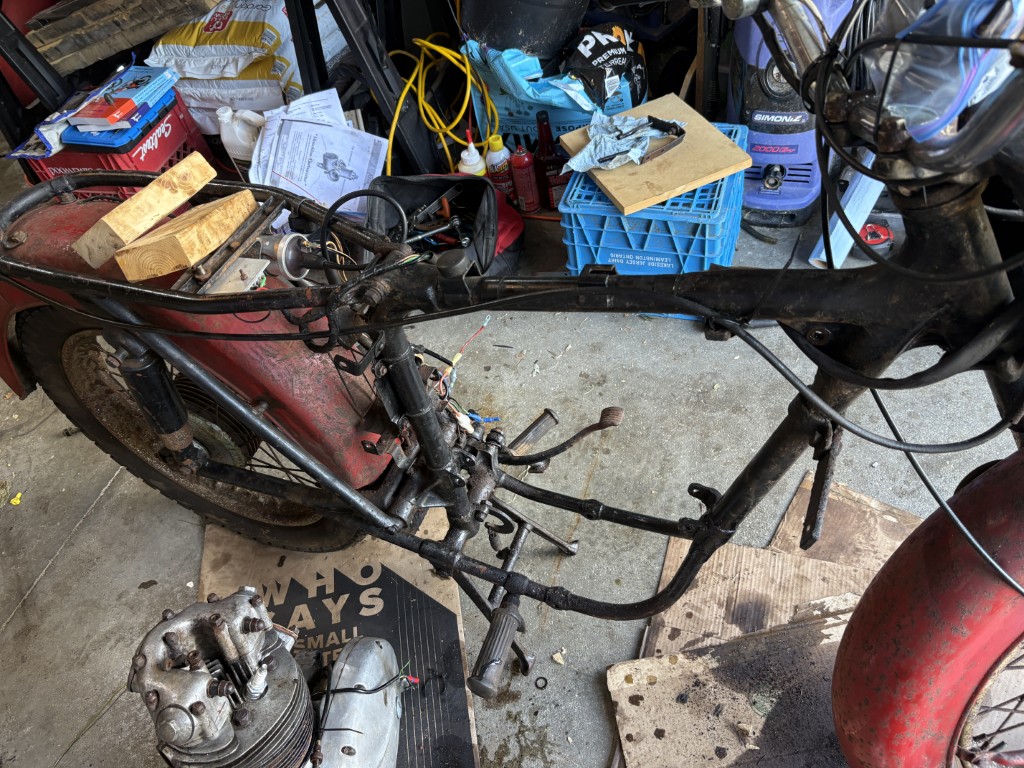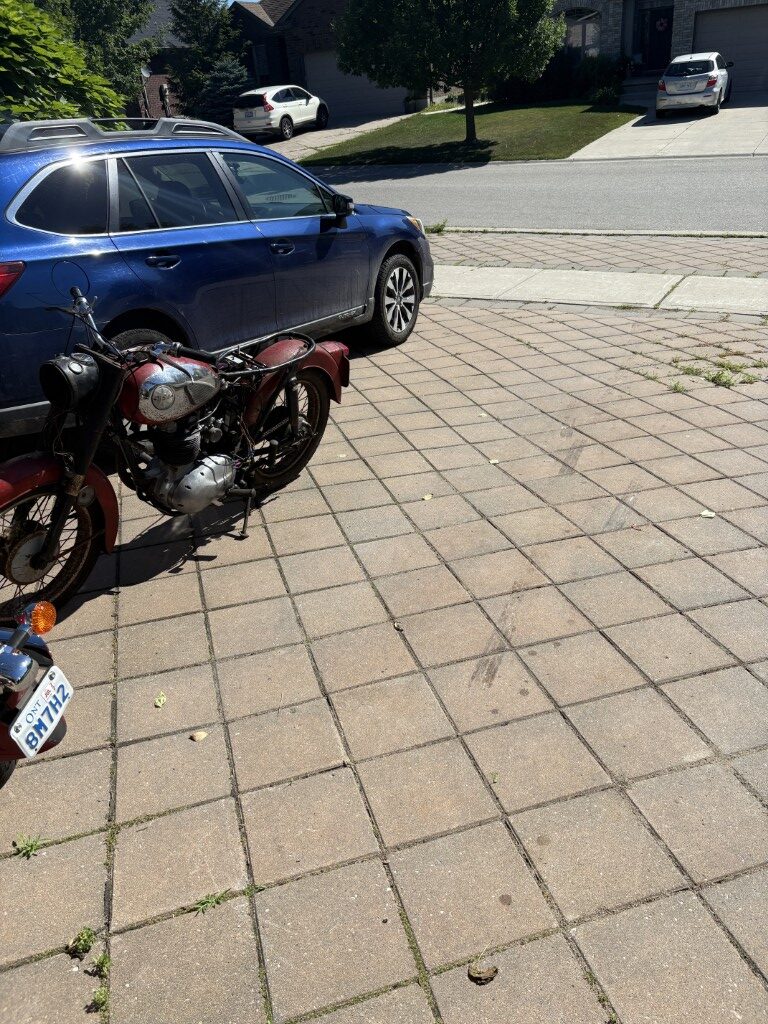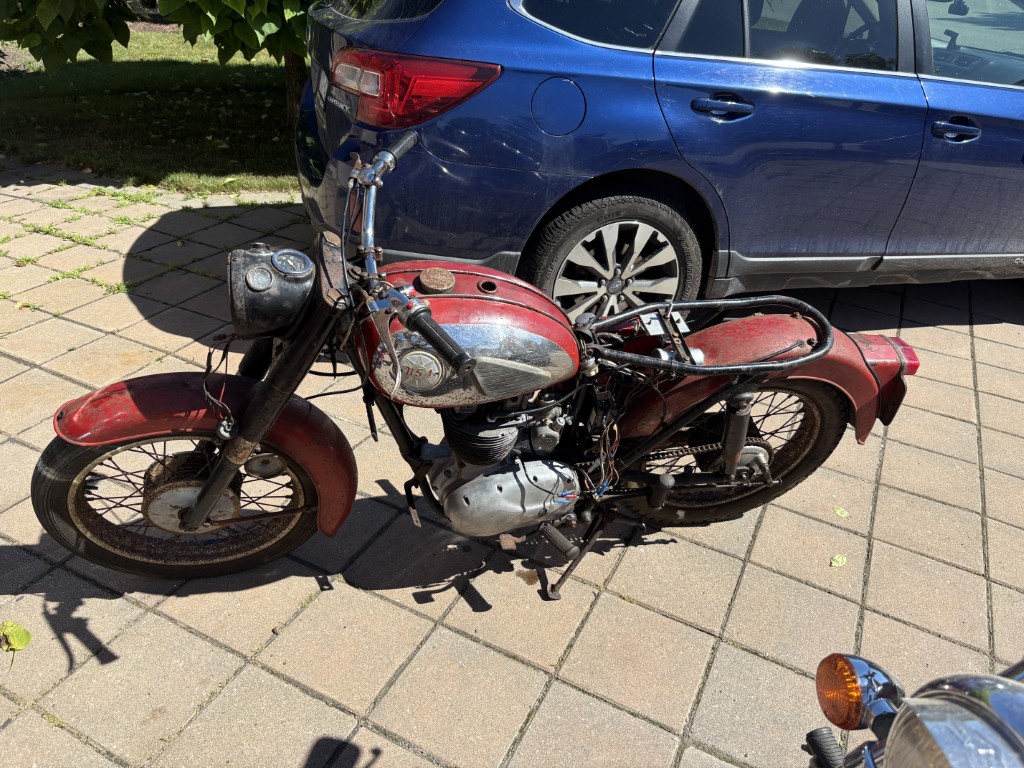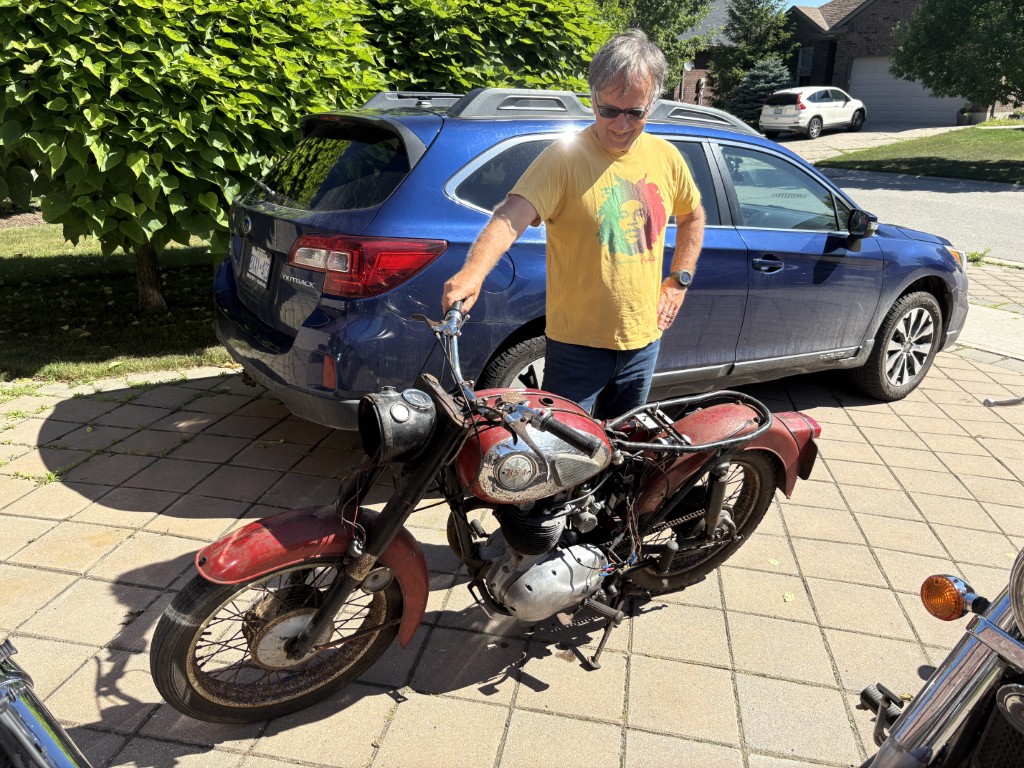
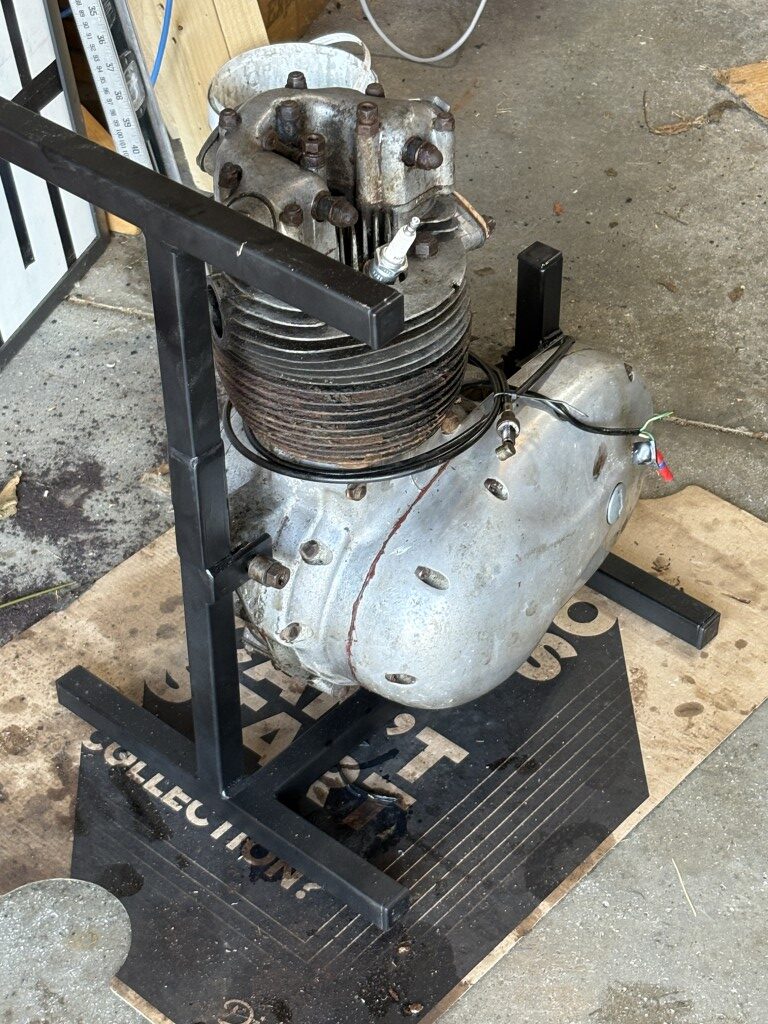
B40 350 Engine out…. milestone (toes intact)

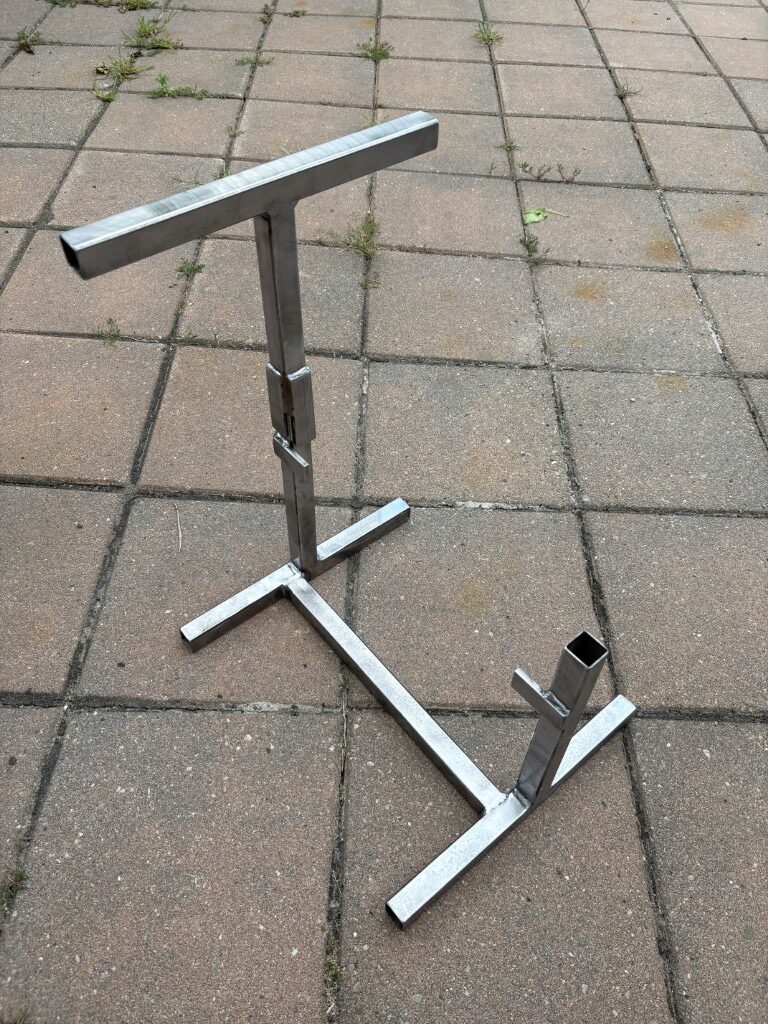
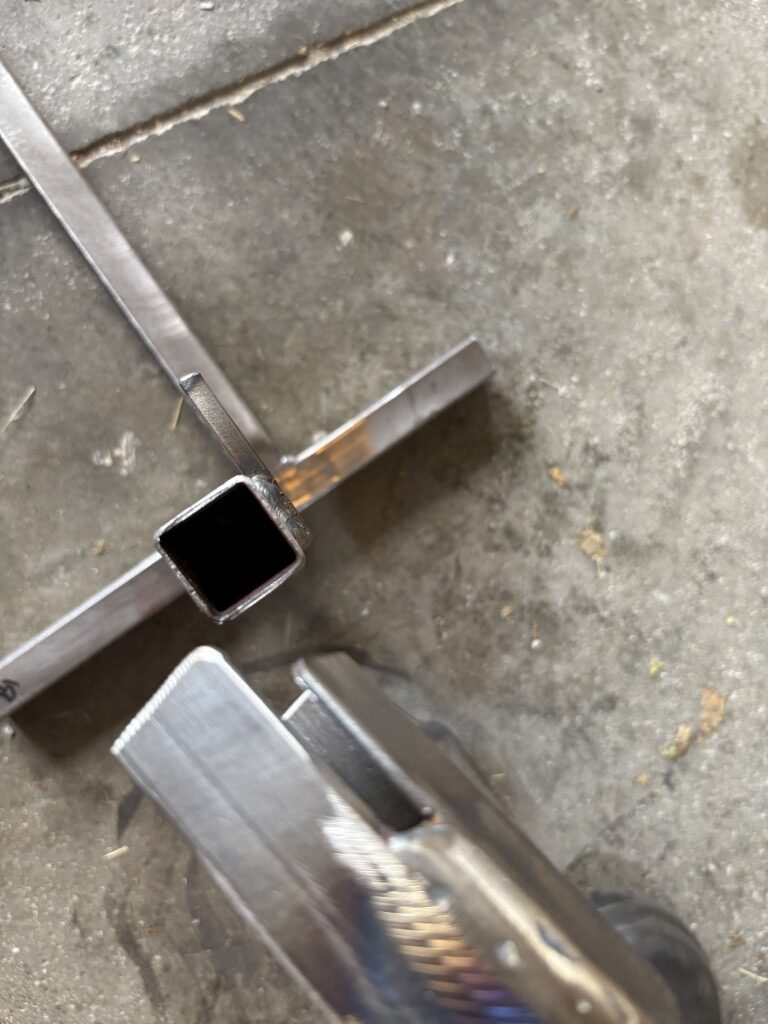
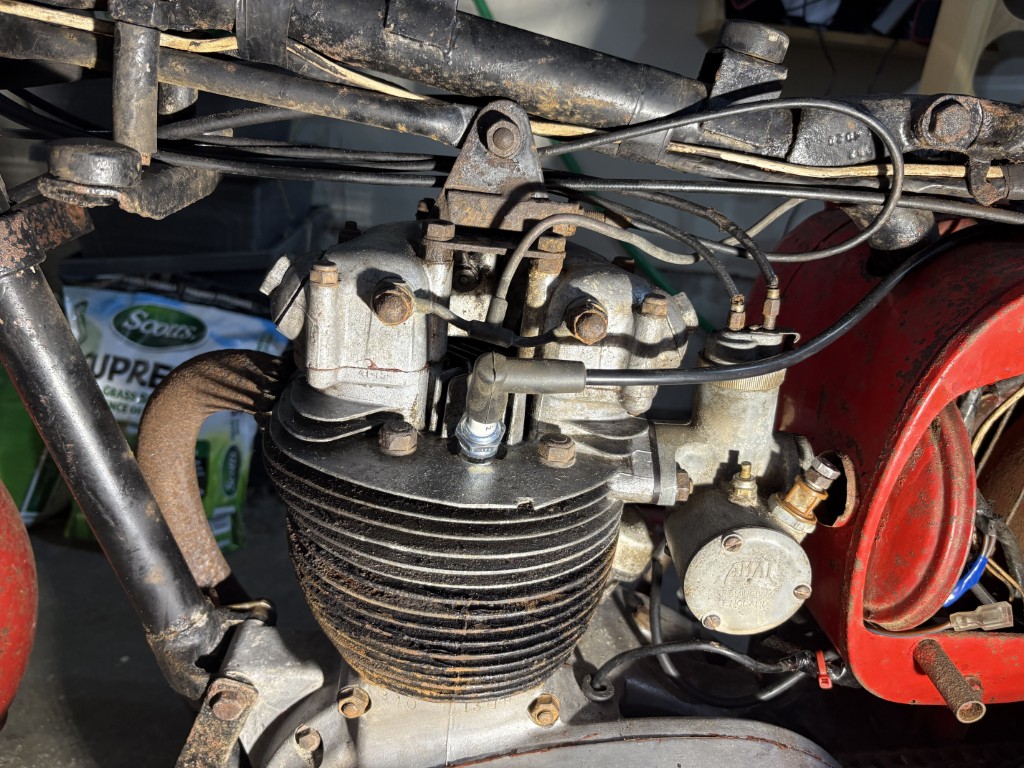
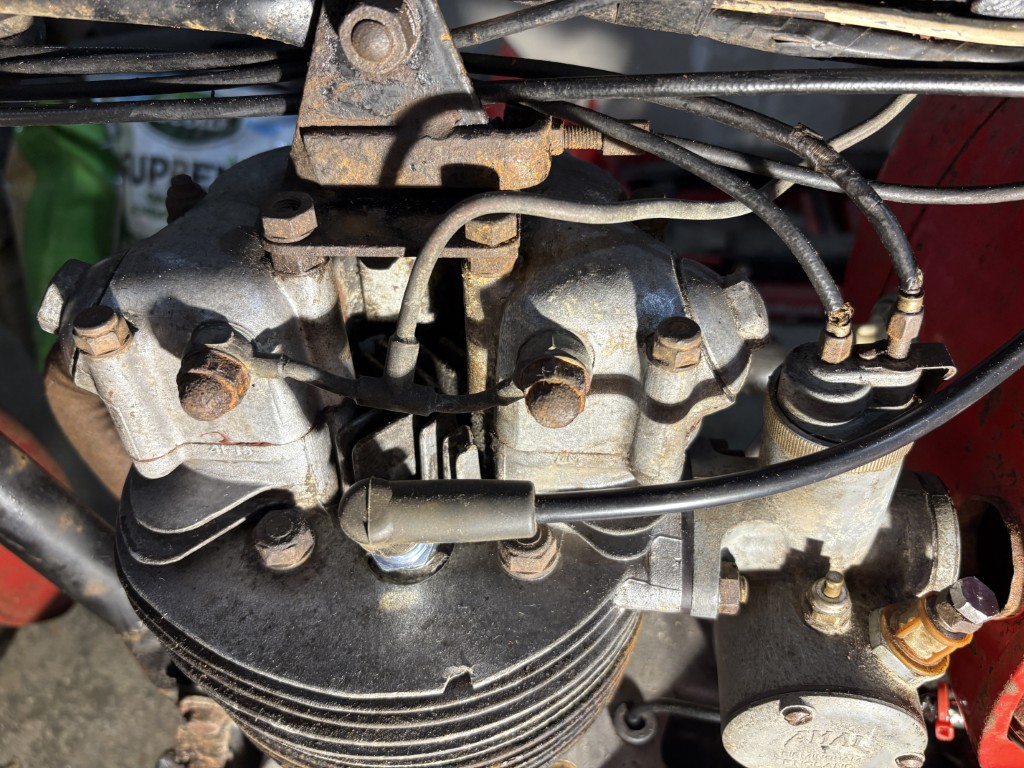
Hope it’s clear now how the engine stand works. The extended leg lets me lay the motor down on either side, which is handy for maintenance, or for when I just want it to think about what it’s done for the past 64 years. The top end is fully accessible, which is both exciting and mildly terrifying.

I still need to go get proper bolts and washers, but for now I’m using the frame bolts just to hold it in place. You know, the old “don’t worry, it’s temporary” approach — the same philosophy that keeps duct tape sales strong.

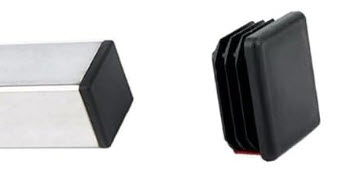
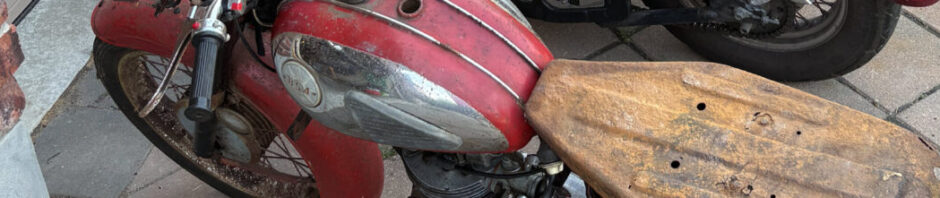
In the last photo, you’ll see the stand was not yet painted, but I did manage to install some Amazon.ca plastic plugs. Because nothing screams “professional restoration” like $4 worth of imported plastic caps.

The Removal Process (or: How to Test Your Friendships)

  1. Exhaust valve release cable: Removed from the top end. No drama here, which immediately made me suspicious.
  2. Oil feed lines: These deliver oil to the top valves and gravity drains it to the sump. I put hoses over the feed points with the nuts attached to keep out dirt. This was mostly successful, except for the bit where I got oil on my shirt anyway.
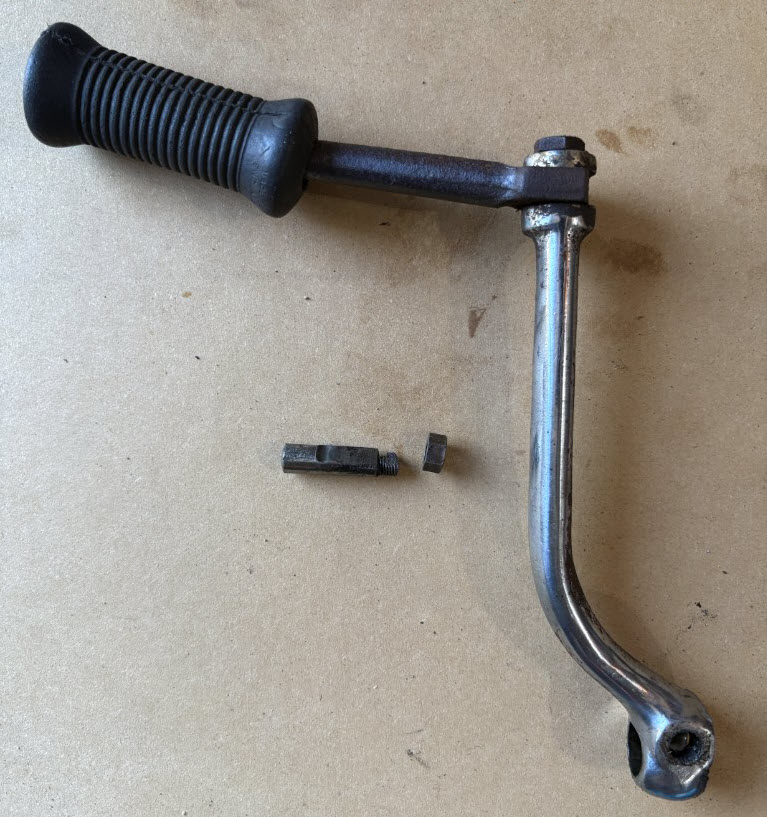
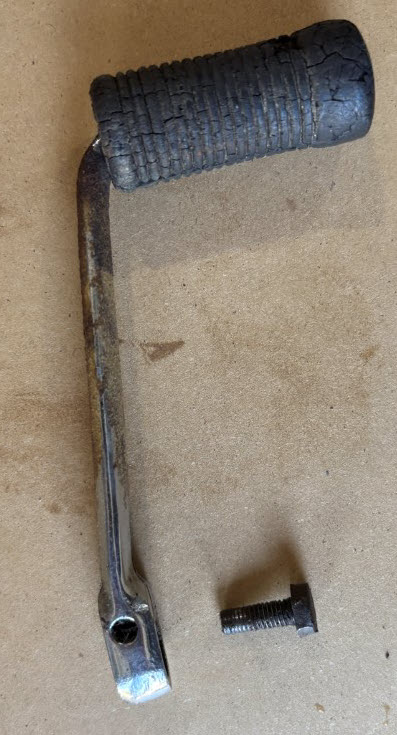
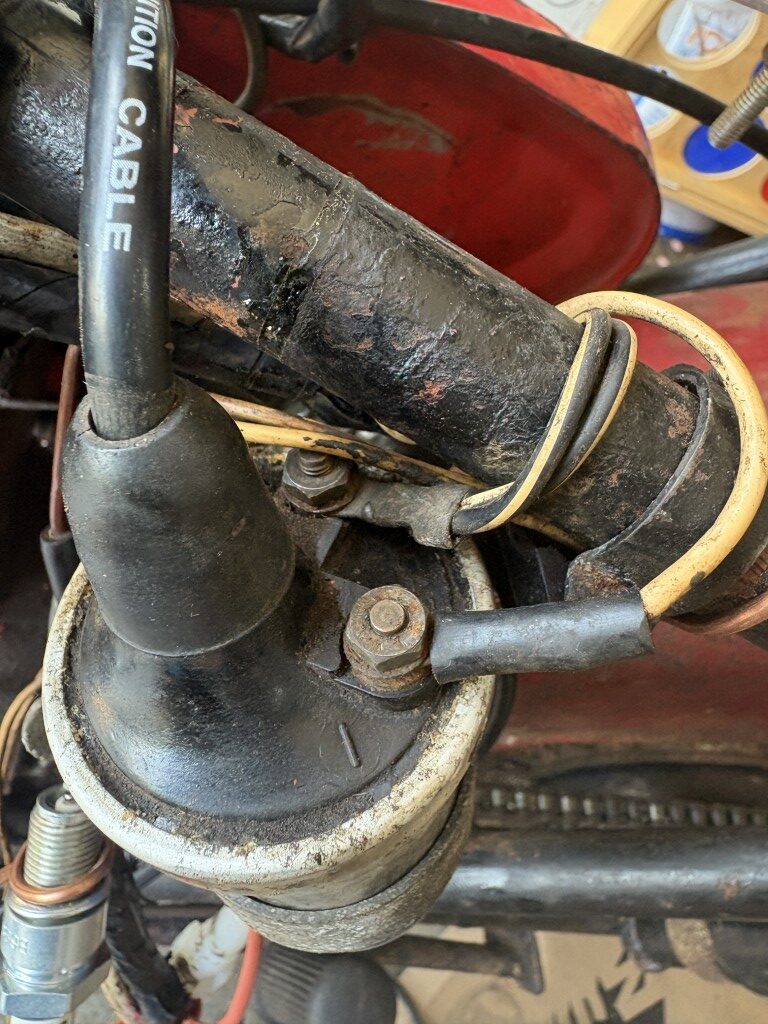
  3. Distributor wire: Disconnected, which means the bike can no longer spark — or judge me silently from the corner.
  4. Generator wires (3): Removed. These are responsible for charging the 6V battery and coil. I labeled them carefully to avoid future “why won’t it run?” meltdowns.
  5. Clutch cable: Still attached inside the right side, so I disconnected it at the lever and wrapped it around the top. Very professional. Definitely not what you’d call “farm-engineered.”
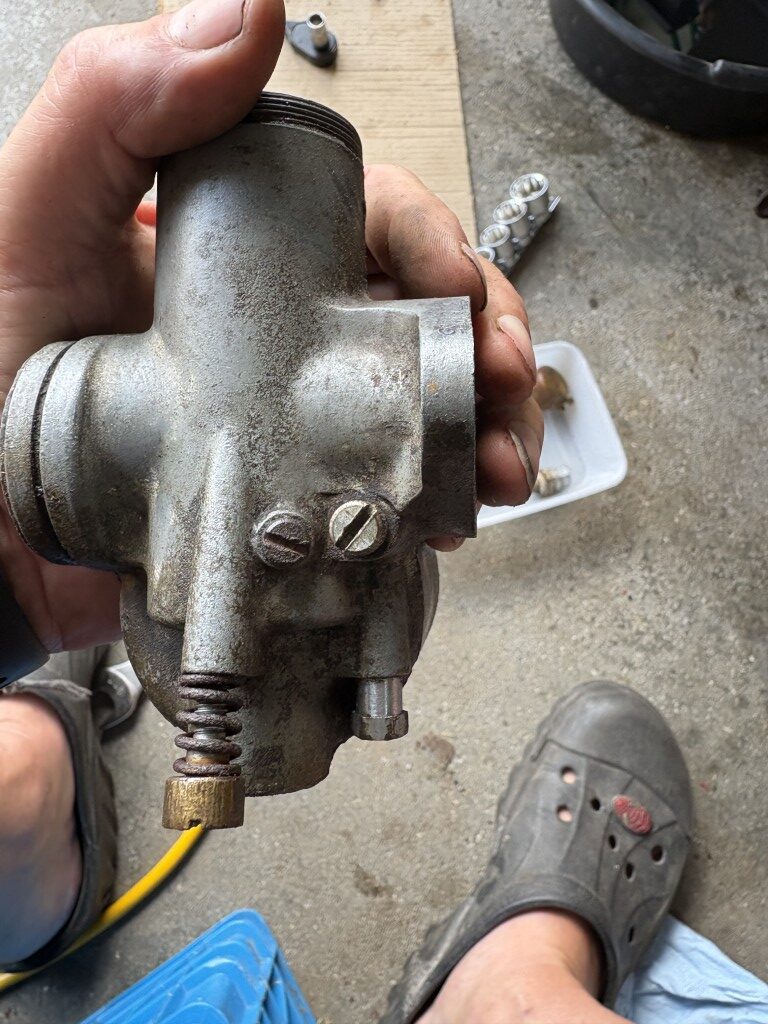
  6. Carburetor: Removed and covered with a precision-machined dust shield (aka a scrap of cardboard). NASA, eat your heart out.
  7. Kickstart lever & gear shift: Already removed earlier during the “exhaust pipe fiasco,” which you may recall was resolved with a Sawz-All.
  8. Engine mounts: Three bolts: front, rear (stud with two nuts), and cross bolt underneath. Each one removed without incident — which makes me think the engine knew what was coming and decided not to fight.

Extraction Team: Me + Neighbor

This was a two-man lift. We raised the front, lowered the rear, twisted the motor clockwise, tilted it right, rotated it 90 degrees, and finally set it down on cardboard. If it sounds like a complicated dance move, that’s because it was. I’m pretty sure we invented the “BSA Salsa.”

With the engine out, I wrestled it into the stand and bolted it in. Front bolt first, then rear. It now sits like some ancient relic on display — equal parts intimidating and oddly majestic.

The Plan

One of my friends from the CVMG London branch, Mario (because every restoration needs a Mario), has generously agreed to help me break the engine down and rebuild it. I’m confident it’ll run, since I had it running before disassembly. The clutch plates, however, appear to be fused together after a half-century of napping in a shed. I even tried the “kick it in gear while pulling the clutch” trick. The result? Nothing freed up, but I did get some excellent cardio.

Stay tuned — next chapter will likely feature me discovering what 60 years of British engineering looks like from the inside. Spoiler: probably oily.
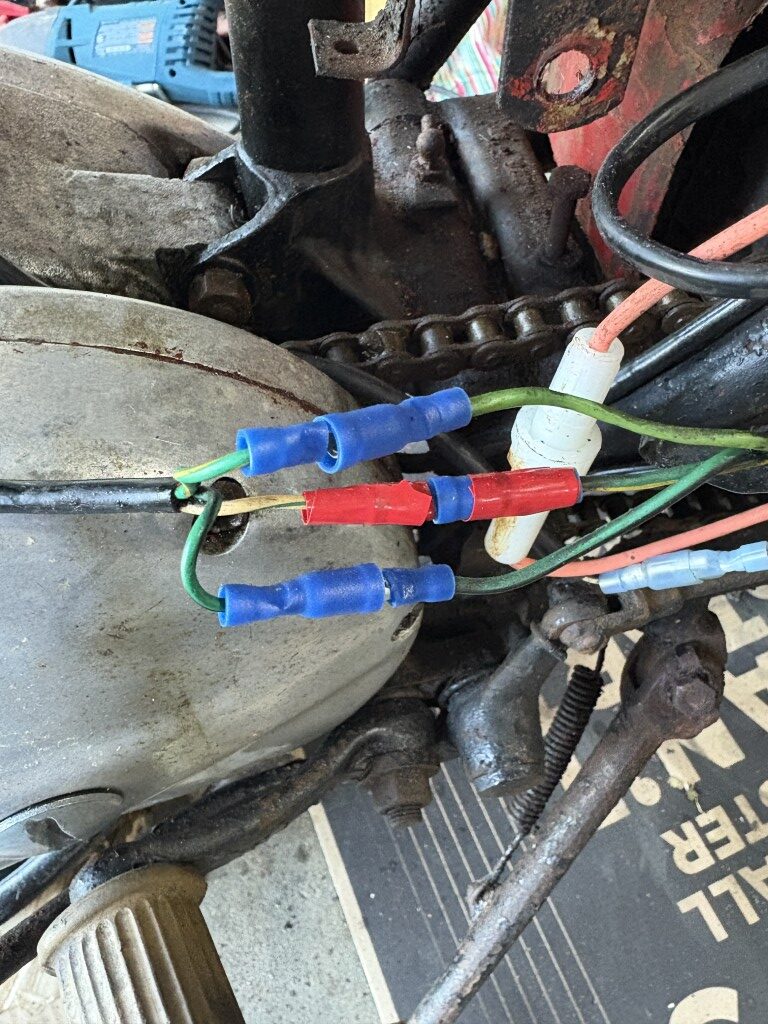
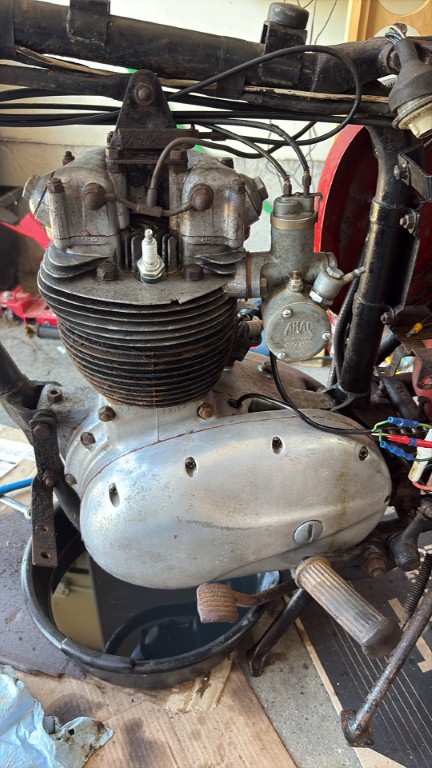
Just got back from the weekly Saturday morning 9:30 coffee at McDonald’s, where the London branch of the CVMG convenes to drink caffeine, swap stories, and gently remind me that buying a 1961 BSA was a “life choice” I’ll be explaining for years. Everyone congratulated me on my milestone (translation: the engine is out and I’m still married) and then promptly volunteered me to create a flyer for the September Swap Meet. Apparently, I “look like someone who knows computers.” They asked, and for once I didn’t lie — though in hindsight, maybe I should have. I’m trading BSA knowledge with Mario for how to work his technology.

I missed all the early spring swap meets, but I’m catching the late ones with a shopping list that currently reads: Exhaust/Silencer, clutch bits, and possibly a therapist. There’s one on September 6th and another on the 28th, which should give me plenty of chances to buy rusty parts at premium prices and ask enough questions to risk a lifetime ban. Now the only challenge is convincing Holly to subcontract the flyer project before the club finds out my real design skills peak at “WordArt.” :o)
Posted in Engine | Leave a comment

Exhaust removal – Engine next…

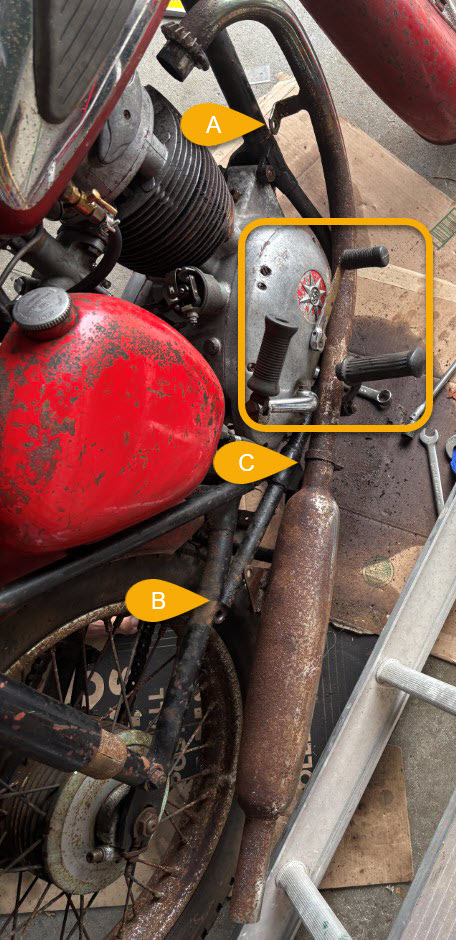
Lets’ start with the death shot image to the left

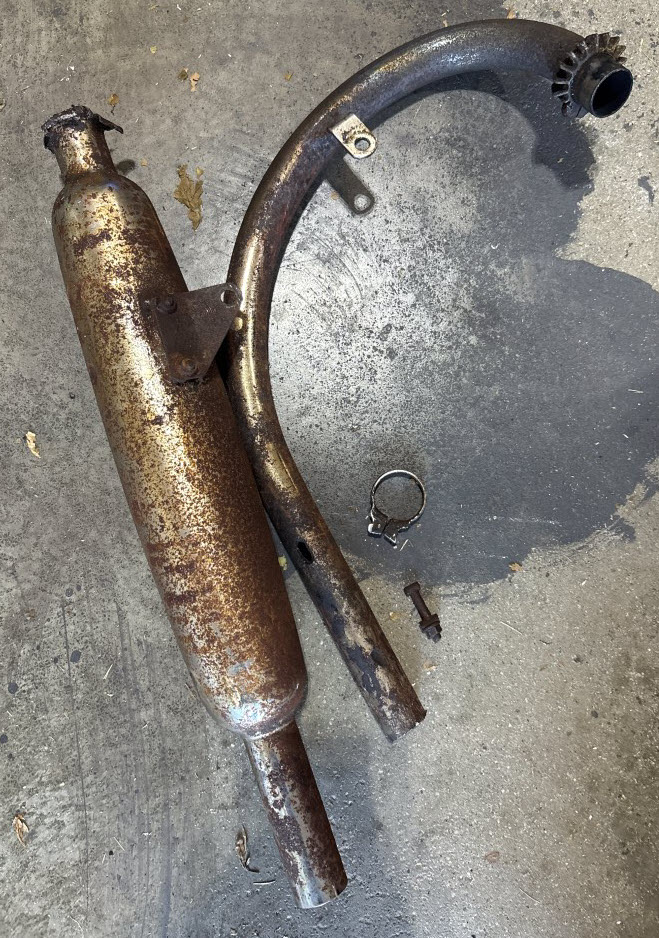
Ok… so the exhaust is removed. At first glance it appears to be a success — but not the kind of victory I had in mind. I was picturing a clean, one-piece removal, like pulling a sword from a stone. Instead, it was more like digging up an ancient fossil with a jackhammer.

Sure, the pipe was so rusted it wasn’t going to win any beauty contests, but technically it was doing its job. It did function as a “silencer,” though in that very British way: it didn’t silence much, it just made the noise sound slightly more polite.

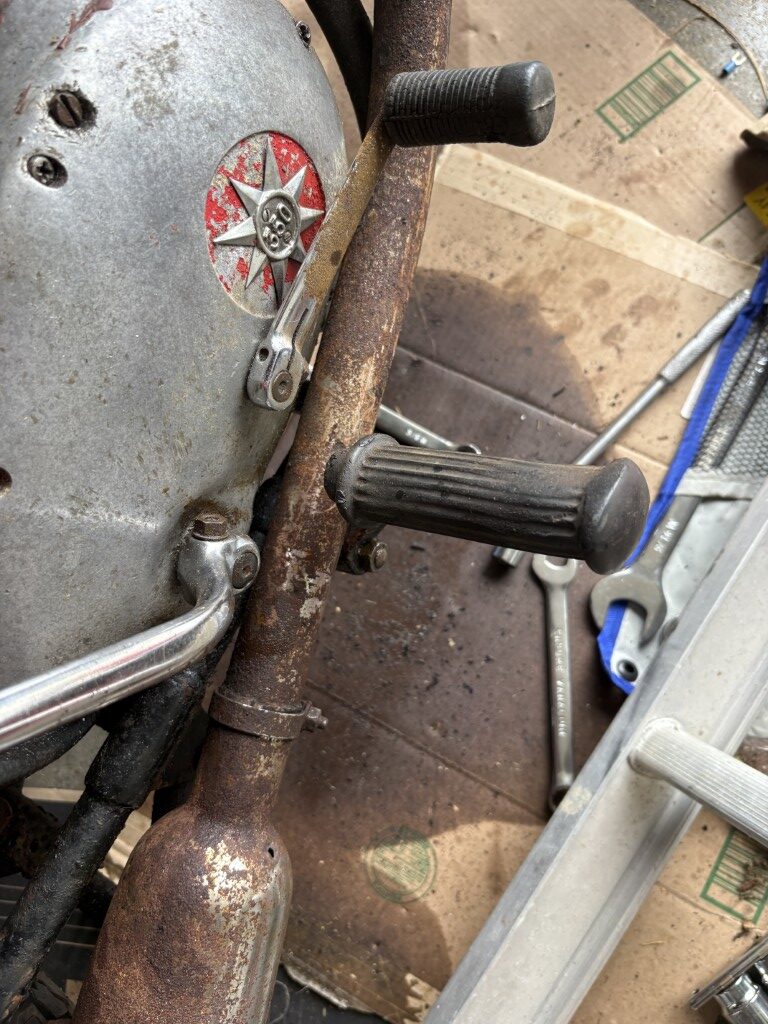
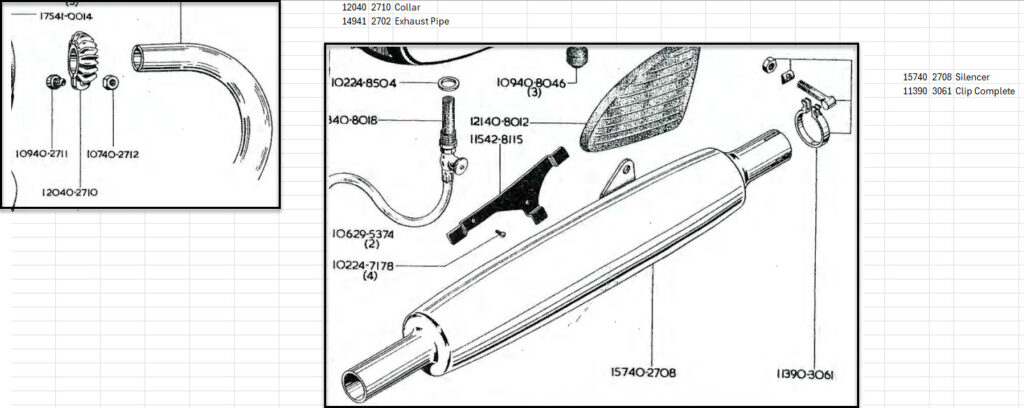
Now, here’s the fun bit: the pipe is held on in two places (A) and (B). The whole system is actually two pieces joined with one pipe sliding into the silencer, clamped at (C). Easy enough in theory. Except the section in the yellow box passes through the kickstarter, the foot peg, and the gear shift. Once everything was loose, you’d think the pipe would just slide out with a cheerful “pop.” Nope. Instead, it was like trying to solve a mechanical Rubik’s cube designed by someone who hates you.

Removing the foot peg should have made it possible. But of course, the bolt and nut had other plans. The foot peg bend blocked a socket, and a spanner? Useless. Too close to the ground, bad angle, no leverage. The open end managed to get on one set of flats, but with enough pressure it started rounding the corners. Arrgghh. At that point I summoned the pneumatic impact — my Excalibur — but all it did was create rounder nuts, inside and out. Almost heroic, but not quite.

Enter the Sawz-All. When 50+ years of engineering stubbornness meets modern reciprocating fury, there’s really no contest. Let’s call it: Engineers 0 – Sawz-All 1.

Oh, and the kickstart? That had its own little trick — a wedge piece pulled into the lever to hold it against the shaft. Over time, the pin had collected more dents than a bumper car, and it fought me every inch of the way. It’s now on the shopping list.

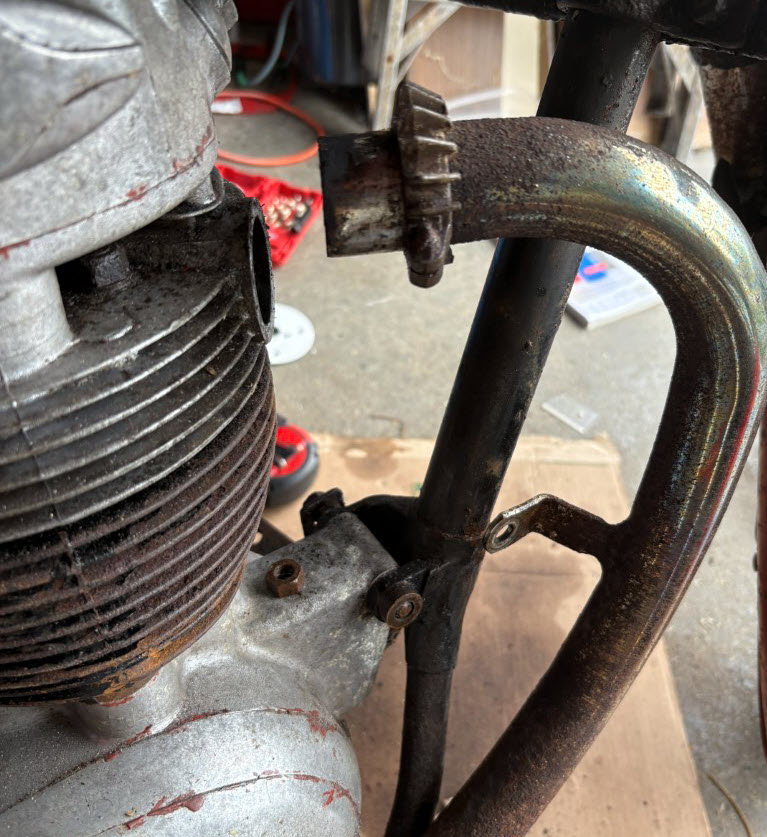
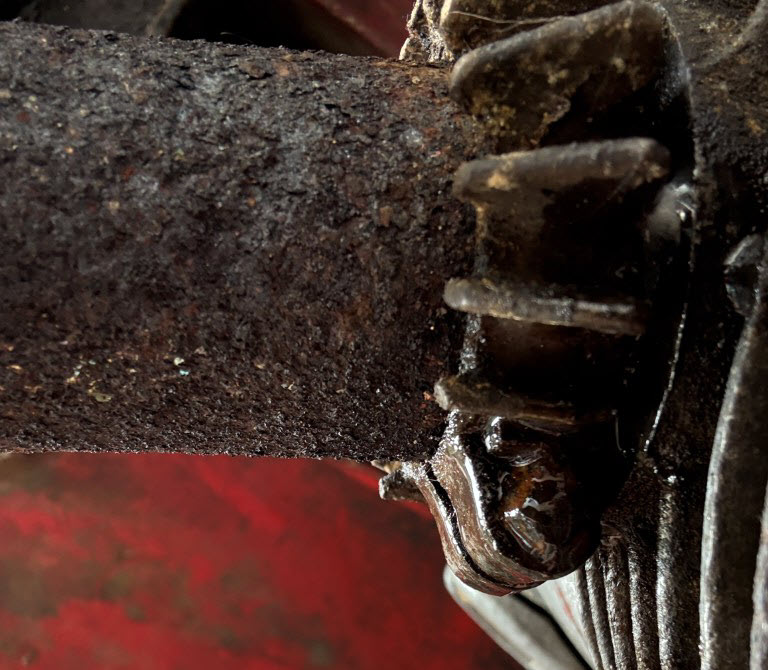
Finally, the exhaust pipe — slip fit into the cylinder, held with a bracket. I had a quick sanity check call with Mario (every restorer needs a “Mario”), who confirmed the finned ring casting was just a heat relief and could be removed later. Good to know I wasn’t about to dismantle something sacred.

Next up: engine removal.

If the exhaust was this much fun, you can only imagine what’s coming next…

Posted in Uncategorized | 2 Comments

Engine holder.. assembled!

Not bad for $10 in scrap steel with some left over.

This is what it looks like so far. My neighbor did the welding and it’s tricky to do the tack welds and then how to keep everything square and aligned as you fill the welds (heat warping the steel). The part on the left we made so it fits together with a joint so that it can be removed. It’s only required if you tip the assembly down to work on either side of the motor.

I spoke to one of the CVMG guys (mechanic) and he said back in the day they just put them in a wooden box (remove sides likely) as an engine holder. Of course not so easy to find a wooden box anymore as that was likely when vegetables came in them :o)

Next steps are to get some black rattle can paint and put a few coats on it with maybe a coat or two of clear coat… then I will put in the plastic plugs for the ends that I got from amazon,

I still have to measure and drill the holes to mount the engine before I do the pretty work and before it starts rusting…..

Posted in Uncategorized | 1 Comment

Engine Holder – Prep

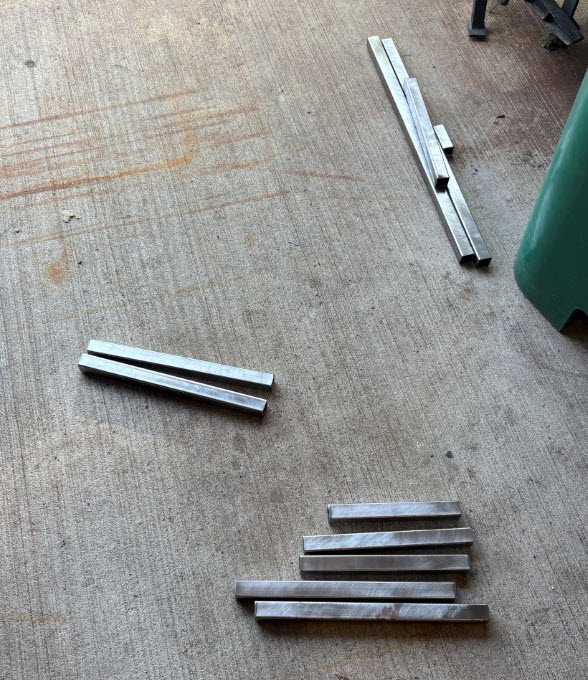
Today I took the 6 pieces of 1″ square tubing purchased at a local metal shop for $9 and cut out the pieces required for the welded assembly.

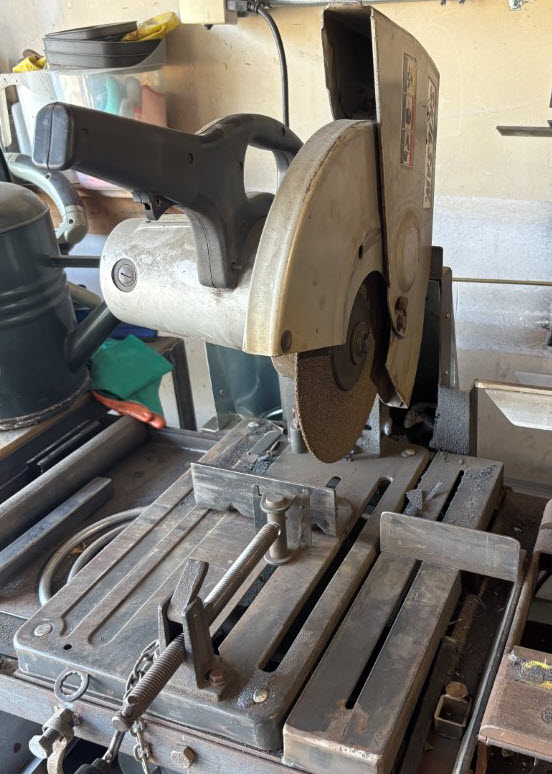
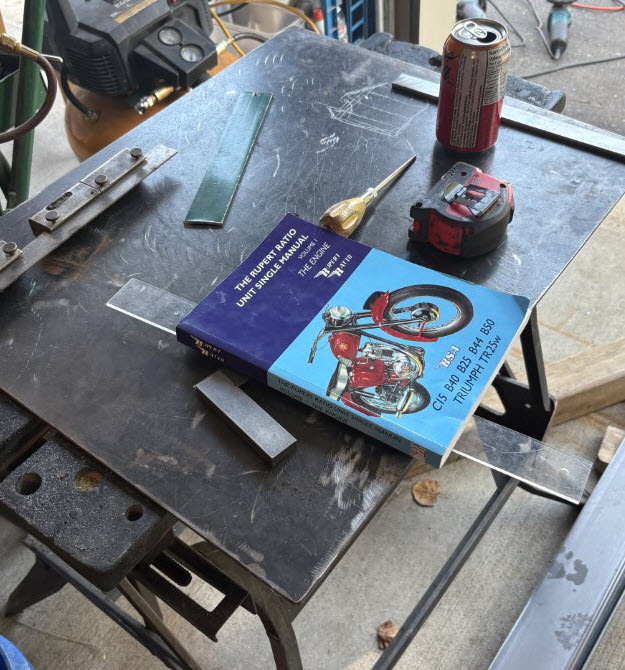
Tool of the day was at my neighbors. I had a metal chop saw for a while, but sadly it was James’ and so it’s no longer in my Garage. I setup and measured all the pieces I’d need from the 6 24″ lengths of 1″ sq tube.

Neighbor setup a working table for me to measure and debur and you can see on the floor the finished pieces as well as some left-overs.

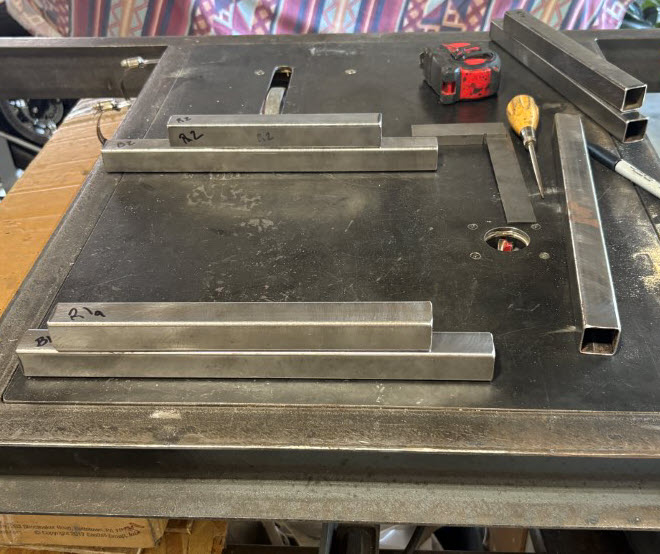
The last photo (without the book) is the assembly table where we’ll start to tack weld and assemble. Ended the day today with all pieces ready and marked for assembly. Tomorrow we (neighbor) welds.

Posted in Uncategorized | Leave a comment

Engine mount.. Fab begins…

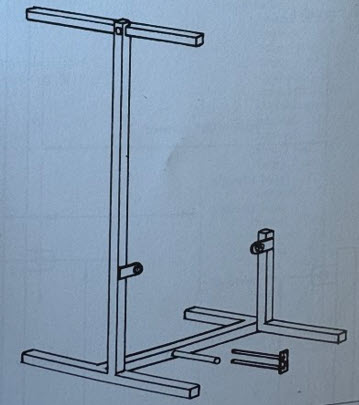
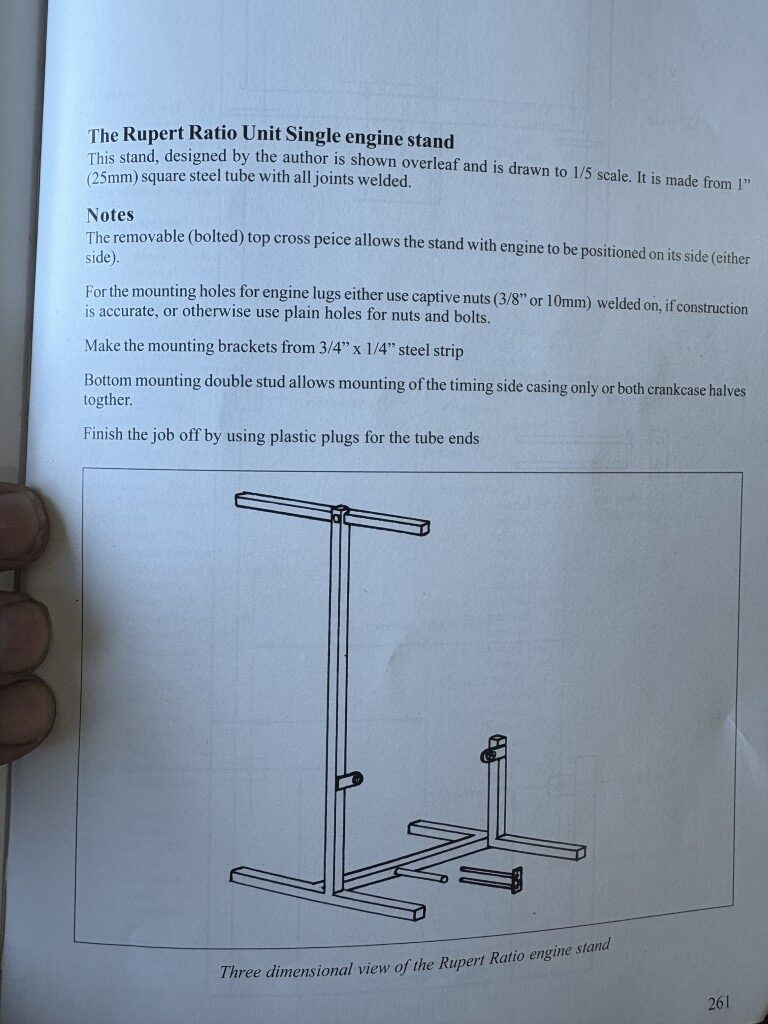
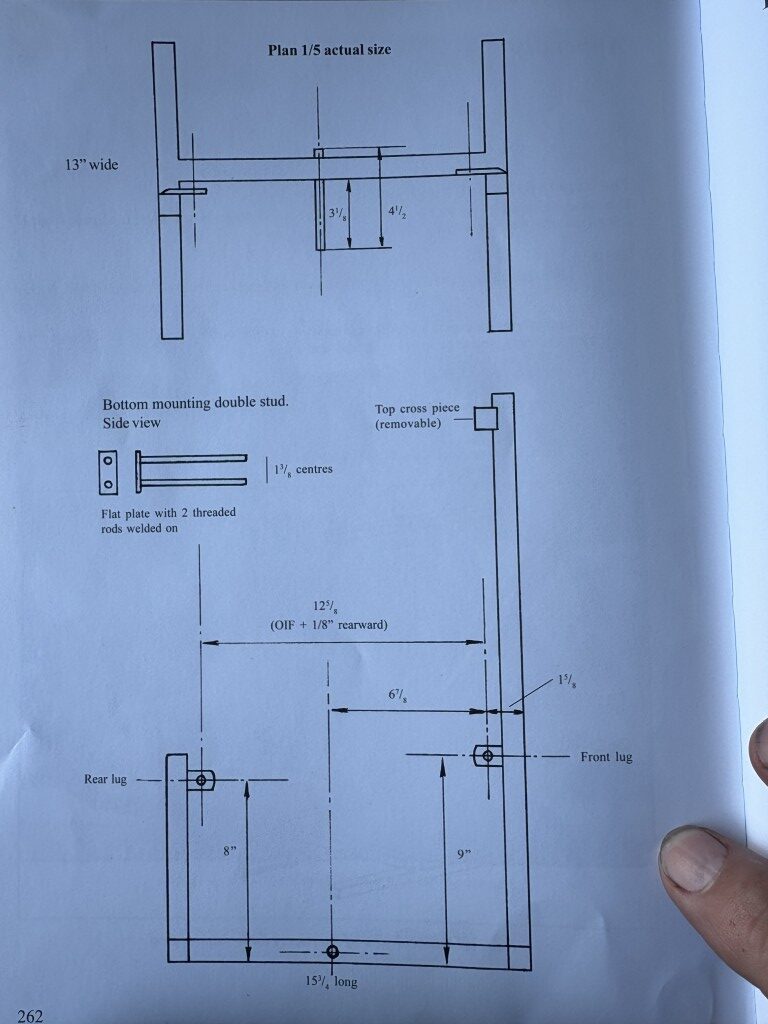
The diagram is a rough sketch of the pending build. I obtained it in one of the initial books purchased for this journey. I’ll put later the more detailed version. Many dimensions missing, but since it’s a 1 to 5 scale I can measure from the book.

I’ll post pictures of the completed unit that my neighbor is going to assist as he’s a top notch retired welder and great metal fabricator.

I managed to pickup the 1″ square tubing from a local metal supply vendor on their cut-off rack. They happened to have 6 24″ lengths and this should allow me to complete the full assembly.

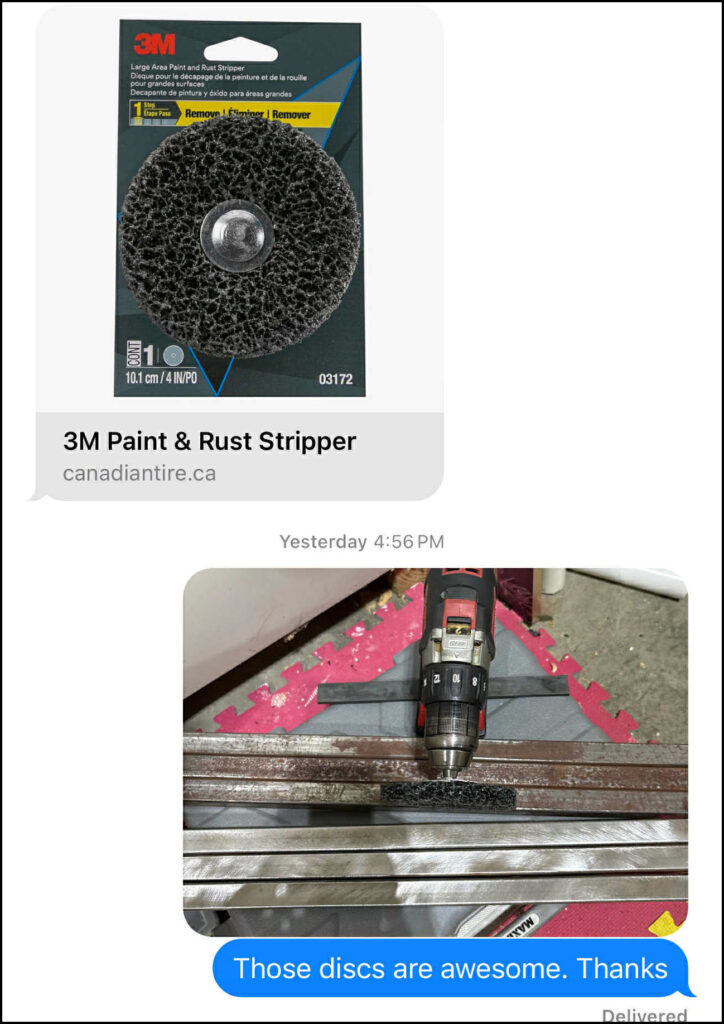
I had to clean the rust from the steel and the following 3M tool was recommended to use on my Power Drill (Milwaukee). Wow was it a good remover of the rust and likely left the surface close to ready for painting.

The full diagram of the assembly is below..

Posted in Engine, Uncategorized | Leave a comment

And with a kick….

After my first run with Bohdan pushing I worked on the carburetor a bit more. I had to rebuild it again as you might recall at the end of the road trial a major gas leak was noted. Luckily the gas valve from the Triumph worked very well.

I’ll post the video below so that people know it’s real 🙂

This was an accomplishment and I felt now that the bike is ready to start planning to strip down and truly restore.

Video filming by my neighbor Arnold

Posted in Engine | Leave a comment

Bubbling gas…

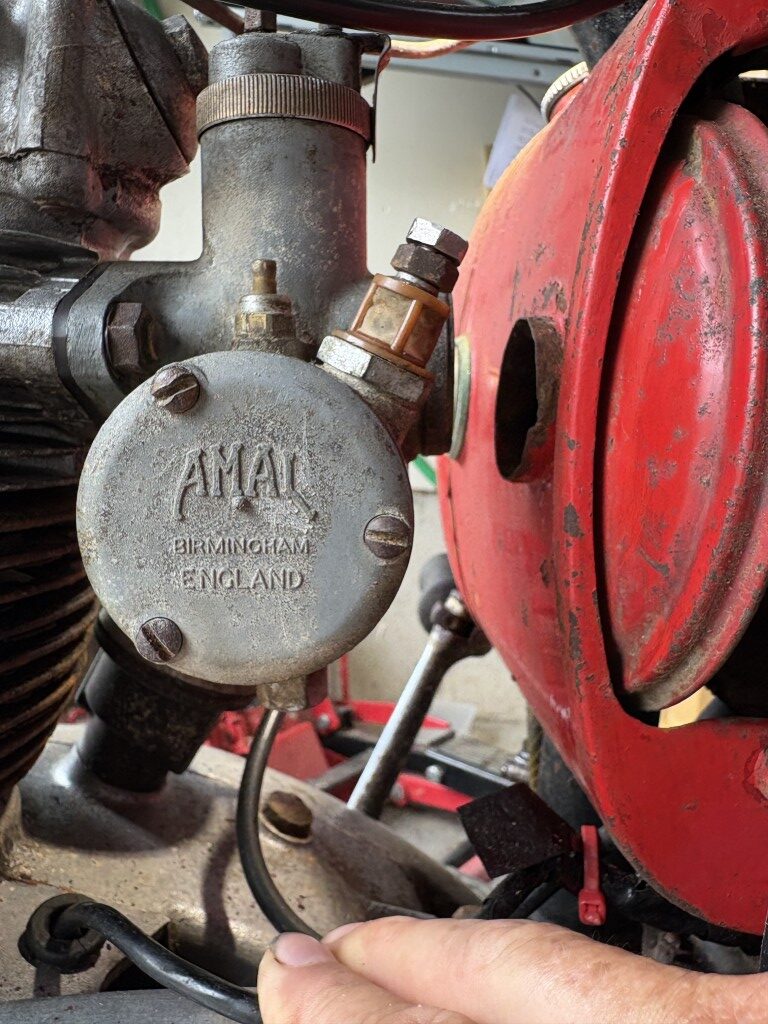
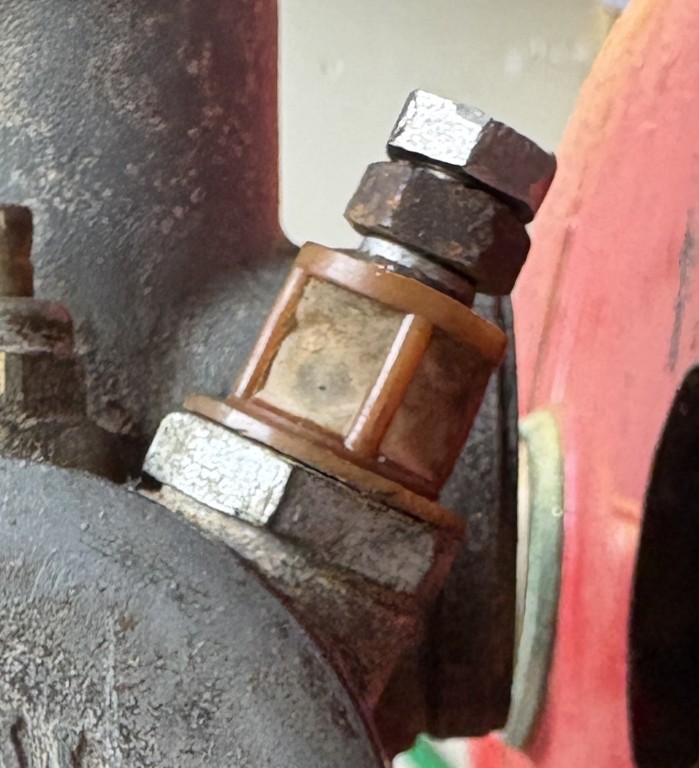
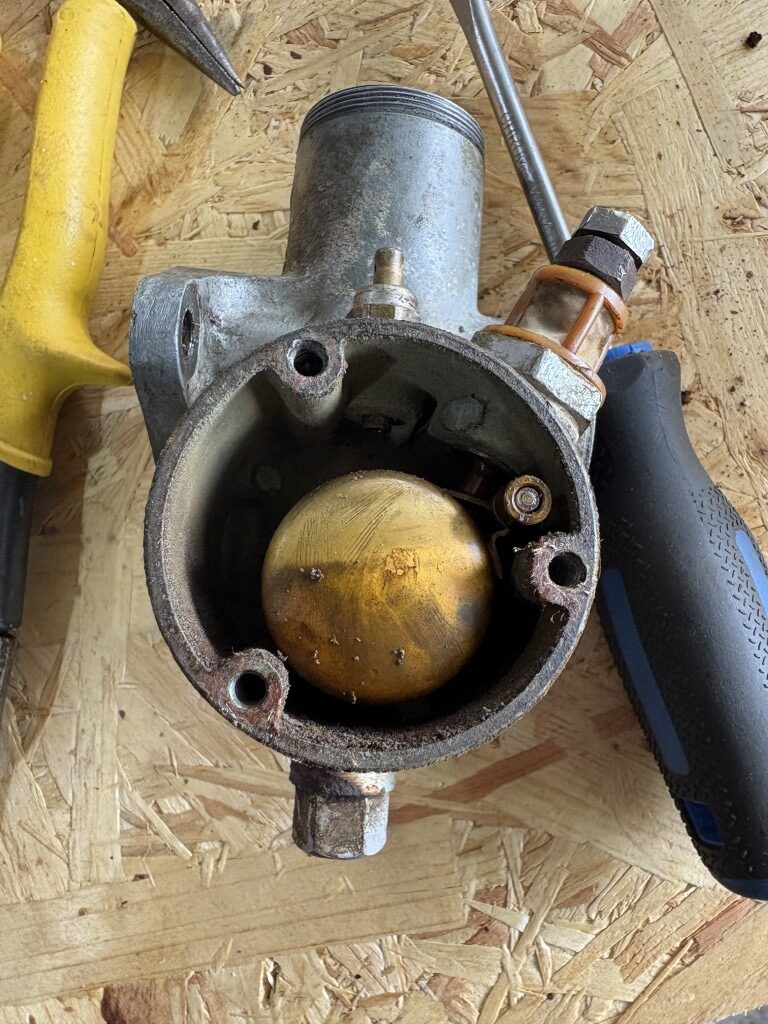
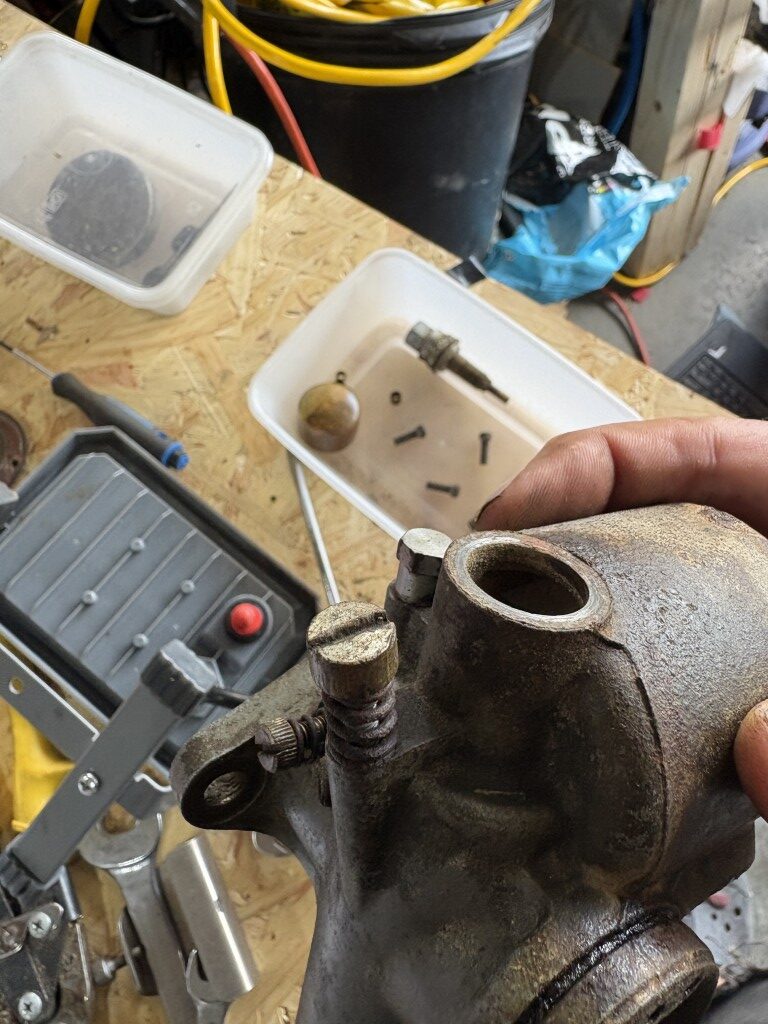
The gas was bubbling out of the “tickler” as it’s called. I had to fully disassemble the carburetor and clean some of the areas.

Mario gave me a tip to use some toothpaste on the tip of the old needle and twist it to assure it polished the seat for the new needle. After I did that and reassembled then there was no more leakage at the tickler.

I had already rebuilt the carburetor, but took it apart and after cleaning the needle seat I reassembled and no more tickler valve leak :o)

Posted in Uncategorized | Leave a comment

Push me Bohdan….

Kicking the bike was not working… I certainly had tried…

Even some other BSA owners had said that sometimes these bikes just tended to bump start better. I have bad memories though of bump-starts. Although over my years I’ve pushed many and been pushed I’d also left some victims behind of pushes gone wrong. Eleanor fell victim once in Brampton where her hands and upper body just went faster than her feet :o). Michael O’Neil was my saddest story as he bump started my bike for the last time as he was heading west (I was heading east). It was on a downhill and once the engine caught the bike just left him on a bit of a slop (while running). He feel forward and although his hands broke his fall… the fall broke his wrists. His journey that year was cut short and I’ve had to fight the guilt for years.

The following video was unfortunately captured on the second loop, so it was running pretty good. I also have a picture of all the rubber left on the driveway, but to be honest it started after the third push Bohdan provided. On my first pass I yelled for him to record the event (as I was scared running it too long might cause an issue).

Might have to try and crop or edit this video to center on the run. At the end we had stopped video ing the event, but when we looked down gas was pumping out of the carburetor, so glad we did not have a fire and I’ll post about that finding next.

Photos show the rubber marks on the driveway as we were bump starting the bike. I rode it with no seat but it was not too uncomfortable. Bohdan checking it out after the run.

Posted in Uncategorized | 2 Comments

Get the engine running …

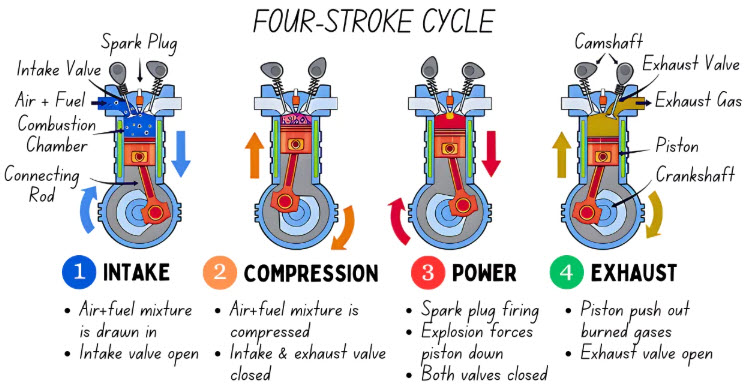
It’s a relatively simple engine (Single cylinder) and they key of course is the 3 main things:

  1. Fuel
  2. Air
  3. Spark

FUEL:
I started with reviewing the fuel and the tank was in reasonable shape (more to come later). Although I had bought a seal kit for the tank I had received opinions from several that it’s not as necessary as many would suggest. I have an endoscope device so I put the camera in the tank and reviewed inside. It was not too bad and since the fuel line has a filter I decided to just make sure I could turn the gas fuel on. The fuel line was quite stiff and would need replacing, but also the fuel valve was a push/pull and was obviously quite seized.

I enlisted the help of my neighbor and we got serious. With a set of grips on the valve into the tank we start to put a lot of pressure back and forth. It took a while for the first move (strength, WD40 + heatgun) and then with some back and forth it eventually was removed.

Purchased a new twist valve from Walridge Motors that came from a Triumph and along with some new fuel hose I was ready to connect the carburetor and feed it fuel (once rebuilt).

AIR:
Not much to do here… I just removed the sheet metal under the seat where the filter is installed. I need a replacement hose anyway to feed the air through the filter, but for the purposes of the initial engine run the straight intake into the carb will be fine.

Spark:
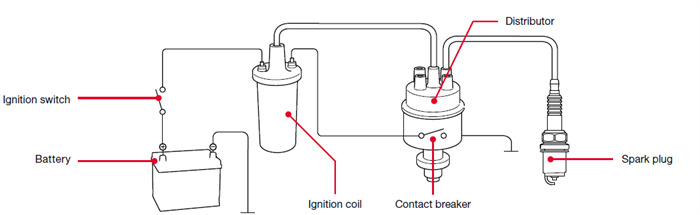
This might be the most exciting. The bike does not have the 6 vDC battery it requires. Not that a 50+ year old battery would have worked. :o). I had to review the electrical on this bike to determine what I’d need. I purchase a 6 vDC battery from Walridge as this would be likely required. Although one should potentially be able to start the bike without the battery I soon read that this bike would be more likely to start with the battery as the kick-start would not generate sufficient charge with the coil to get spark.

I took time to check all the wiring and put some modern connections where required for the battery and other areas. I also added a fuse as I noted that the wiring system did not include any fuse originally. There were two added switches not within the original schematics I had for this bike.
1. A switch on the handlebars near the clutch (thumb switch)
2. A similar switch hidden under the seat.

Turns out they were both kill switches to the starting circuit. The one on the handlebars was a convenient kill switch to stop the bike engine and under the seat was a security one as this bike has now ignition key :o). The world was much more trusting back in the Scottish lands of the 60’s.

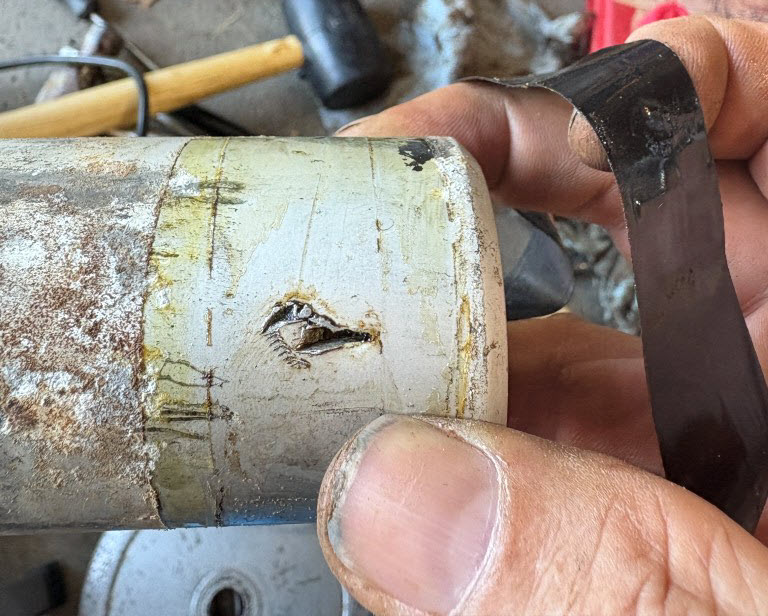
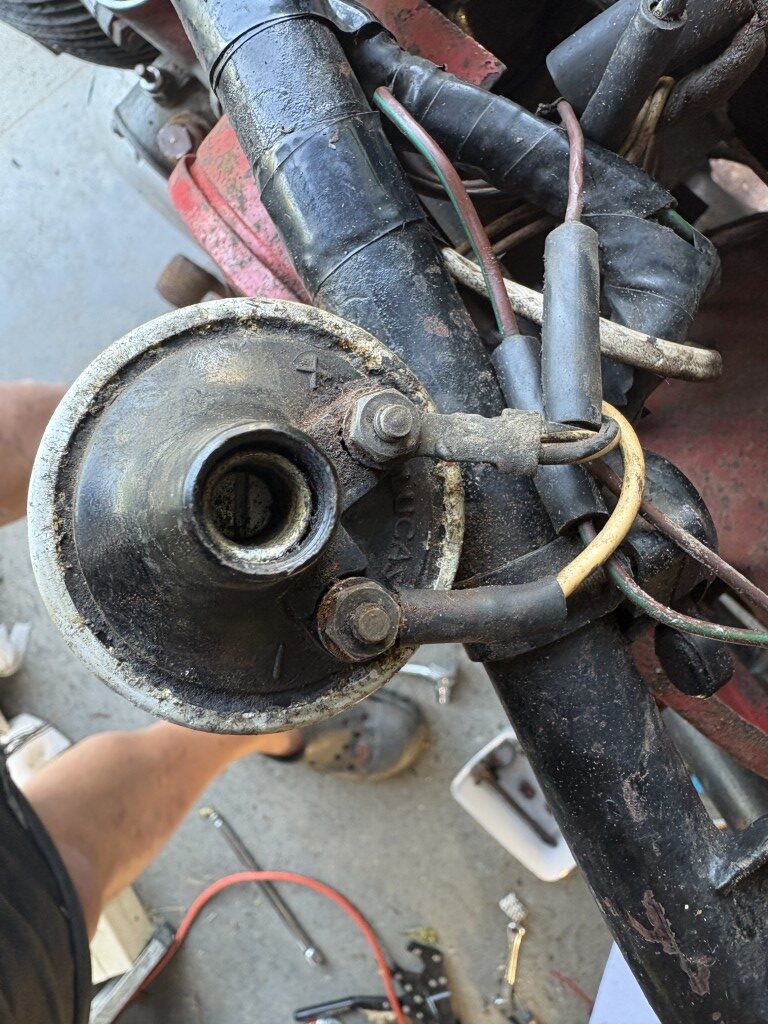
I did have to also replace the coil as I unwrapped the electrical tape and found an interesting hole in the side of the coil that was on the bike. I can only assume it was running with this installed, but for sure it could have been causing some spark loss. I would say at this time after 50 years the oil in the coil was dried out and so the electrical readings were not ideal. Walridge motors to the rescue again.

I did pick up a new spark plug and a kit to build a new spark plug wire as on the bike the one was missing the plug cap. This was an easy build. I was concerned that the spark plug would not thread into the cylinder completely and so I was thinking I might have to chase the threads. An idea to do this was provided to put air pressure in the exhaust so that the cylinder was under positive pressure and also coat the tap in grease to help not let any filings get in the cylinder (this would be bad). However when I put the socket on and gave it a gentle extra twist the plug did start past the stuck point and then was able to go to full depth.. phewwwww.

The last key part on the electrical was the distributor and of course the points which help with spark. Ok, not help but actually are a key point. I didn’t want to move them at all as this then leads down to having to setup the timing if there is an issue. I carefully used some 400 grit sandpaper and slid it back and forth between the points to assure a good connection (remove 50 years of fine buildup). with the spark plug grounded against the engine block and hooked up to the coil I was able to kick the bike and get spark. With it hooked up I was able to open and close the points with a small screwdriver to see the spark generated when they were open (opening the points is when the coil sends the spark high voltage).

I was now ready to go…..

Posted in Engine | Leave a comment

This coil is suspect….

You can still see the black electrical tape on my finger. It was wrapped around the coil and I wondered what it was for. Thought it might have been protecting the coil under the clamp or to make it tighter (non slip).

It seems that something had pierced the shell and maybe there was some arc’ng that prevent start due to the high voltage jump.

However now likely the oil inside had dried and the coil was not functioning.

Some photos showing the new ignition cable built and installed. I also purchased a new coil ($65) for the system. It should be noted that as of now the BSA is a 6vDC system with a positive ground.

Posted in Uncategorized | Leave a comment