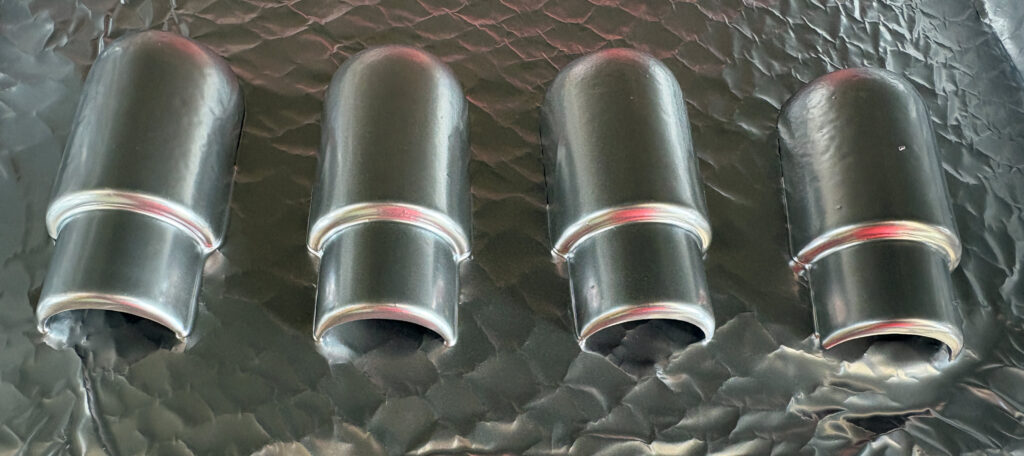
Feels like a properly momentous moment this one — the rings have finally landed here in Canada, safe and sound, unlike their poor cousins sent off to Scotland who appear to have vanished into the mist, presumably last seen heading for a dram and a warm pub. A mystery for another day.
We’re smack in the middle of a snowstorm here… or maybe crawling out the other side of it. Hard to tell when everything’s white and the forecast keeps changing its mind. Either way, January isn’t exactly lining up to offer a nice warm day and spare time to get back at the engine. Winter has opinions, and it’s not shy about sharing them.
That said, this delivery is a real nudge forward. The top-end rebuild is officially back on the cards, and with the head fin now patched up (see the earlier post Patch up the head), there’s no excuse not to press on. I’ve got the new valve guides, so we can even think about getting the valves fitted — assuming my fingers haven’t frozen solid by then.
No point dragging this out into a long-winded post — this one’s more about lining up the dominoes for the next stage. It’s been far too cold to spend any real time in the garage, even when I’ve had the chance. I am, however, eyeing up the electrical harness and thinking it might enjoy a wee holiday indoors. A bit of bench work in the basement sounds far more civilised than wrestling metal in sub-zero temperatures.
More soon — assuming the weather behaves, the parts stop going walkabout, and the old BSA doesn’t decide to test my patience again. Stay tuned… the next chapter’s brewing.
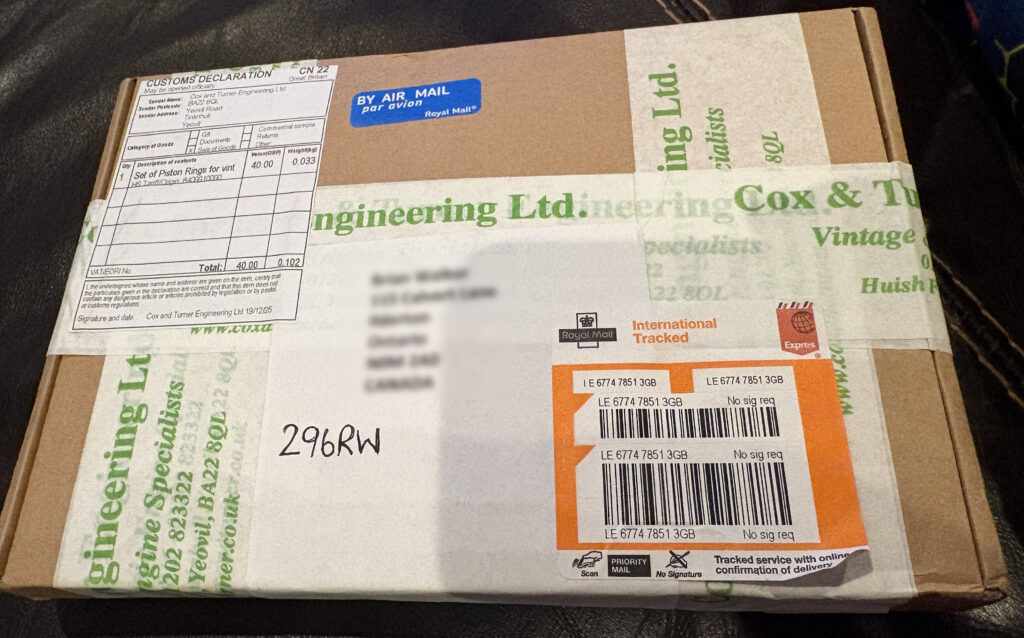
I was hoping I’d get back to see Mario by now to try again with the 2nd compression ring, but seems they got lost. CoxandTurner.co.uk confirmed their thoughts that they were lost in the post over the holidays when they returned to work January 5th. They were kind enough to confirm they were putting another set in the International mail to Canada this time. You might recall the last set was supposed to meet up with Eleanor when she was visiting her mum in Scotland. So far as of today neither address has received a set. Something to look forward to.
Thanks to everyone following along and really looking forward to the warmer weather so that things can speed up on the restore. Wanted everyone to know I’m still engaged in the journey.
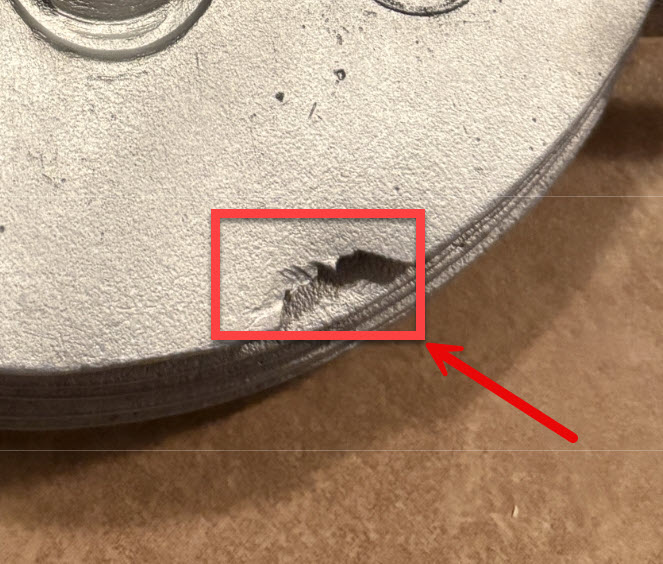
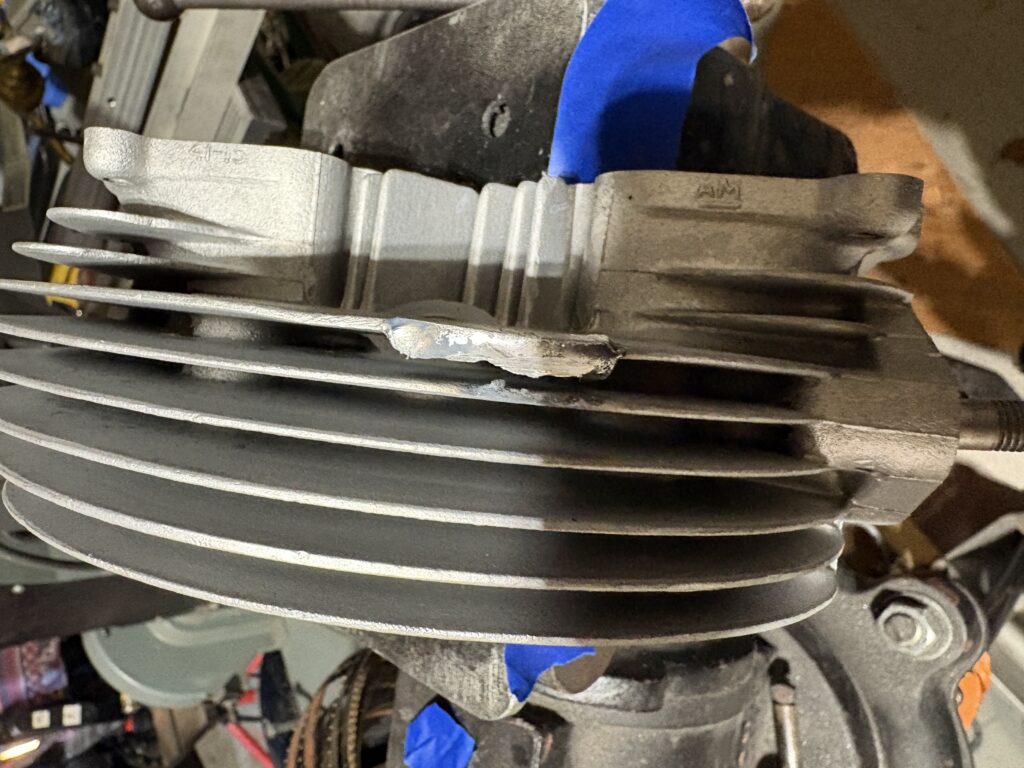
You may remember the wee chunk missing from one of the head fins, previously documented for the avoidance of doubt and future embarrassment. Fortunately, my neighbour is a career welder and—either out of kindness or curiosity—agreed to patch it up for me. Today was judgement day.
I set off for his garage around 2 pm, embarking on what can only loosely be described as a journey. The sidewalks were glazed over nicely thanks to a recent winter storm, turning a short walk into a low-budget audition for Dancing on Ice. Still, it’s only door-to-door, which is comforting when you’re contemplating how far an engine head might fly if things go wrong.
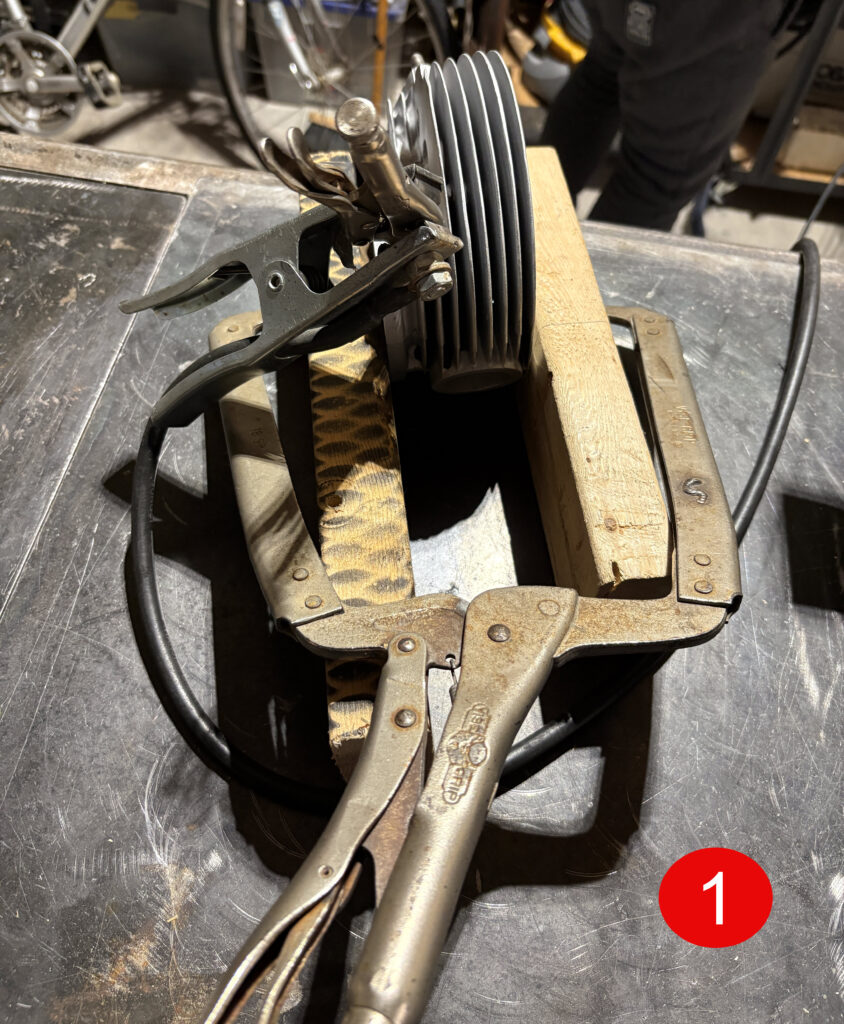
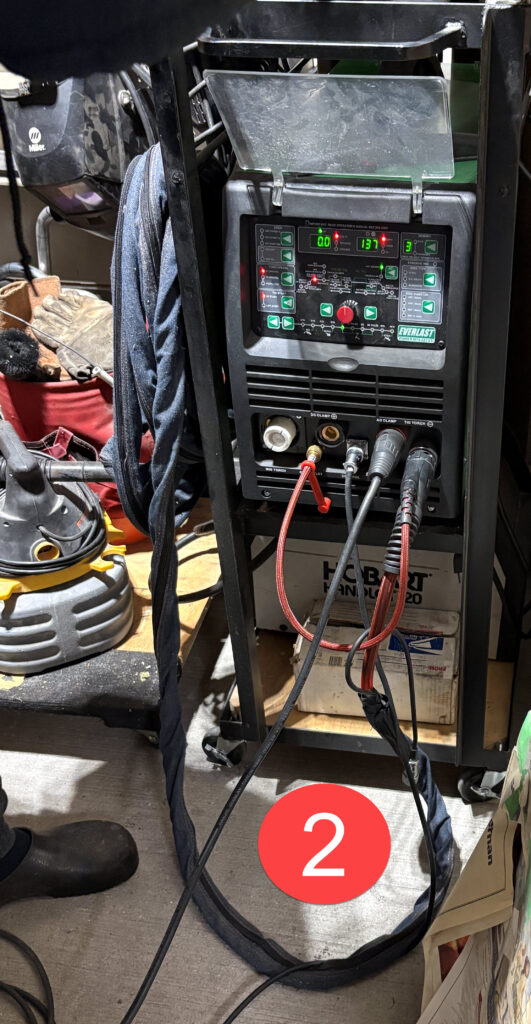
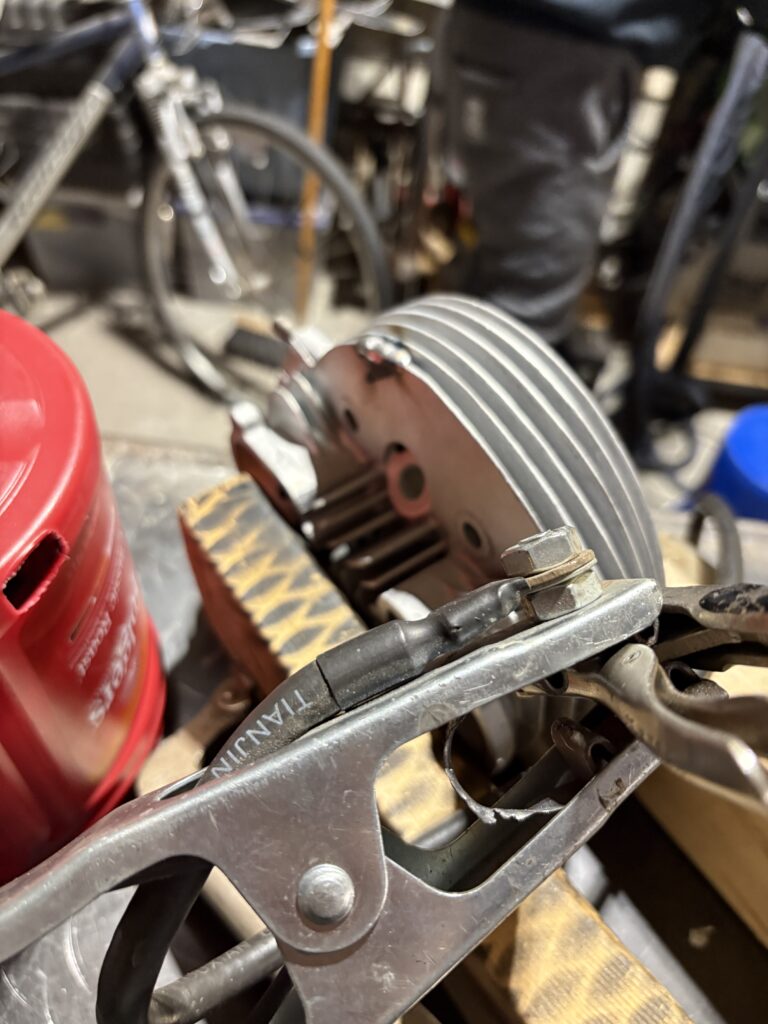
The photos above show the arrangement Steve put together on his welding table, with the welder sulking quietly in the corner. He spent a fair bit of time persuading the shielding gas to make an appearance, as it stubbornly refused to cooperate on either the trigger or the foot pedal.
Whether this was due to the cold, a wiring control issue, or the machine simply taking offence at being asked to work in winter remains unclear. That said, some strategic fiddling with the cable connections eventually produced results, which in the world of welding is generally considered a sound diagnostic method. The cold, however, remains under suspicion.
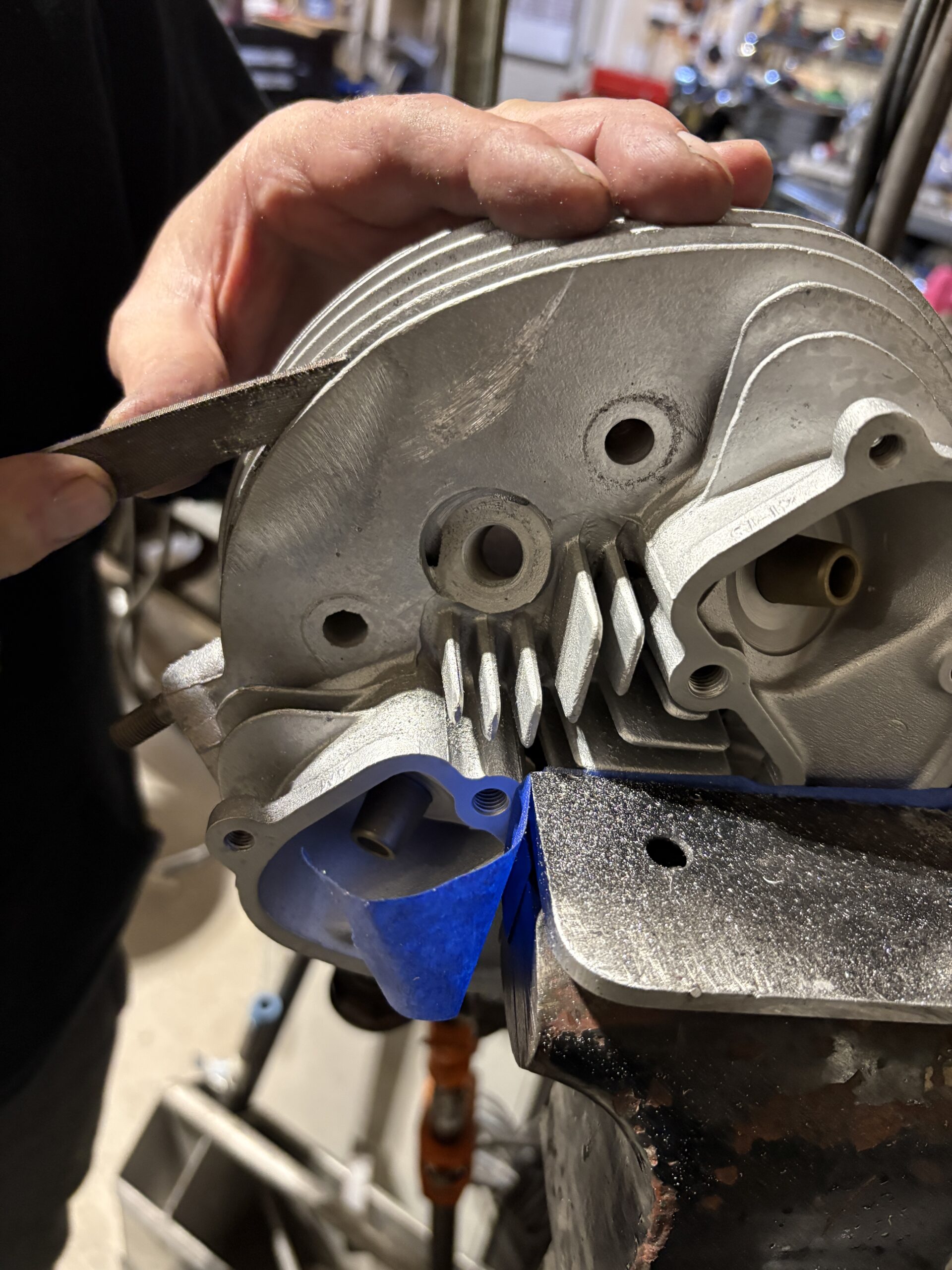
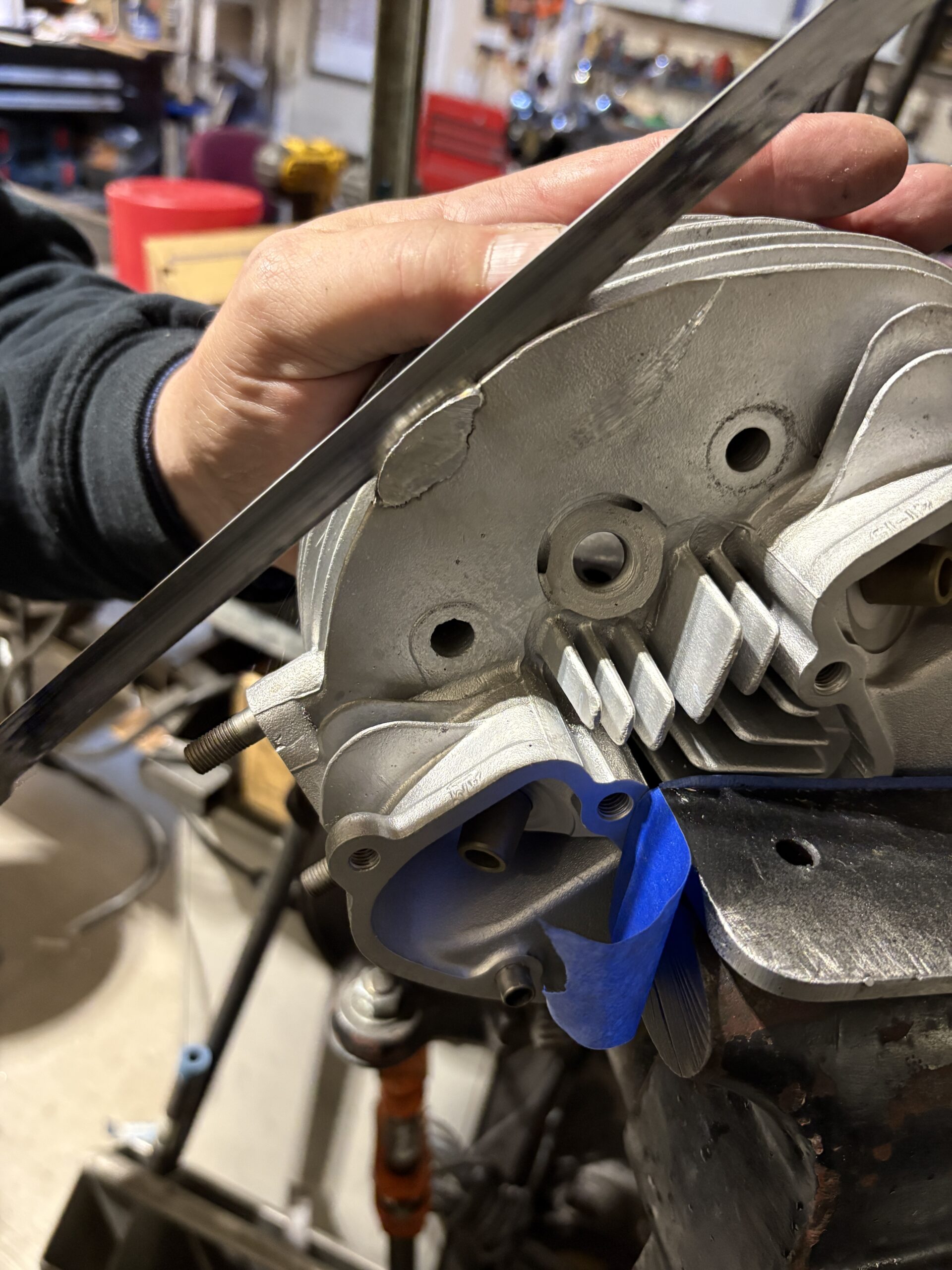
The photos above show the build-up at various stages of shaping. Steve made use of a pneumatic Dremel for the rougher work, along with a hacksaw to remove the inner chunk and allow the file to get properly between the fins—because subtlety only gets you so far with aluminium and cold fingers.
All told, the job was wrapped up in roughly 90 minutes, and that figure generously includes a fair amount of off-topic discussion. In other words, not bad going, and nobody lost any skin or sanity, which counts as a successful afternoon.
The image to the left shows the finished repair on the fin, and against all reasonable expectations, it actually looks good.
No obvious bodges, no artistic liberties—just a solid repair that blends in nicely. How it all came together quite so well remains something of a mystery, but I’m fairly sure Willie would approve. Possibly even nod. Steve keeps his expert welder badge of honor (was never a doubt).
As for the piston rings, the latest update is less triumphant. They failed to arrive at Eleanor’s mum’s place during her visit, which means they’ll now need to be forwarded via international mail once they finally show up. That honour will fall to either her mum or her sister. Realistically, this pushes things to Monday.
It was a good plan at the time. And that, in itself, deserves some recognition.
Ontario briefly remembered how to be civilised today, scraping its way up to a balmy +10 °C, which of course meant it was perfect weather to work in Mario’s workshop — a space that treats heating as more of a philosophical concept than a necessity.
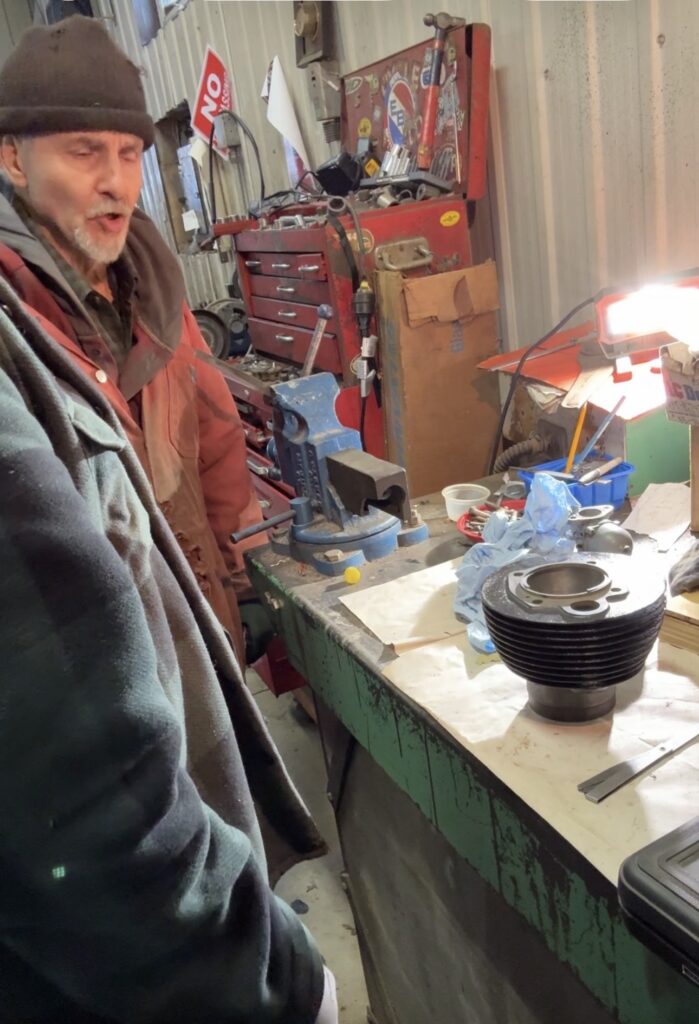
Once I arrived with the engine and assorted bits, Mario immediately unveiled an impressive collection of carefully prepared specialty tools. We admired them thoroughly… and then proceeded to use precisely none of them. Instead, we opted for the traditional approach: the quiet confidence of a master mechanic and methods that predate electricity, optimism, and probably safety regulations.
The barrel and tools were arranged on the bench, with the barrel set wide-end up — because that’s how it’s always been done, and arguing would only make things worse. Based on the bore diameter, our target ring gap was a neat .009″. Naturally, having purchased .040 oversize rings, they overlapped rather enthusiastically to begin with, so the afternoon’s entertainment would be the gentle, painstaking joy of precision hand-fitting.
Slowly. Carefully. And with just enough muttering to demonstrate the peaceful coexistence of a retired Master Mechanic and a Mechanical Engineer who knows when not to argue.
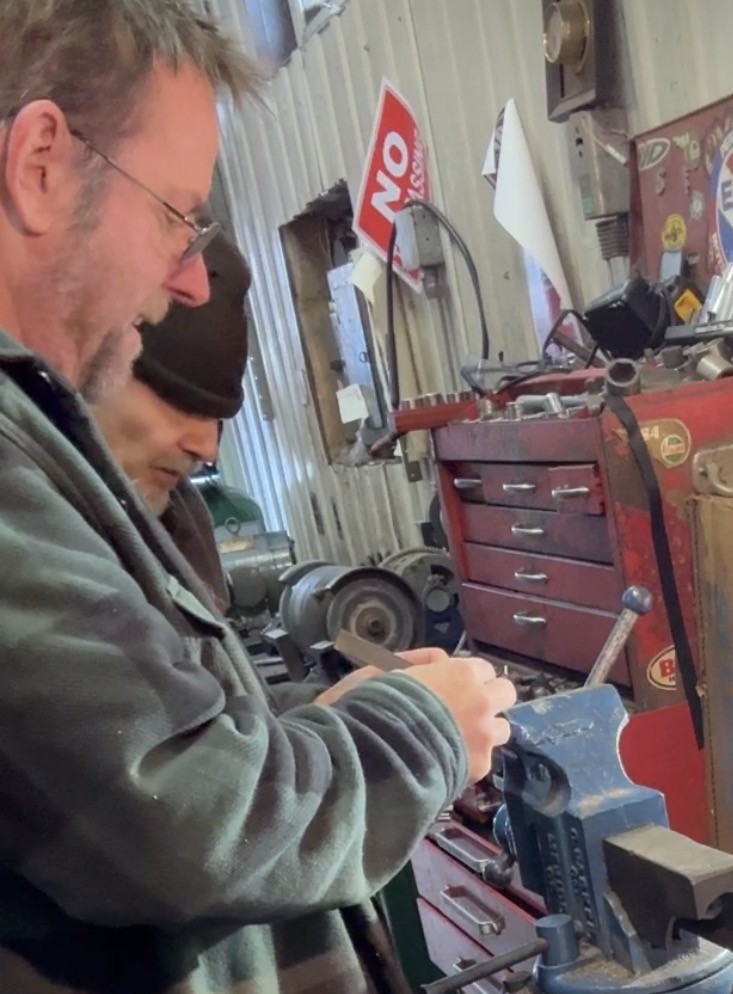
This is me, firmly cast as the apprentice, carrying out the precision sizing using one of Mario’s rather precise files. By pressing both ends of the ring evenly against either side of the “file” and working it back and forth, the gap is adjusted uniformly, resulting in a clean, controlled, and very deliberate fit.
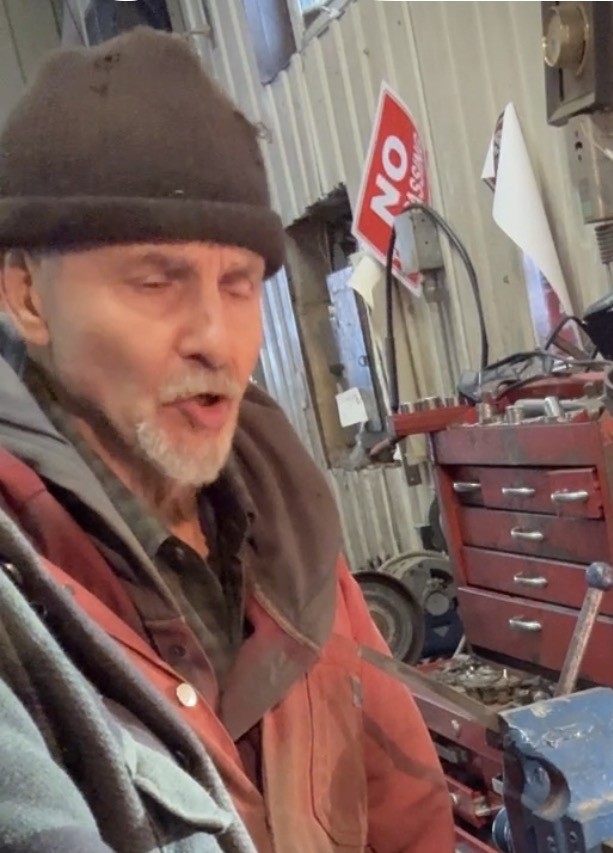
My technique was conducted under the close and unwavering scrutiny of a master’s watchful eye. Progress was measured, pauses were frequent, and measurements were checked repeatedly — because nothing ruins a good day like discovering you’ve filed past perfection.
With the oil ring successfully fitted, followed by one of the compression rings, confidence was cautiously allowed to build. One ring remained.
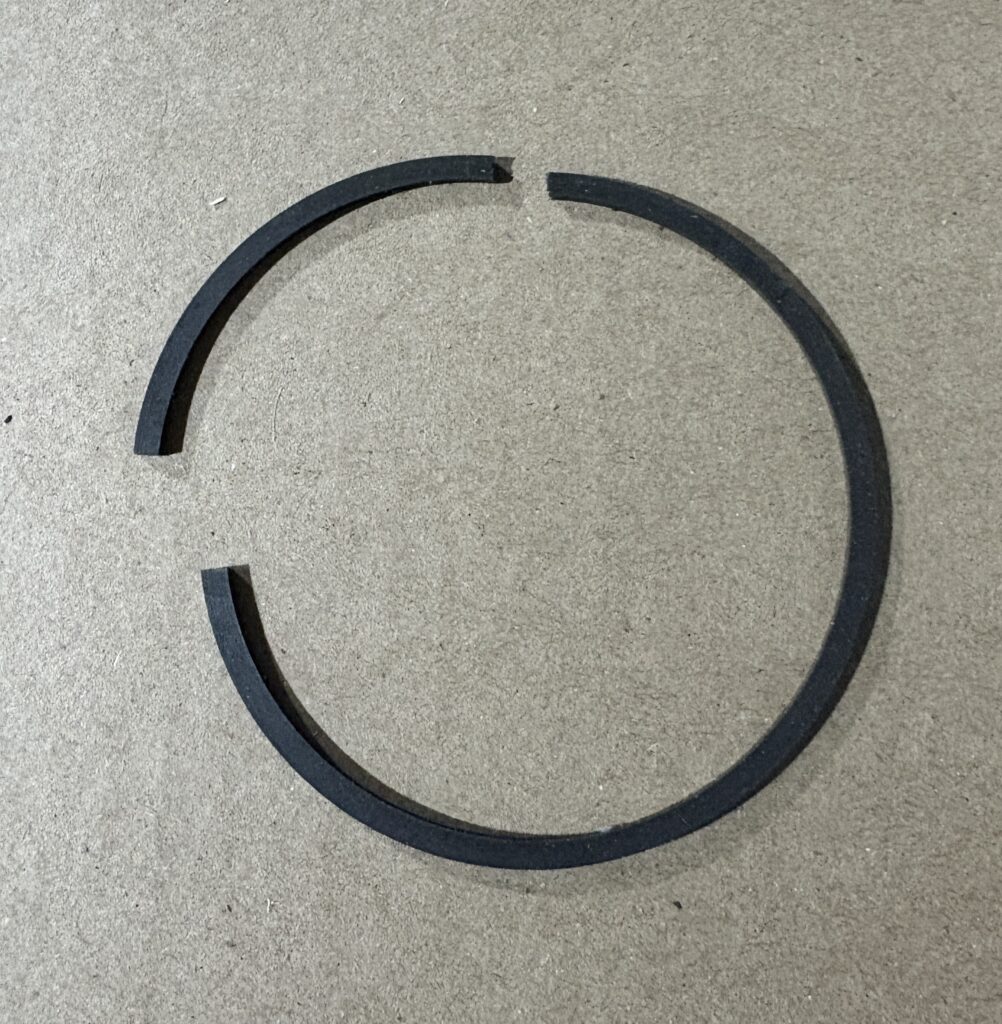
This is what I call shock and awww… the exact moment I finished informing Mario about the distinctly unhealthy PING noise that occurred while fitting the last ring to check the gap.
A brief pause followed.
“Anybody got some ring glue?” …Oops.
And so, the story continues — which neatly explains the Take 1 in the title.
Fortunately, coxandturner.co.uk still have another set in stock (email went out quickly). By sheer coincidence (and a generous interpretation of planning), my wife and daughter are heading to the UK on Saturday for a holiday visit. The new rings will be shipped to her mum’s place and smuggled back across the Atlantic before the New Year, wrapped in festive goodwill and mild mechanical regret.
A return trip to Mario’s workshop will be scheduled, and I’ll get the pleasure of doing it all again — this time armed with fresh rings, renewed optimism, and an even greater respect for that watchful eye.
In hindsight, I’m fairly certain I know exactly what went wrong.
I was wearing a pair of rubber grip gloves, and more than once they had a habit of catching between the ring and the barrel while fitting. That simply wouldn’t have happened with bare hands. In the ping moment, I believe the glove on the finger supporting the back of the ring snagged slightly, and when I pressed down on the front, the ring was encouraged — briefly and fatally — to twist.
Cast iron piston rings are many things, but forgiving under torsion is not one of them. Hard, brittle, and entirely unimpressed by my logic, it let go immediately.
To be honest, I recognised the sound instantly. Earlier, Mario had deliberately sacrificed one of my old rings, snapping it cleanly so I could use the broken end to scrape carbon from the piston grooves. Educational, effective… and foreshadowing, as it turns out.
We did manage to capture some video along the way for a future instructional YouTube post, but the editing and publishing will wait until Take 2 — when the full lesson can be demonstrated without the dramatic intermission.
That’s likely all for 2025. I’d like to wish everyone a very Merry Christmas and a Happy New Year. I may post before year’s end when my Christmas present arrives (a fresh set of rings), but Take 2 itself will almost certainly be a New Year event. Finding warm weather in Ontario at that point may prove to be the real challenge. 😄
Fresh back from the cleaning folks—who somehow didn’t lose or ruin anything, a small miracle—I had a couple of things to sort out before meeting up with Mario (a.k.a. The Master Mechanic, and trust me, he reminds you of the title often) to start piecing the engine back together.
First job: took the rocker over to my neighbour Steve last night. He’s kindly squeezed it into his “G-job” list, which is what he calls work he does for pals, usually at the pace of a scenic Sunday drive :o). He’s fixing a tiny-ish chip on one of the fins. Can’t wait to see it done—his work’s usually immaculate enough to make you question your own life decisions.
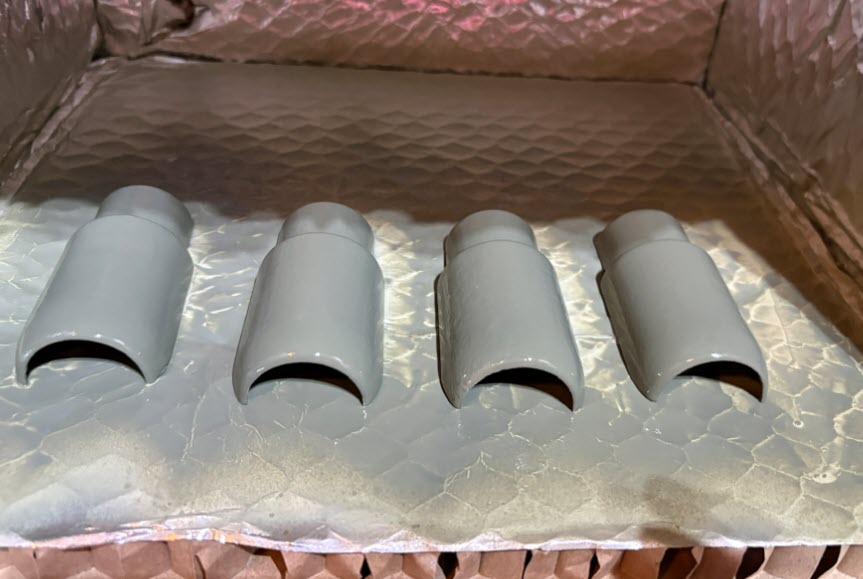
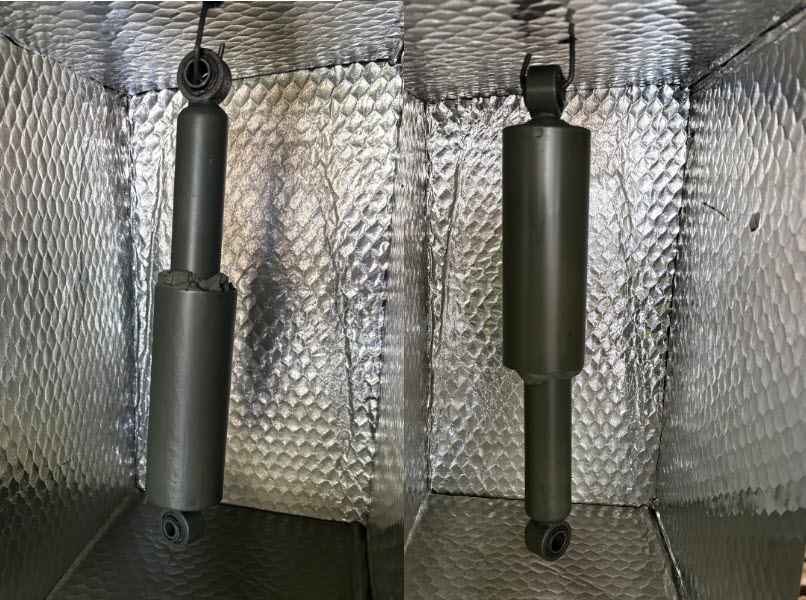
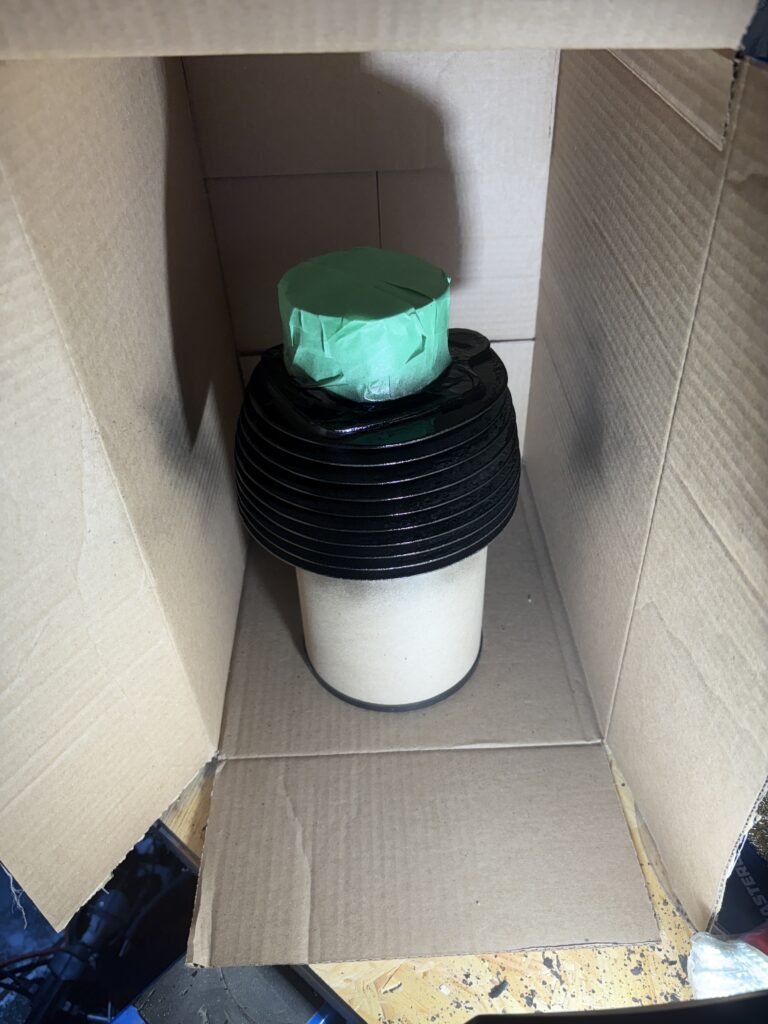
Then there’s my mini paint booth, if you can call a cardboard box with the barrel on top of a container a paint booth. Engineering genius, I know. But it let me spin the barrel around like a rotisserie chicken, which meant I could get paint in between every fin. Once it looked halfway respectable, I chucked it into another box, sealed it up, and brought it inside the house—partly to keep fumes under control, partly because the outdoor temperature was roughly that of a meat locker.
Next up: the cylinder head repair. After that, I’ll be waiting for a day that’s not blowing a gale or freezing solid, so I can head over to Mario’s and get this thing reassembled.
If the weather cooperates, that is—which, knowing my luck, it absolutely won’t.
Holly (my wonderfully obliging daughter) did the Uber Pickup for me—mainly because Monarch Rebuilding Inc. had the parts ready and, naturally, the transaction was CASH ONLY. ((Thank you John Johnson for the contact—clearly a man who still lives in the age of banknotes and handshake transactions). I told Holly I’d e-Transfer her the money later, and minutes afterward her mum receives a message asking how does one even acquire cash? Apparently the younger generation now treat physical currency the same way archaeologists treat ancient pottery shards—fascinating, but absolutely no idea how to obtain it.
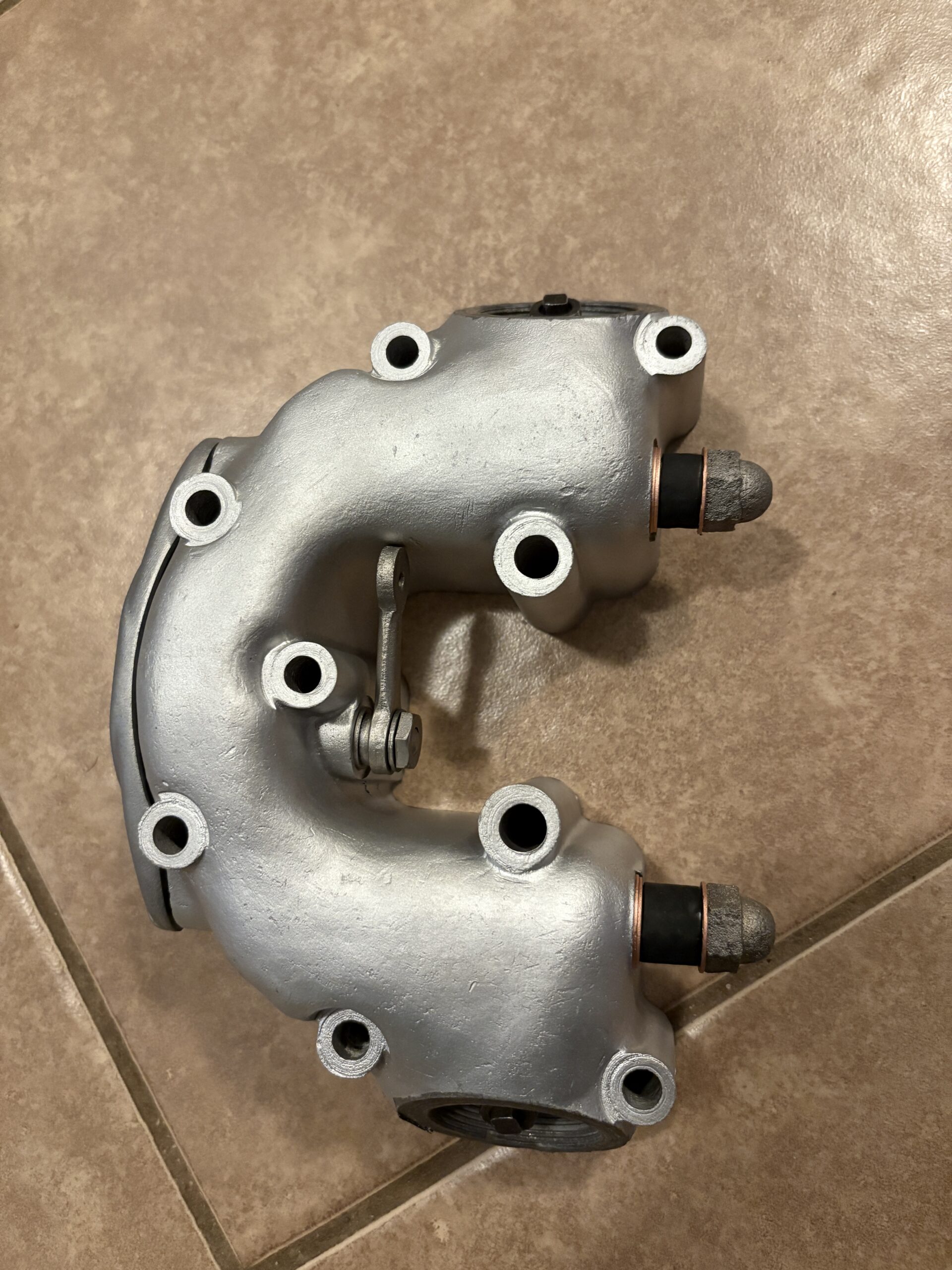
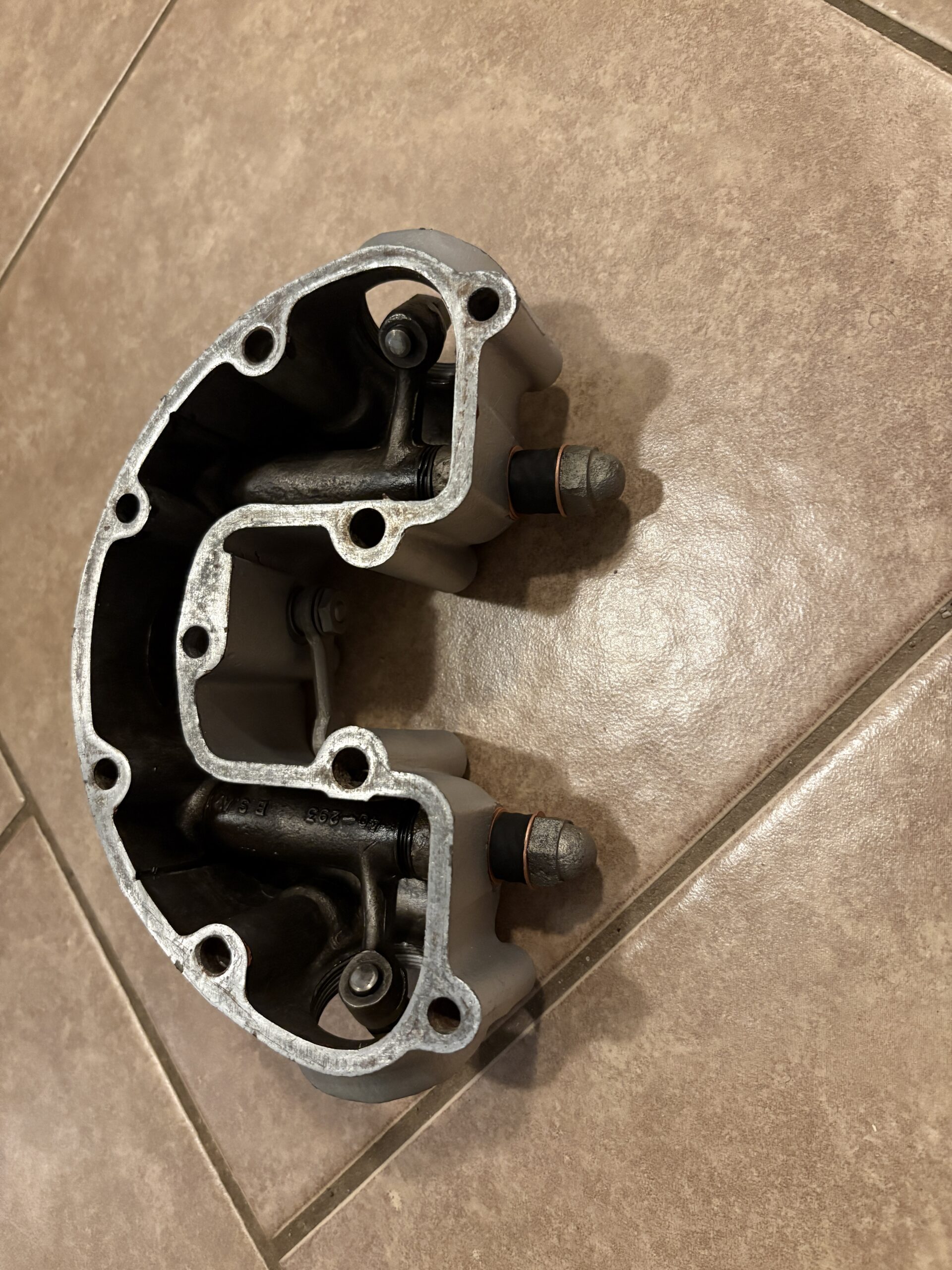
Rocker BoxRocker Box Inside
Rocker Box
The first piece of the grand assembly is the Rocker Box. They’ve wisely left the gasket surface and inner bits untouched, but the outside looks rather tidy. All the important surfaces appear protected, so here’s hoping Mario gives it the nod. Fingers crossed—though knowing my luck, he’ll find something microscopic and roll his eyes in that special “I expected better” way.
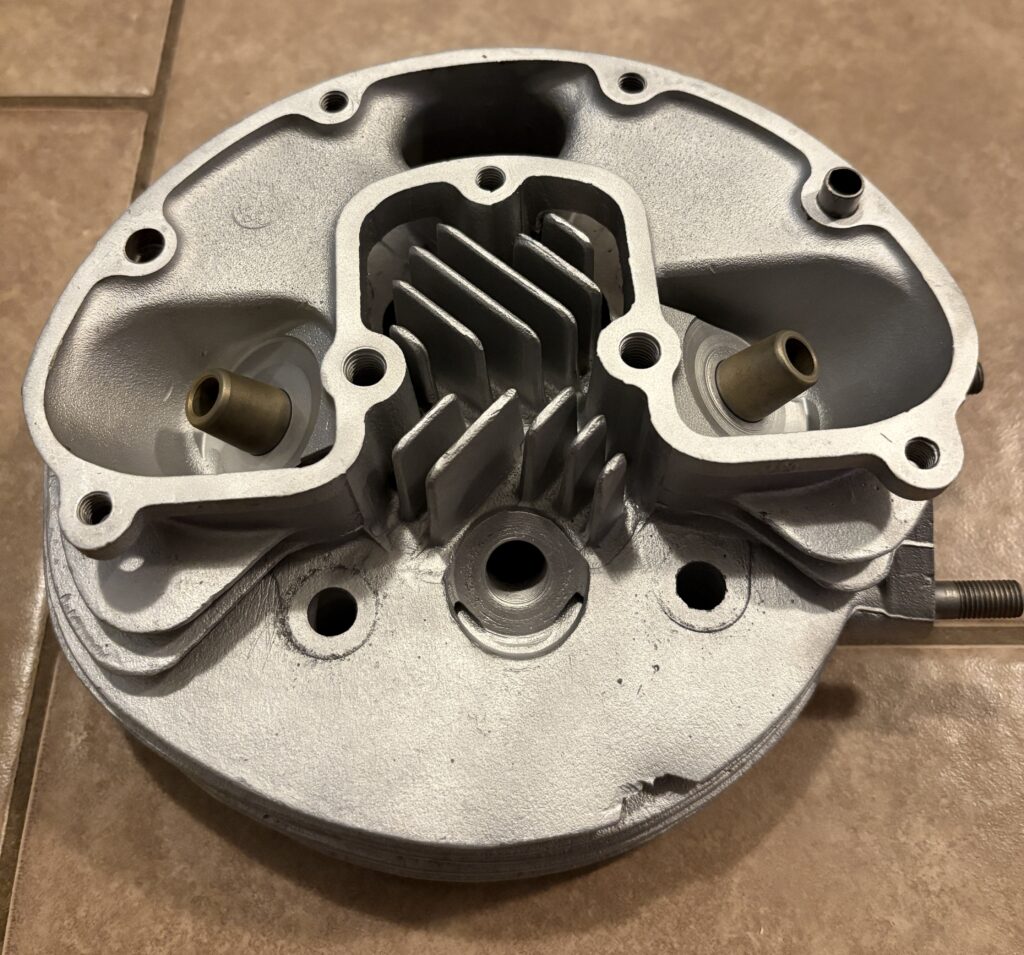
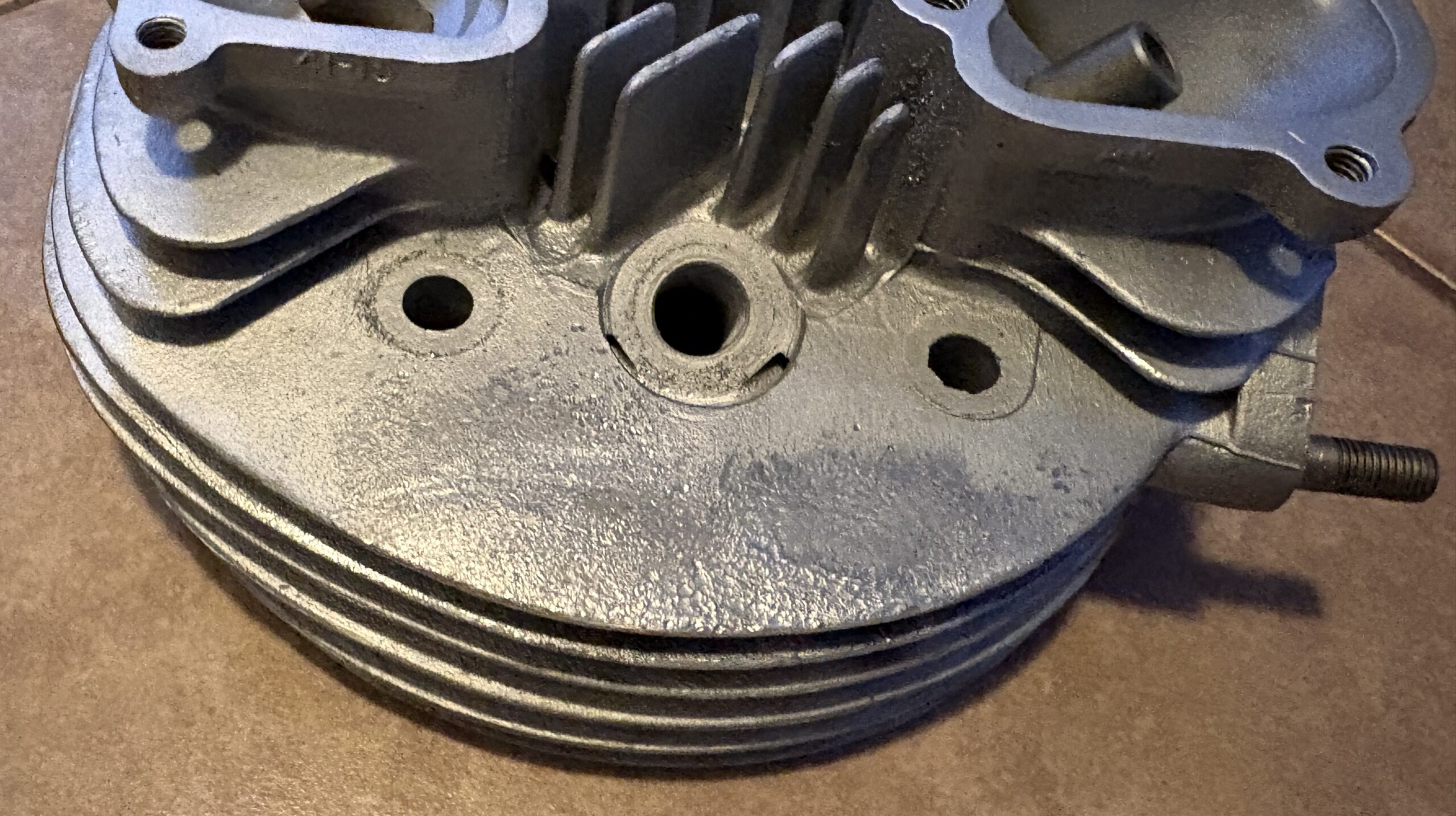
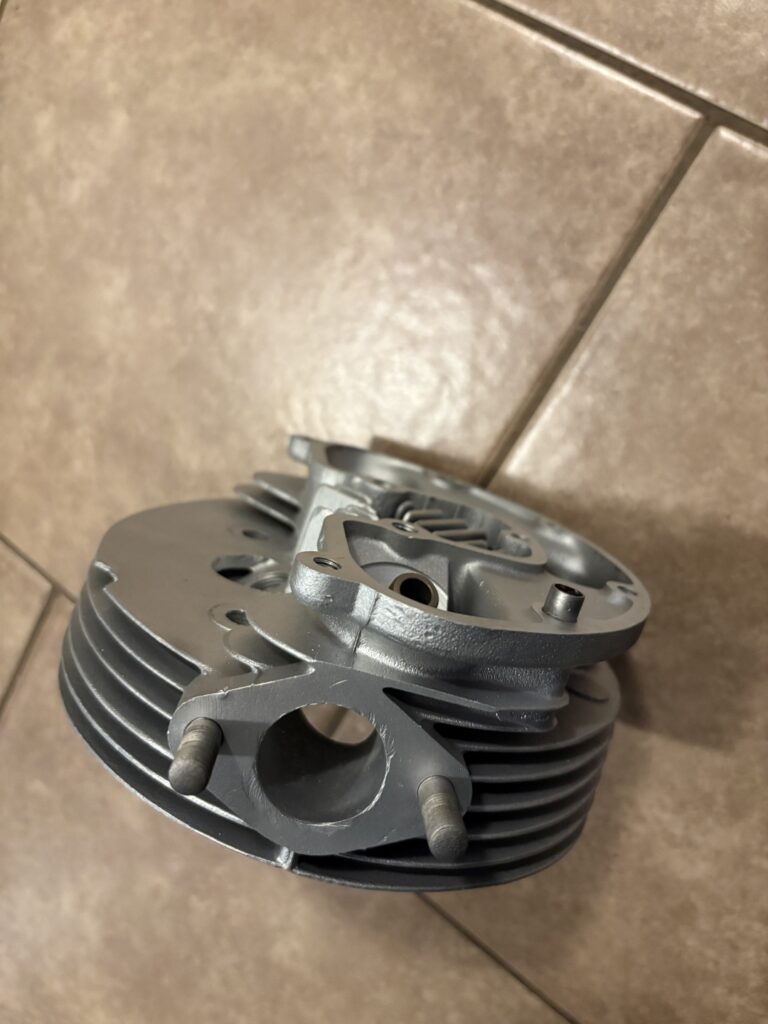
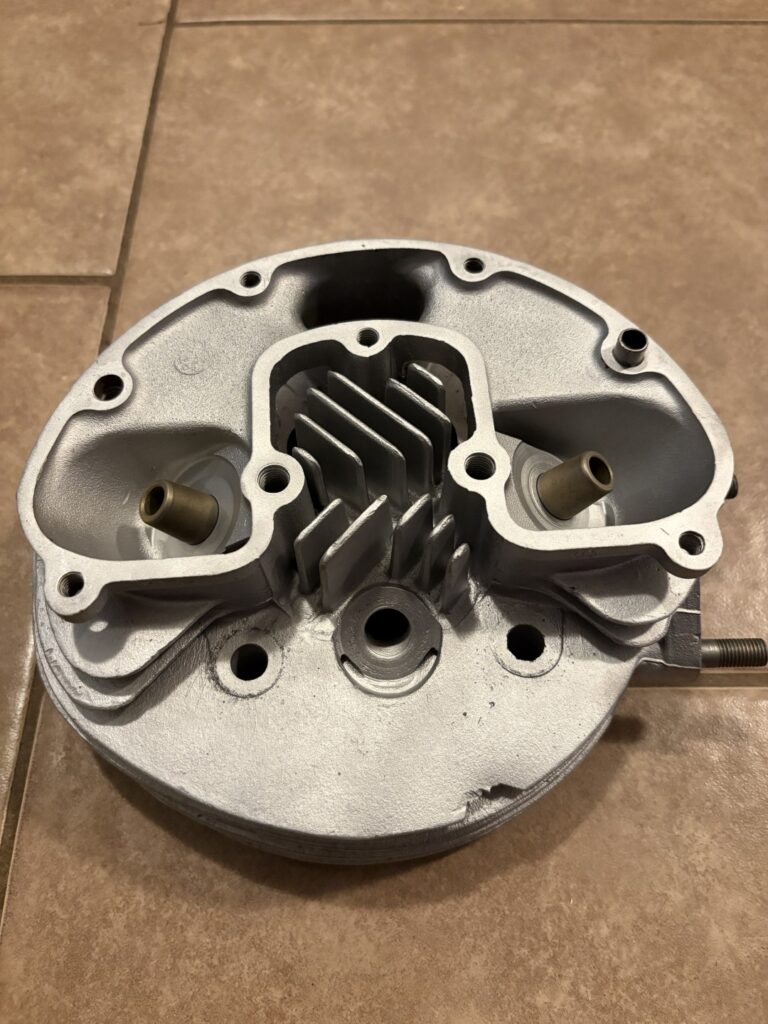
Cylinder Head – Exhaust portCylinder Head top
Cylinder Head
Next up is the Cylinder Head. The top fin has a wee chip, which my neighbour has already been staring at like it personally insulted him. He’s offered to weld it up, so I’ve sent out the ceremonial smoke signals to see if he’s ready. I can do the Barrel and Piston first and worry about the head later, so we’ll see how the stars align. Stay tuned—preferably with low expectations.
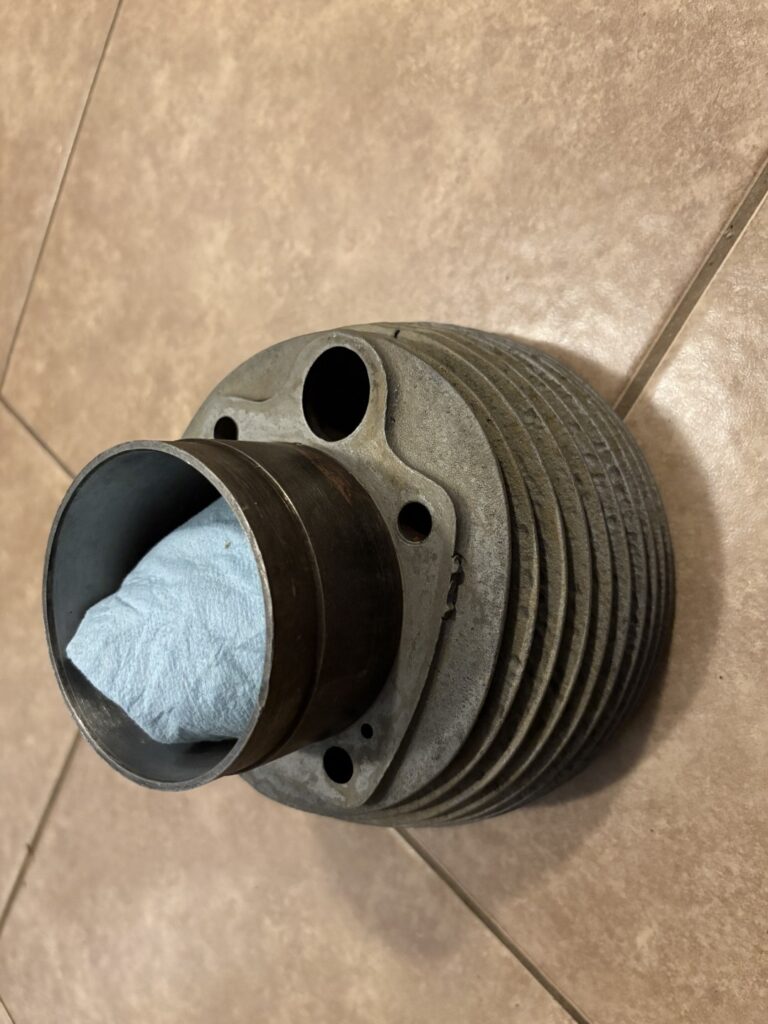
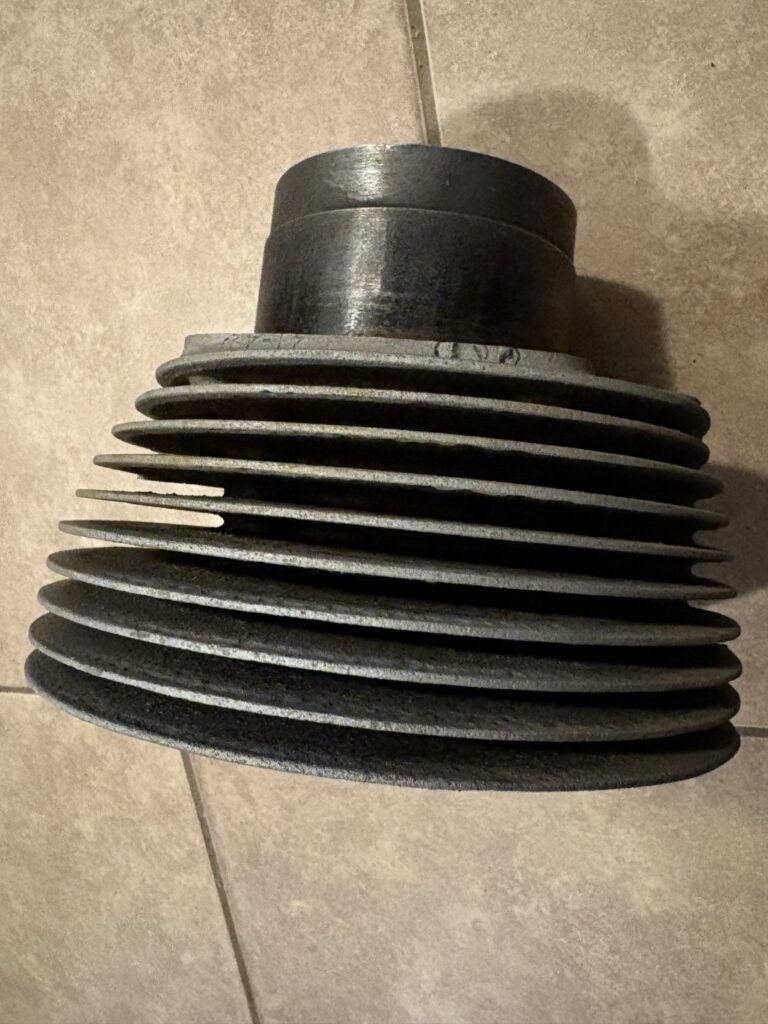
Cylinder – BottomCylinder – Side view
Cylinder
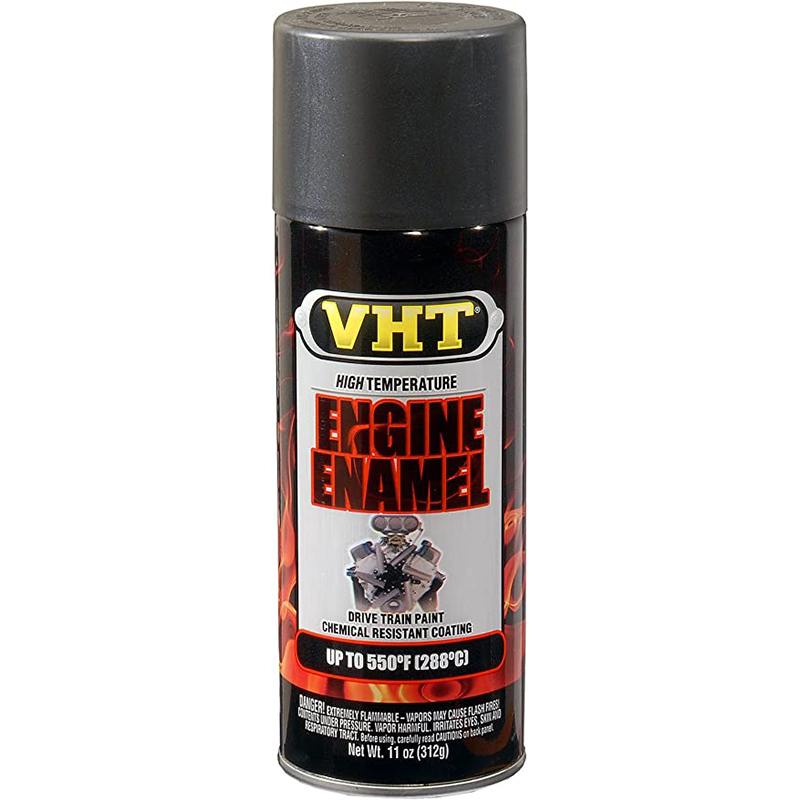
The Cylinder was the one I really wanted cleaned, as I’m planning to spray it with VHT high-temp black. Some folks insist high-temp isn’t necessary because the barrel “doesn’t get that hot.” Aye, and some people think Scotland gets “a wee bit of rain.” For the few extra dollars, I’ll take the insurance. I’ve even been told I can bake it in my wife’s oven to cure the paint. I suspect that would go down about as well as putting engine parts in the dishwasher, so the springtime running-in heat might have to do. Better read the paint instructions before I accidentally gas the household.
Conclusion And yes—before anyone comments—I’m using my entranceway ceramic tiles for photos. Couldn’t be bothered waiting to set up a proper white backdrop. Real life restoration doesn’t pause for aesthetics.
Wanted to get the engine’s top end cleaned up before putting the whole puzzle back together again. The Barrel will be getting a fresh coat of VHT high-temp paint—because nothing says “I tried” like paint that can actually survive a warm day.
I did consider cleaning everything myself, but with all those fins on the Barrel and the Head, it was like trying to scrub between a porcupine’s toes. As you saw in my last post, there was enough dirt packed between the fins to start its own postcode, plus 55-year-old paint hanging on for dear life. Without sand blasting or vapour blasting, the whole job looked about as appealing as hand-polishing a hedgehog—so aye, not happening.
John Johnson from the CVMG pointed me toward a company called Monarch Rebuilding, so I gave them a shout. They kindly offered me the “friend of John” pricing—which, knowing my luck, probably means a wee extra added on for the privilege.
My other option was the old DIY route, and I even looked at a couple of the “recommended” hand-held blasters from Crappy Tire and Princess Auto. Aye, proper high-end equipment… if you’re restoring a toaster. My garage compressor is only an 8-gallon wee beastie, puffing away like a pensioner on a hill climb, so it’s well below spec for any serious blasting.
Sure, with enough stopping and starting I might manage it, but that sounds like the sort of trial best left for spring—when the weather’s warm enough that my fingers don’t freeze to the tools. I could try to reclaim the blasting media to save a few quid, but out in the winter or late-fall cold? Aye right. That’s just adding another layer of misery to the job.
So I packed the parts up today, stuffed a bit of pool noodle in there for padding—very high-tech, NASA-approved packaging—and sent Holly off to St. Thomas with the box. She dropped it off on her way back from her program, probably wondering why she’s now part of a BSA logistics operation
Apparently it’ll be ready for pickup Monday or Tuesday, so once it’s back in my hands I’ll post the next thrilling chapter. Fingers crossed no surfaces are damaged—because after all the emails, assurances, and “oh aye, we know exactly what we’re doing,” I’m expecting nothing short of perfection. Full confidence… or at least enough to pretend I’m not sweating over it.
Let the dice roll. The box is away, the die is cast, and my stress level is now officially in the red.
I’ve finally gathered every last bit needed to rebuild the top end again—miracles do happen, apparently—but the barrel’s still sitting there looking like it lost a fight with time itself. I was hoping to give it a good going-over with the brass wire wheel, but of course the fins are packed tighter than a Scotsman’s wallet, so that’s not happening any time soon.
One of the lads from the CVMG passed along a contact at Monarch Rebuilding in London, so I’ll be giving them a ring on Monday to see if they can work their magic. Here’s hoping they don’t laugh me off the phone. Vapor blasting seems to be the way to go!
Been tied up with other nonsense lately anyway. And just to keep life interesting, I had to drag out the snowblower this past week for its first shakedown of the season—we got a proper dump of snow. Didn’t last long, mind you… we’re back to grass again. But it was a nice wee reality check… or a slap in the face, depending on how optimistic you are.
Not technically progress on the BSA, mind you — but certainly progress toward the work that’ll eventually be done on the BSA. Aye, it’s a process… like a good whisky, or government paperwork.
This past month I decided to engage in some high-altitude engineering and mounted two 4′ x 8′ ceiling racks in the garage. Borrowed a mate’s 8-foot step ladder for the job — less chance of death than using my 6-footer, and I quite like living, at least until the bike’s finished. I’m now officially in the market for an 8-foot ladder of my own, ideally one that’s only slightly cheaper than a small motorcycle. I’m stalking Facebook Marketplace like a cat on a mouse — or more accurately, a Scot on a “free to good home” post.
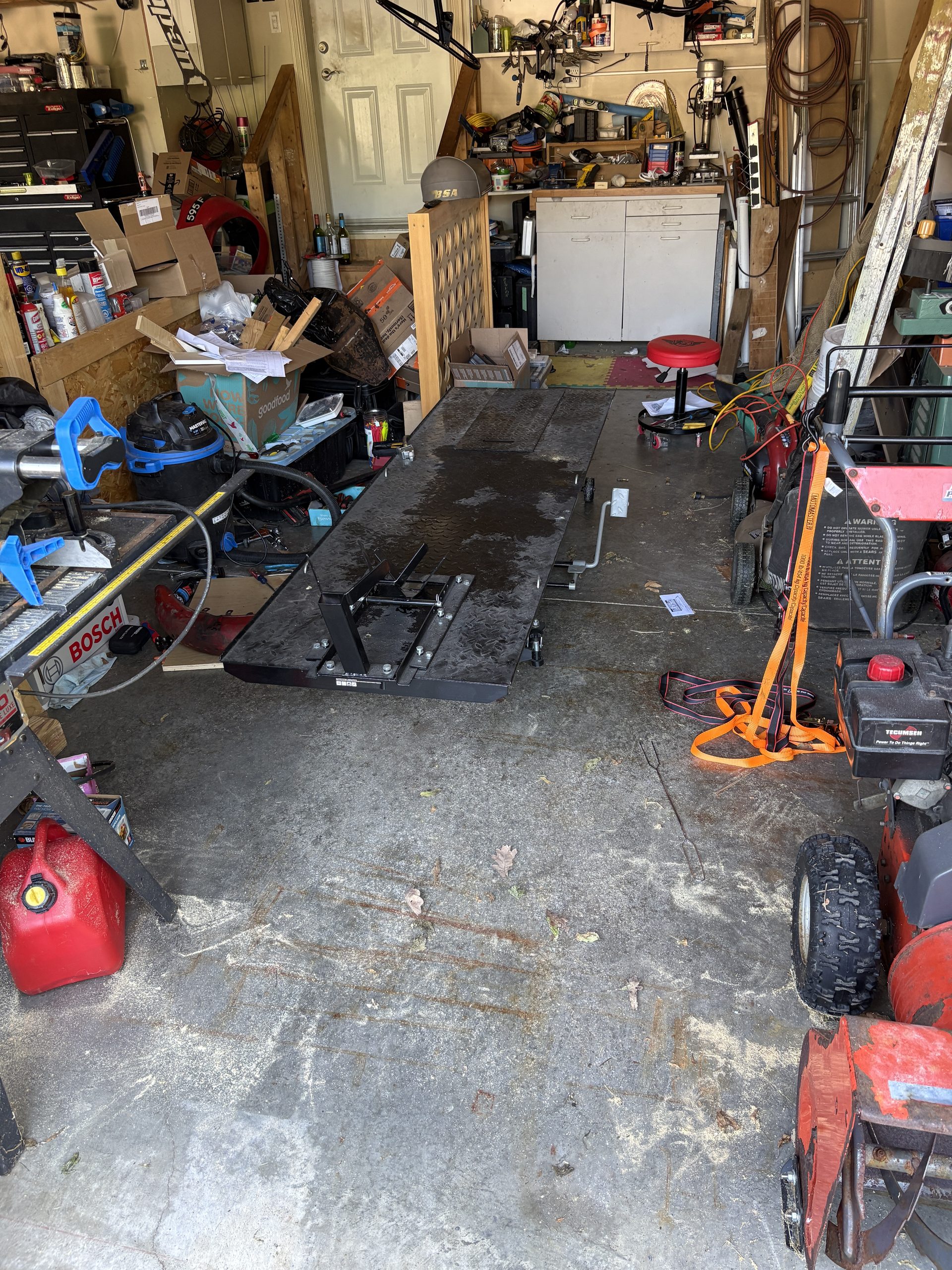
The left bay of the garage is now my official repair shop — though “shop” might be generous for what’s currently a pile of BSA bits stacked neatly by module. It’s not heated (yet), so the plan is to sneak bits into the basement for “focused work,” also known as making a mess somewhere warmer while pretending I’m being productive. Still waiting on a few engine parts, and if I’m lucky, I’ll get to Mario’s before the frost arrives and the engine rebuild becomes a spring project… again.
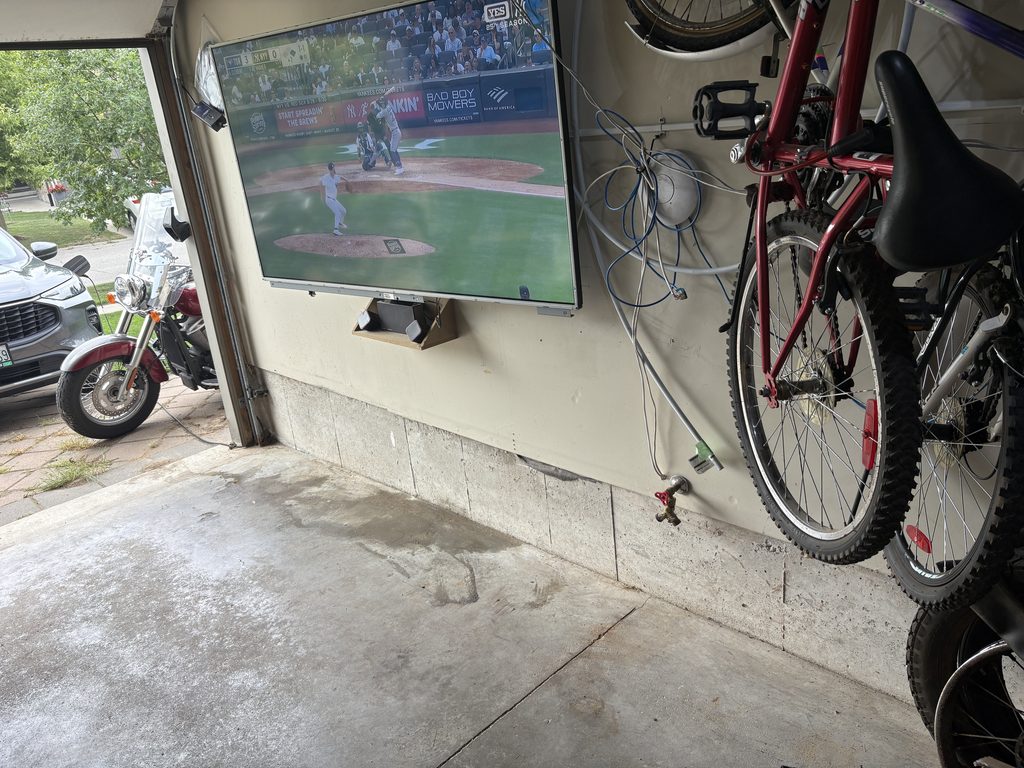
On the right side sits the modern fleet: one Kawasaki 800, two Kawasaki 900s (Custom and Classic), all tucked in tighter than a Scotsman’s wallet in tourist season. There’s even a bit of room left for the snowblower and a path to visit — because nothing says “motorcycle season is over” quite like prepping the machine that reminds you winter’s a thing.
Right — so first off, I’ve been carefully preserving (read: tripping over) the chipboard panels used to ship the bike all the way from Scotland to Canada. I was tempted to say London just to confuse a few of my UK pals, but that seemed a bit cruel… and, well, geographically inaccurate.
These panels have been living rent-free in my garage all summer, awaiting their glorious second life. And since I’m now knee-deep in the annual “garage clean-up before winter bike hibernation,” it seemed the perfect time to put them to use.
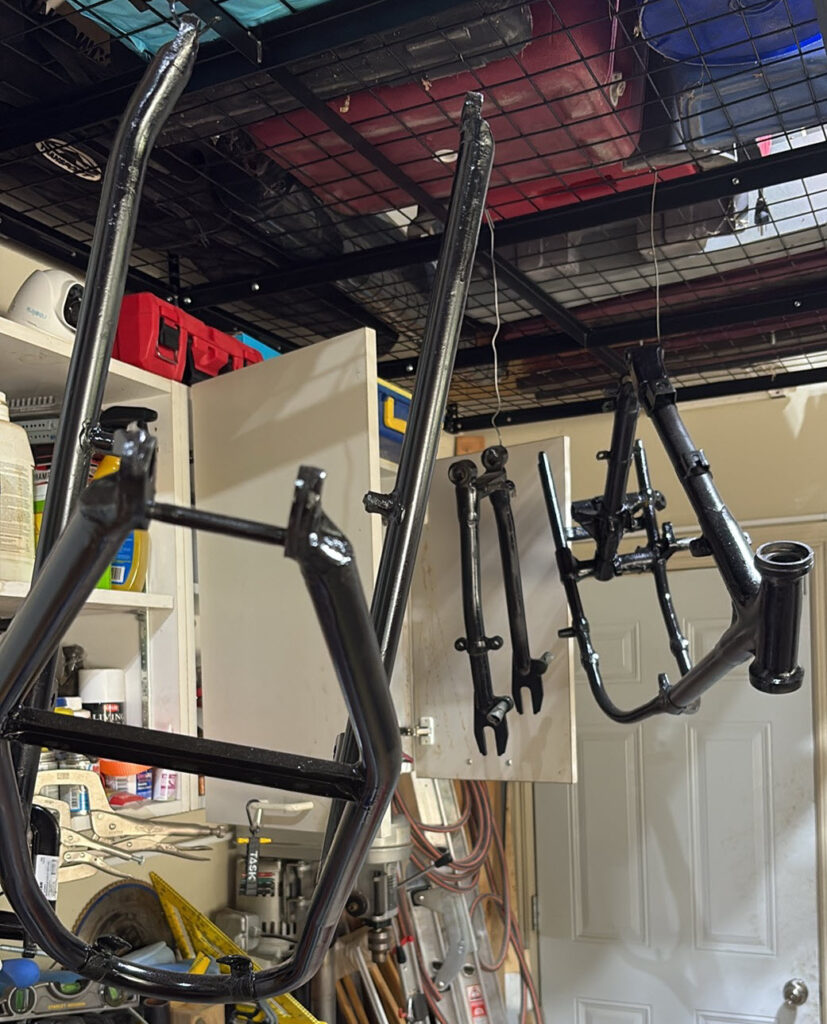
So, out came the saw — I split the long pieces right down the middle of the center cross brace. That gave me some perfectly sized panels to build a state-of-the-art paint booth (by which I mean “some boards nailed together that will hopefully stand up to a light breeze”).
Pro Tip: I finally figured out how to make the images on this blog clickable. You can now click to enlarge them — and click again to shrink them back down. It’s like magic, only cheaper.
Once everything’s hung up and painted like a proper gallery piece, I’ll let them dry indoors. The booth will get another go on the next dry day — assuming the Scottish weather pattern that somehow followed the bike to Canada allows it.
With winter closing in, it’s a race between me finishing the paint and the temperature dropping low enough to freeze it mid-spray. Either way, the booth’s earning its keep before we all go into hibernation.