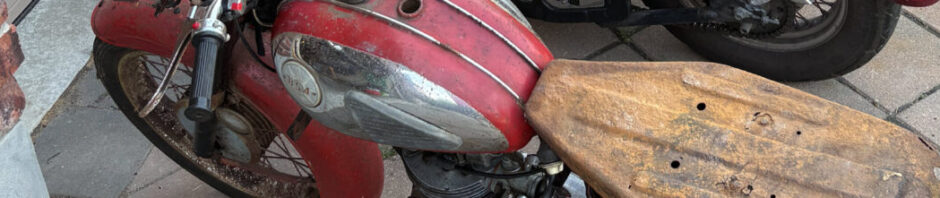
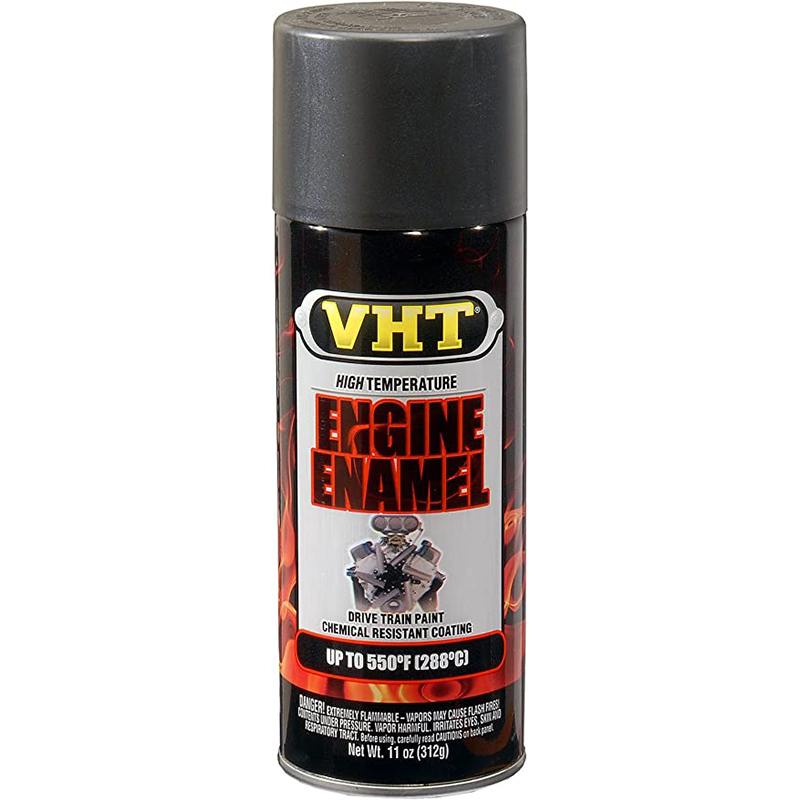
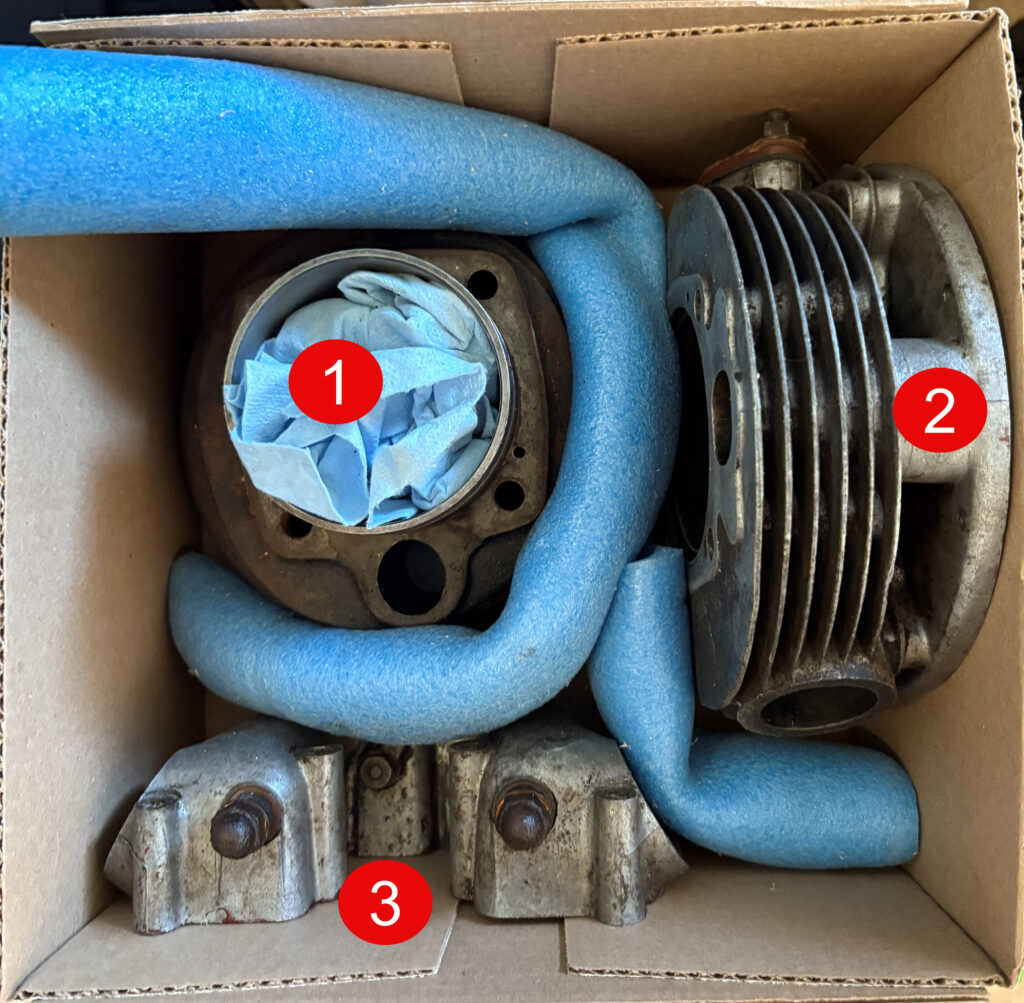
Wanted to get the engine’s top end cleaned up before putting the whole puzzle back together again. The Barrel will be getting a fresh coat of VHT high-temp paint—because nothing says “I tried” like paint that can actually survive a warm day.
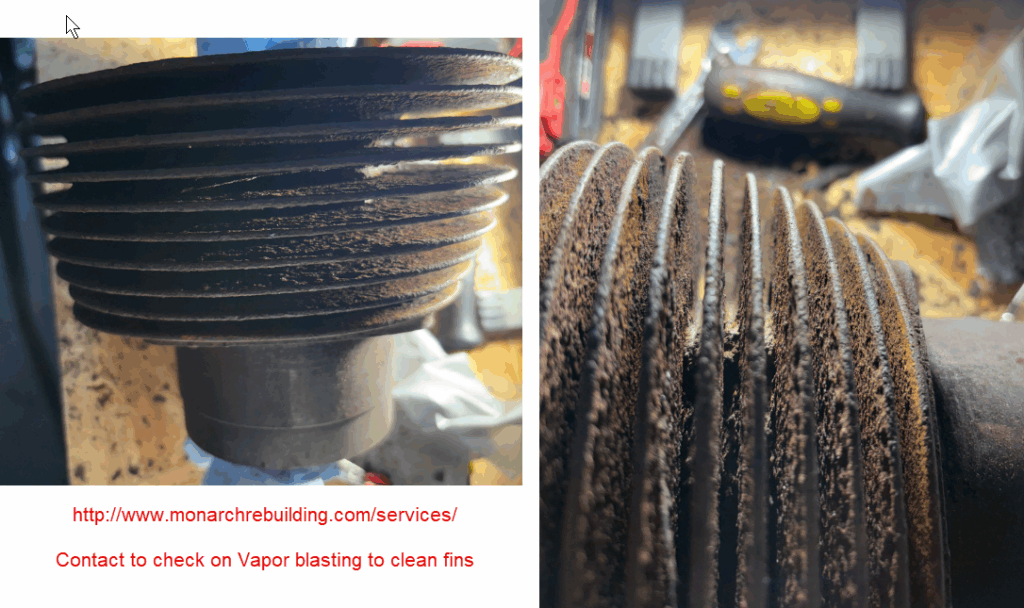
I did consider cleaning everything myself, but with all those fins on the Barrel and the Head, it was like trying to scrub between a porcupine’s toes. As you saw in my last post, there was enough dirt packed between the fins to start its own postcode, plus 55-year-old paint hanging on for dear life. Without sand blasting or vapour blasting, the whole job looked about as appealing as hand-polishing a hedgehog—so aye, not happening.
John Johnson from the CVMG pointed me toward a company called Monarch Rebuilding, so I gave them a shout. They kindly offered me the “friend of John” pricing—which, knowing my luck, probably means a wee extra added on for the privilege.
My other option was the old DIY route, and I even looked at a couple of the “recommended” hand-held blasters from Crappy Tire and Princess Auto. Aye, proper high-end equipment… if you’re restoring a toaster. My garage compressor is only an 8-gallon wee beastie, puffing away like a pensioner on a hill climb, so it’s well below spec for any serious blasting.
Sure, with enough stopping and starting I might manage it, but that sounds like the sort of trial best left for spring—when the weather’s warm enough that my fingers don’t freeze to the tools. I could try to reclaim the blasting media to save a few quid, but out in the winter or late-fall cold? Aye right. That’s just adding another layer of misery to the job.
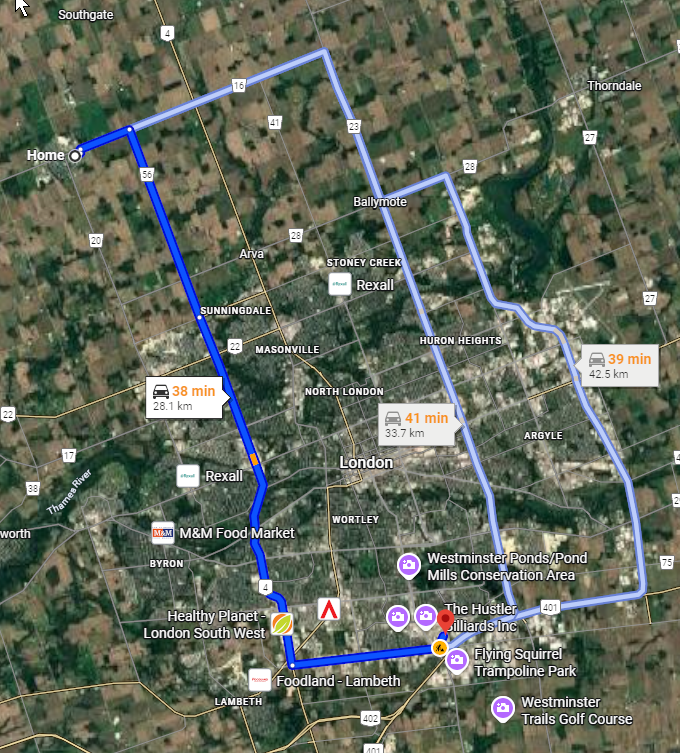
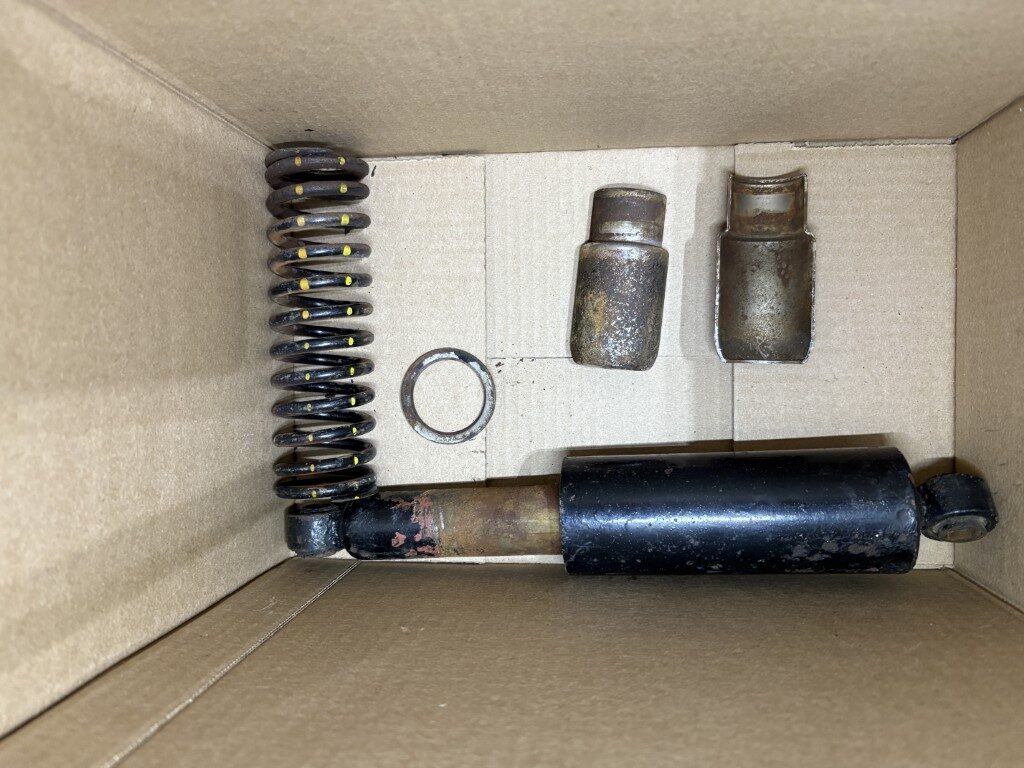
So I packed the parts up today, stuffed a bit of pool noodle in there for padding—very high-tech, NASA-approved packaging—and sent Holly off to St. Thomas with the box. She dropped it off on her way back from her program, probably wondering why she’s now part of a BSA logistics operation
Apparently it’ll be ready for pickup Monday or Tuesday, so once it’s back in my hands I’ll post the next thrilling chapter. Fingers crossed no surfaces are damaged—because after all the emails, assurances, and “oh aye, we know exactly what we’re doing,” I’m expecting nothing short of perfection. Full confidence… or at least enough to pretend I’m not sweating over it.
Let the dice roll. The box is away, the die is cast, and my stress level is now officially in the red.
I’ve finally gathered every last bit needed to rebuild the top end again—miracles do happen, apparently—but the barrel’s still sitting there looking like it lost a fight with time itself. I was hoping to give it a good going-over with the brass wire wheel, but of course the fins are packed tighter than a Scotsman’s wallet, so that’s not happening any time soon.
One of the lads from the CVMG passed along a contact at Monarch Rebuilding in London, so I’ll be giving them a ring on Monday to see if they can work their magic. Here’s hoping they don’t laugh me off the phone. Vapor blasting seems to be the way to go!
Been tied up with other nonsense lately anyway. And just to keep life interesting, I had to drag out the snowblower this past week for its first shakedown of the season—we got a proper dump of snow. Didn’t last long, mind you… we’re back to grass again. But it was a nice wee reality check… or a slap in the face, depending on how optimistic you are.
Not technically progress on the BSA, mind you — but certainly progress toward the work that’ll eventually be done on the BSA. Aye, it’s a process… like a good whisky, or government paperwork.
This past month I decided to engage in some high-altitude engineering and mounted two 4′ x 8′ ceiling racks in the garage. Borrowed a mate’s 8-foot step ladder for the job — less chance of death than using my 6-footer, and I quite like living, at least until the bike’s finished. I’m now officially in the market for an 8-foot ladder of my own, ideally one that’s only slightly cheaper than a small motorcycle. I’m stalking Facebook Marketplace like a cat on a mouse — or more accurately, a Scot on a “free to good home” post.
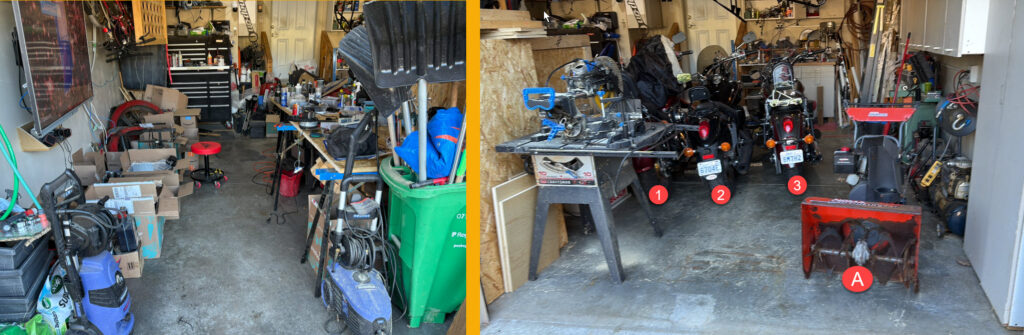
The left bay of the garage is now my official repair shop — though “shop” might be generous for what’s currently a pile of BSA bits stacked neatly by module. It’s not heated (yet), so the plan is to sneak bits into the basement for “focused work,” also known as making a mess somewhere warmer while pretending I’m being productive. Still waiting on a few engine parts, and if I’m lucky, I’ll get to Mario’s before the frost arrives and the engine rebuild becomes a spring project… again.
On the right side sits the modern fleet: one Kawasaki 800, two Kawasaki 900s (Custom and Classic), all tucked in tighter than a Scotsman’s wallet in tourist season. There’s even a bit of room left for the snowblower and a path to visit — because nothing says “motorcycle season is over” quite like prepping the machine that reminds you winter’s a thing.
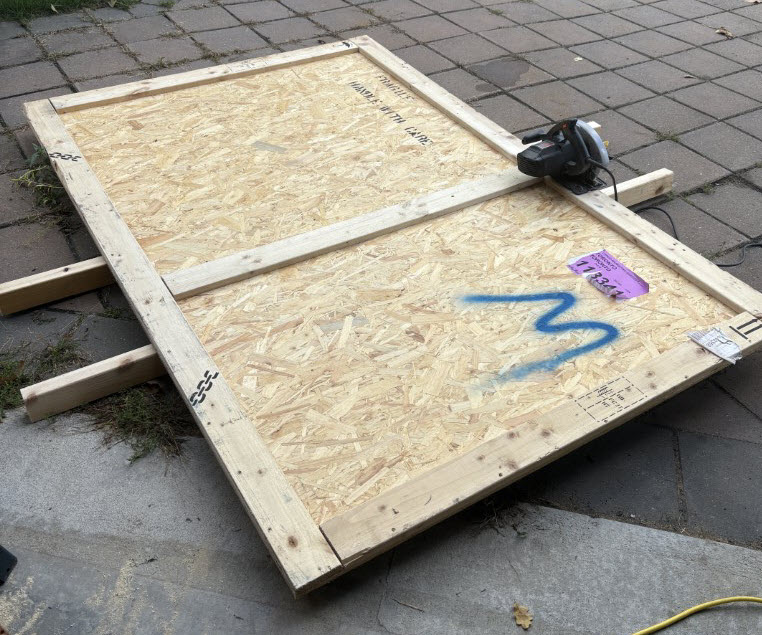
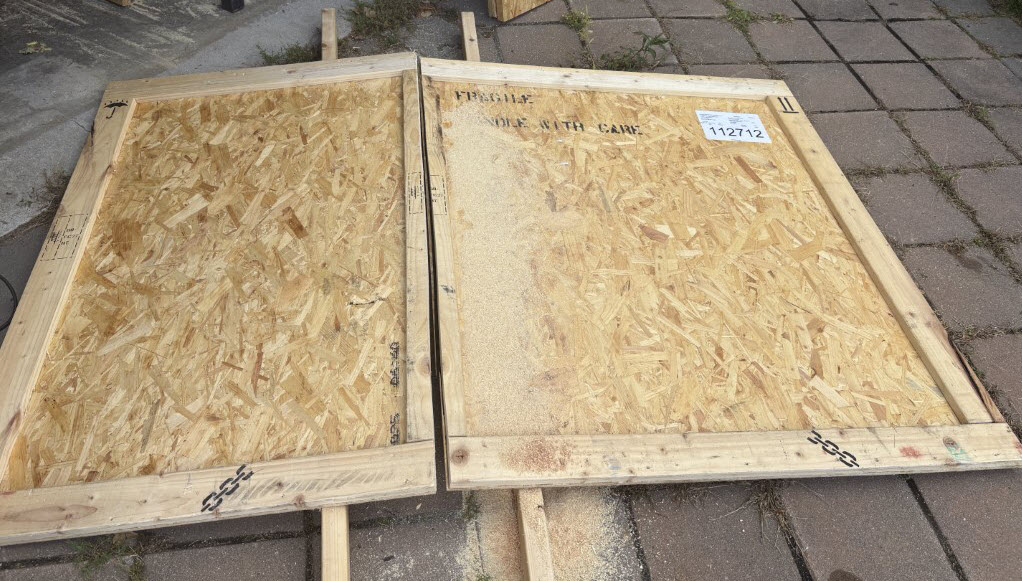
Right — so first off, I’ve been carefully preserving (read: tripping over) the chipboard panels used to ship the bike all the way from Scotland to Canada. I was tempted to say London just to confuse a few of my UK pals, but that seemed a bit cruel… and, well, geographically inaccurate.
These panels have been living rent-free in my garage all summer, awaiting their glorious second life. And since I’m now knee-deep in the annual “garage clean-up before winter bike hibernation,” it seemed the perfect time to put them to use.
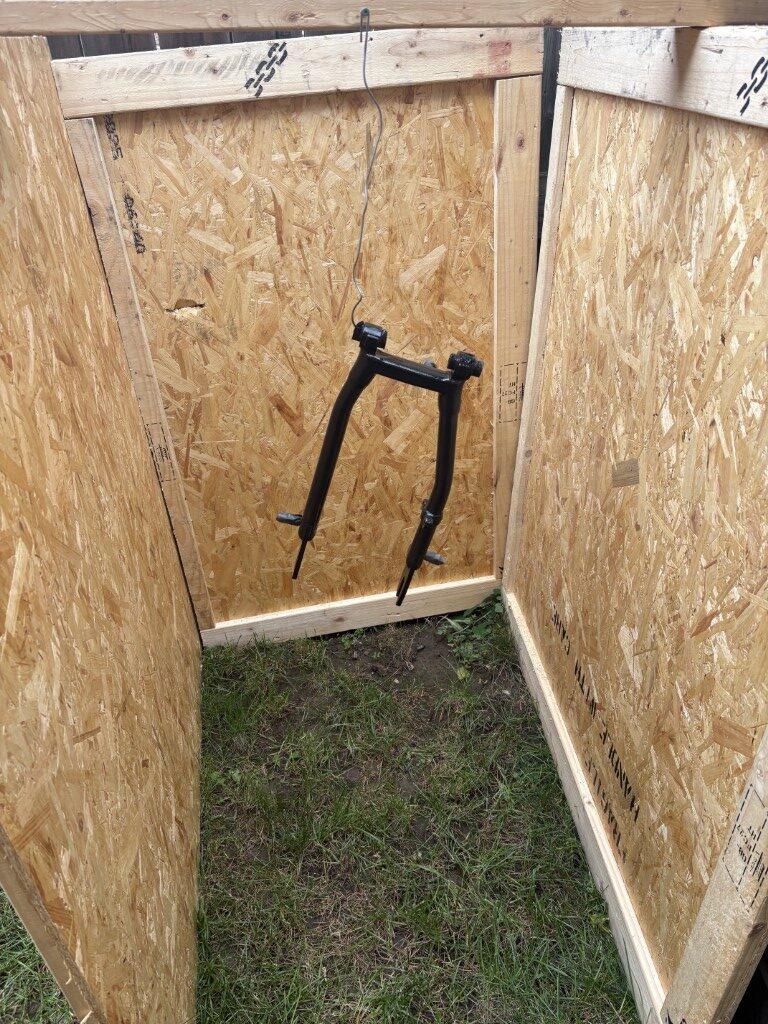
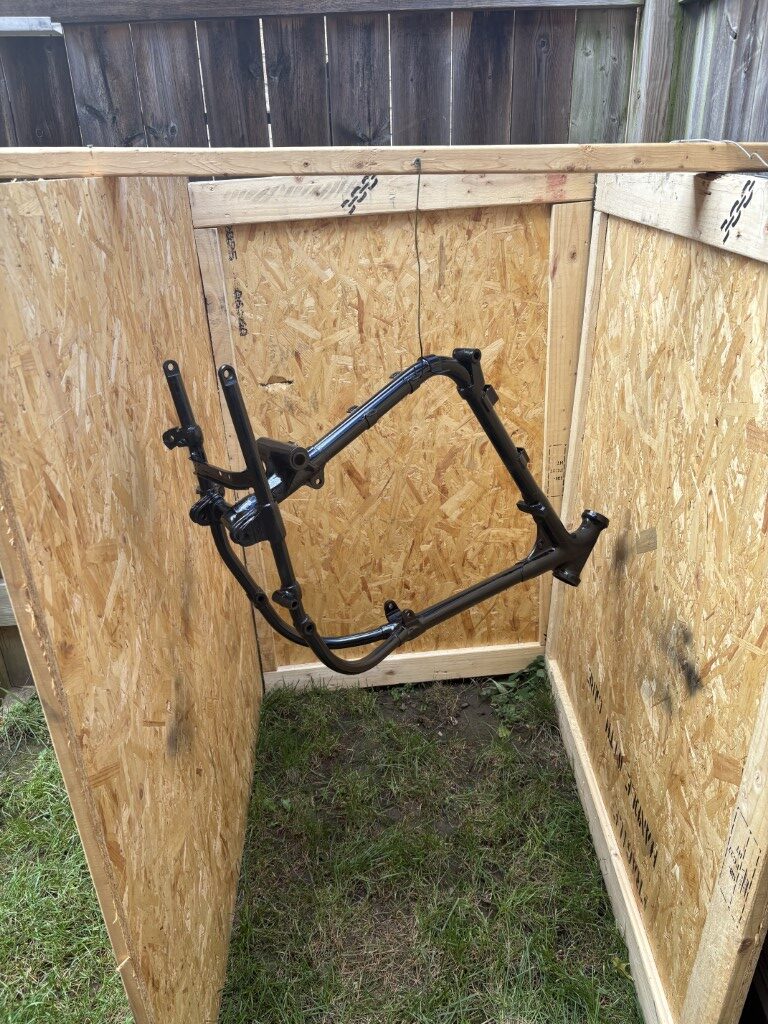
So, out came the saw — I split the long pieces right down the middle of the center cross brace. That gave me some perfectly sized panels to build a state-of-the-art paint booth (by which I mean “some boards nailed together that will hopefully stand up to a light breeze”).
Pro Tip: I finally figured out how to make the images on this blog clickable. You can now click to enlarge them — and click again to shrink them back down. It’s like magic, only cheaper.
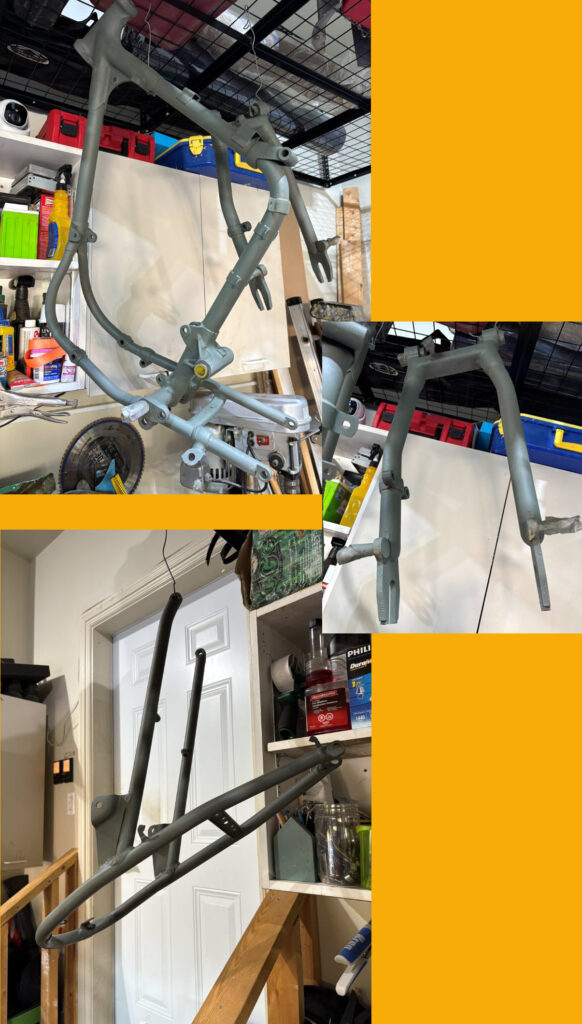
Once everything’s hung up and painted like a proper gallery piece, I’ll let them dry indoors. The booth will get another go on the next dry day — assuming the Scottish weather pattern that somehow followed the bike to Canada allows it.
With winter closing in, it’s a race between me finishing the paint and the temperature dropping low enough to freeze it mid-spray. Either way, the booth’s earning its keep before we all go into hibernation.
A Wee Visit, a Broken Tool, and the Birth of Version 2.0
Took the Vulcan 900 out for a spin today — had to remind it that it’s still part of the family, even though the BSA’s been hogging all the attention lately. Ended up dropping by Mario’s to deliver a few bits of his I picked up from Walridge Motors. They’re close to me, so it made sense to bundle his order with mine (and also because I secretly enjoy pretending I’m doing something productive while out riding).
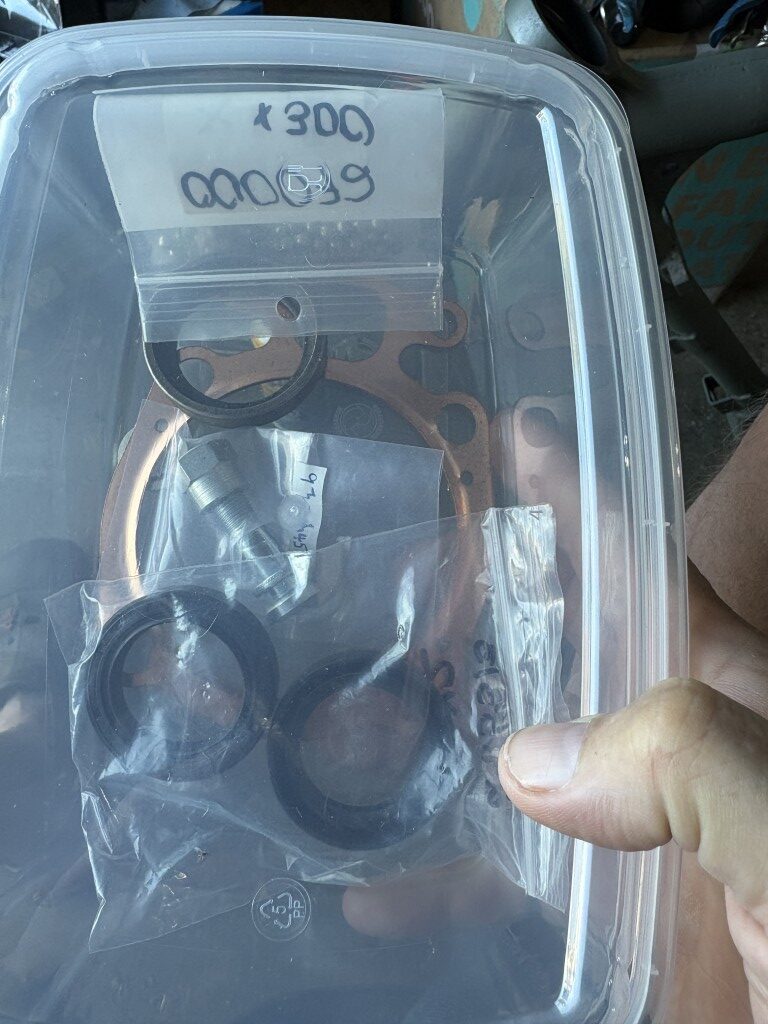
My treasures are tucked safely in the plastic tub — you can even spot the shiny copper gasket for the top end, and I’ve now got the fork seals ready to go. Just waiting on the elusive exhaust valve, and then we’ll plan the grand Top-End Assembly Day — ideally before the garage turns into a meat locker.
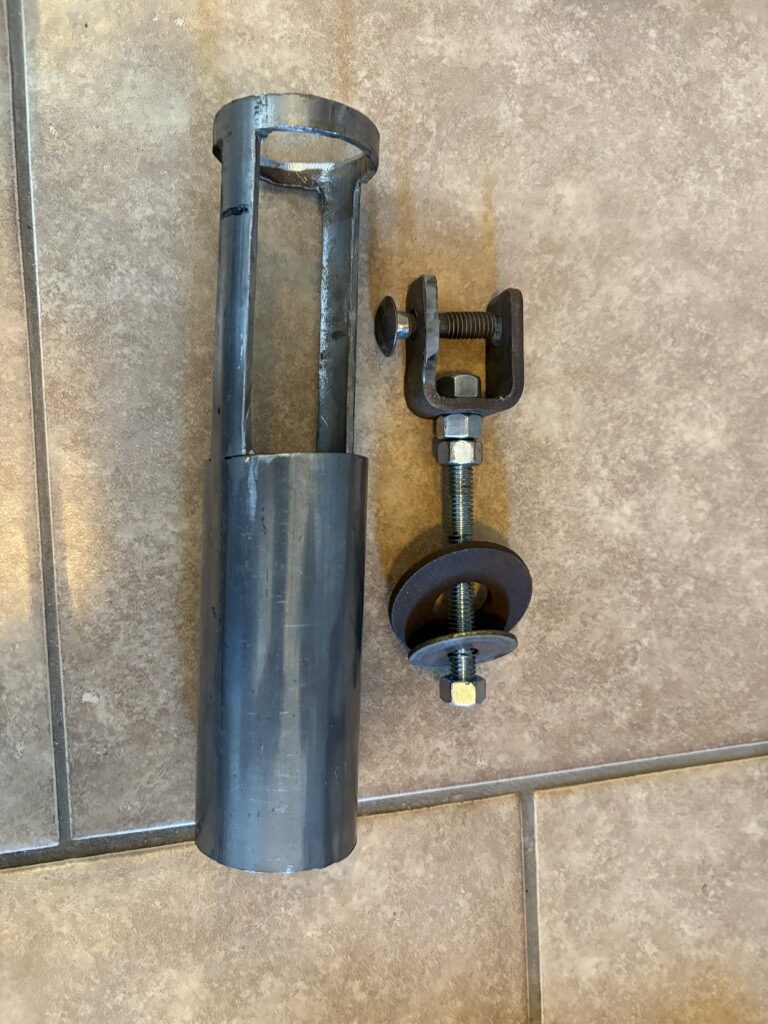
Now, about that rear shock… remember the “special tool” I made? Aye, the one that decided to self-destruct during round two. Turns out the nut had seized on the 3/8″ rod and I managed to twist it with my legendary brute strength (or maybe it was just bad design — but we’ll go with strength). The result: one mangled contraption and a lesson in humility.
So, today’s task at Mario’s barn-garage was Version 2.0. Same tube, but this time we added a proper U-shaped end to grab both sides of the shock bushing instead of relying on that “it might work” setup from v1.0. Even managed to use real washers instead of a socket contraption — we’re getting fancy now.
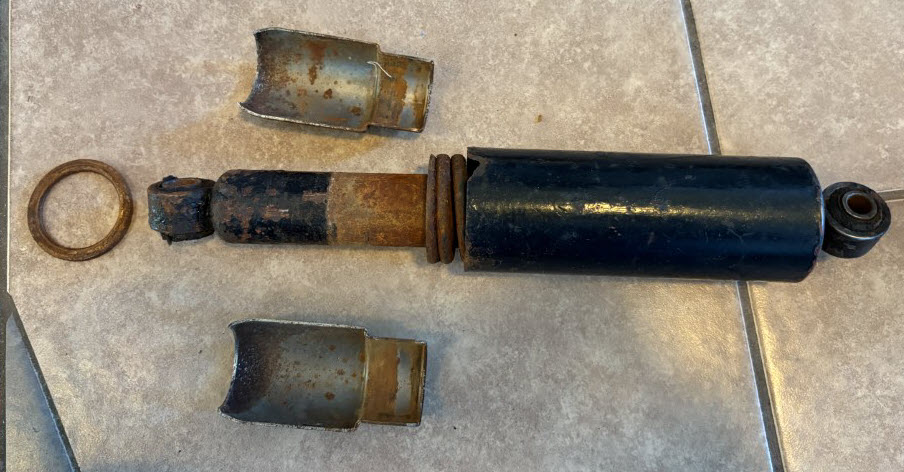
And would you believe it — the collets actually popped out without a fight. No blood, no swearing, no new dents in the workbench. A success by any Scottish standard. Might weld the washer later or craft a proper endcap, but for now it’s holding up nicely.
The shock is mostly disassembled — the spring slides out fine, and I’ll be giving it the full de-rust and repaint treatment.
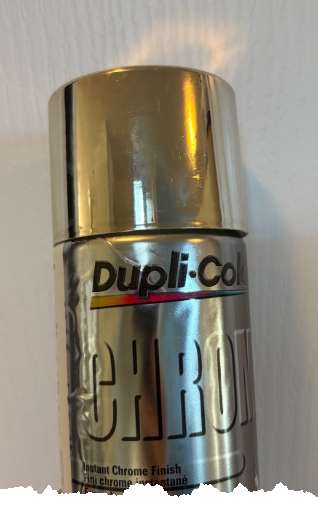
The plan is to paint the black bits black again (because that’s what normal people do), and for the shiny bits, I’m testing out Dupli-Color’s “Chrome-Like” paint. Sounds optimistic, doesn’t it? We’ll see if it’s more chrome-like or aluminum-foil-like once it dries.
Weather looks decent tomorrow, so I’m planning to set up my outdoor paint booth at the side of the house — using some leftover chipboard from the shipping container.
Nothing says “professional operation” like a backyard spray booth held together with hope and clamps.
Cold’s creeping in, so most work will soon move indoors — but for now, we’re still fighting the good fight in the garage, armed with coffee, optimism, and slightly improved tools.
“The Goose Neck Ballet — Featuring Fire, Sweat, and Forty-Eight Little Devils”
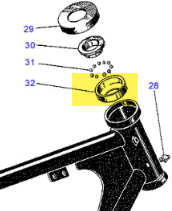
Today was the grand occasion — the day the goose neck bearing races were to come out. Now, if you’ve never had the pleasure, the “goose neck” is that proud bit of the frame where the steering forks pass through — the backbone of the beast. On top and bottom, you’ll find bearings. In the B40’s infinite wisdom, these aren’t modern, civilized caged bearings — oh no — they’re 48 free-range, unrestrained little ball bearings rolling wherever they please (they bounced around my floor when removed earlier and .
This image helps to understand the Goose Neck reference.
Upon earlier disassembly, I found the races inside the frame looking like the surface of the moon — pitted, scarred, and most definitely past their best-before date. I was also short two of the 48 balls, which I can only assume gave up sometime in the last 55 years, vaporized into bearing dust, and helped carve out those pits as a parting gift.
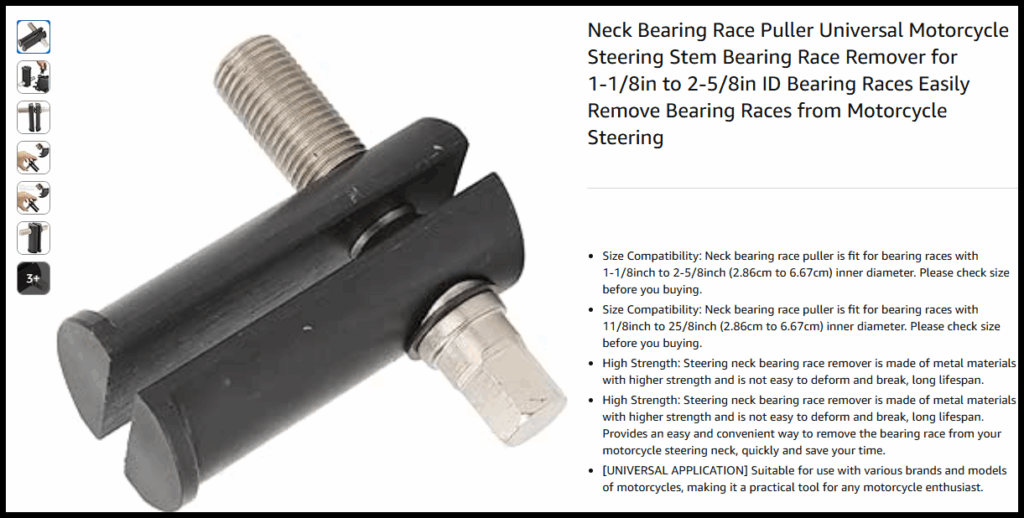
Now, before I got too medieval on the goose neck, I did what any sensible person would do — I bought the proper tool. A tidy little contraption that expands behind the bearing race, letting you drive it out with a drift — clean, precise, professional. About twenty bucks well spent… or so I thought.
The idea is simple enough: keep the race coming out straight so as not to gouge or kink the bore. Easy to say, harder to do when everything’s tighter than a Scotsman’s wallet on payday. I found out there was no lip to hook on and so back to the blank canvas.
So there I was at our usual Saturday CVMG coffee meet at McDonald’s, lamenting my wasted $20 investment, when one of the lads pipes up and says, “Why bother with that fancy gadget? Just throw four wee spots of weld on the race — when it cools, it’ll practically fall out.”
Aye, right.
Apparently, this is a known method, backed by the collective wisdom of several gents who’ve done it “loads of times.” I’d even seen a reference video (see my previous post), so the theory was sound — in that “what could possibly go wrong with welding near your frame neck?” kind of way.
Still, the peer pressure of McDonald’s coffee club is strong. And if a bunch of vintage bike lads say it works, well, how could it possibly go sideways?
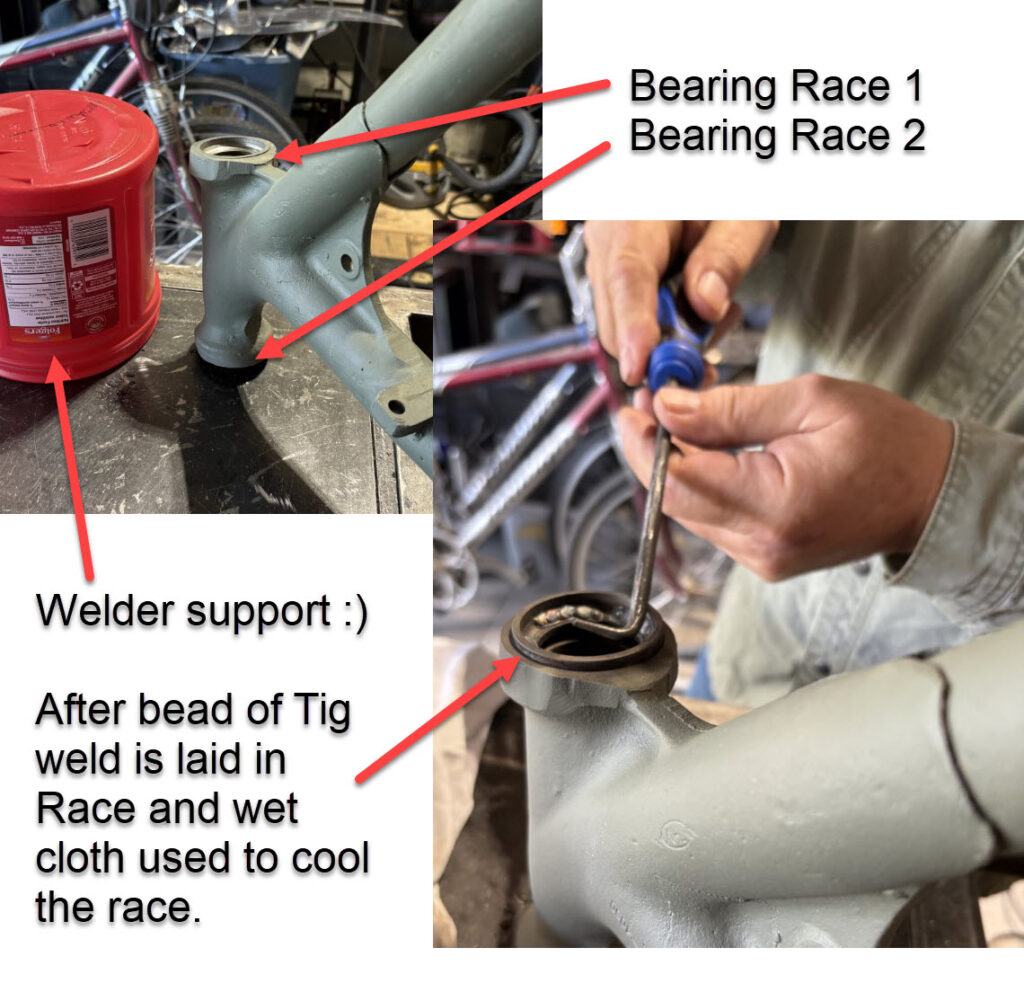
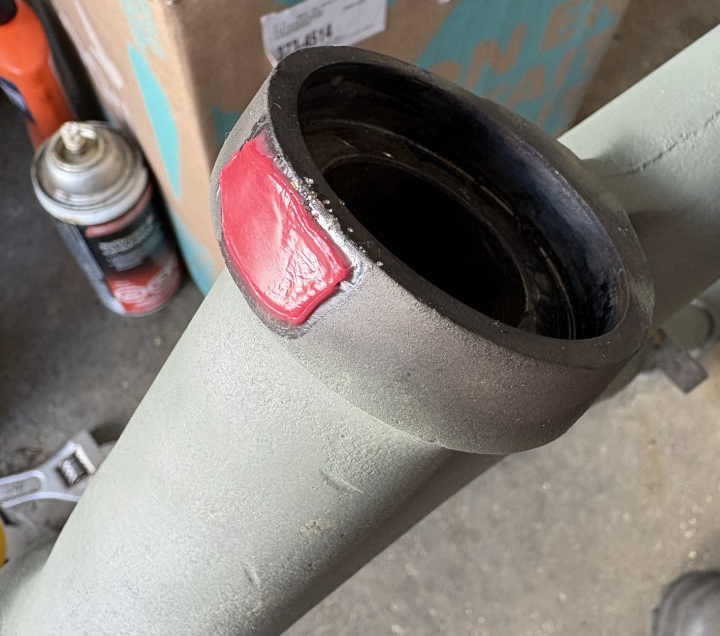
No Video, but a few action shots of the proecess. The Red tub is for arm support to assure No video evidence of the operation (probably for the best), but there are a few action shots from the scene. The red tub in the photo wasn’t a random prop — that was my improvised armrest, there to steady the hand and make sure the weld only went on the race, not into the frame.
Precision, you see.
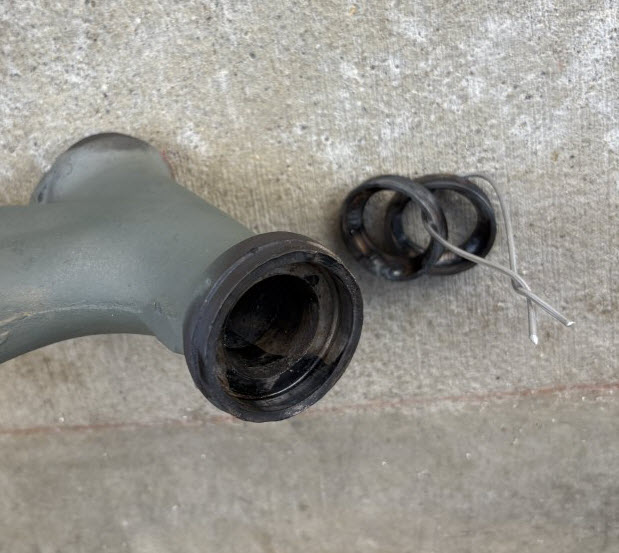
In the photo, you can make out the weld bead — two or three neat little spots — and after a quick chill-down with a very wet rag, the race obediently loosened its grip. A small screwdriver and a pick did the rest. Out it came, smooth as you please.
A huge thanks to my neighbour Steve — a retired pro welder who wisely gave a verbal NDA to assure he was not to be implicated if it went wrong.
As for the mysterious red patch in one of the shots — I wondered about that myself. Turns out the melting point of a plastic coffee tub is somewhat lower than that of mild steel. My “precision arm support” sagged into early retirement, a small sacrifice to the gods of backyard engineering.
But the proof’s in the pudding — both races now out, no frame damage, and just a wee bit of touch-up needed on the primer. Mission accomplished, with only minor collateral damage and one less coffee tub in the world.
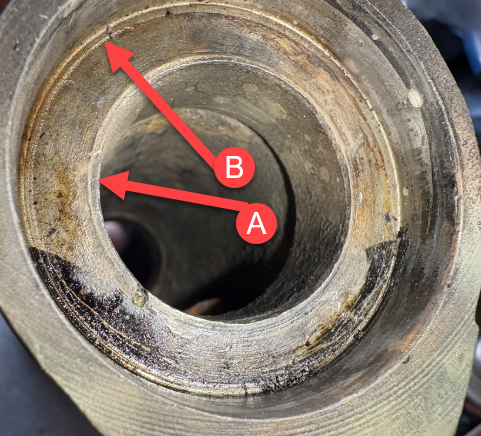
Interesting:
So there you have it — a zoomed-in mystery worthy of a detective. At first glance, (A) looked like a sleeve pressed in, but after some squinting, pondering, and a fair bit of muttering, it appears (A) and (B) might actually be a relief cut — likely done to ensure the bearing race sits perfectly square, top to bottom. A small detail, but exactly the sort of thing that keeps a restorer awake at night, wondering what the lads at BSA were thinking back in the day.
Next step: taking inventory of all the parts on order. I’ll soon be diving into the engine top end, and once the frame’s painted, the rebuild can finally begin. The real fun is about to start — assuming, of course, nothing else decides to “fall out” in the meantime.
Stay tuned — the next act in this ongoing BSA resurrection promises fewer weld burns, fewer missing ball bearings, and (hopefully) fewer melted coffee tubs. But no guarantees.
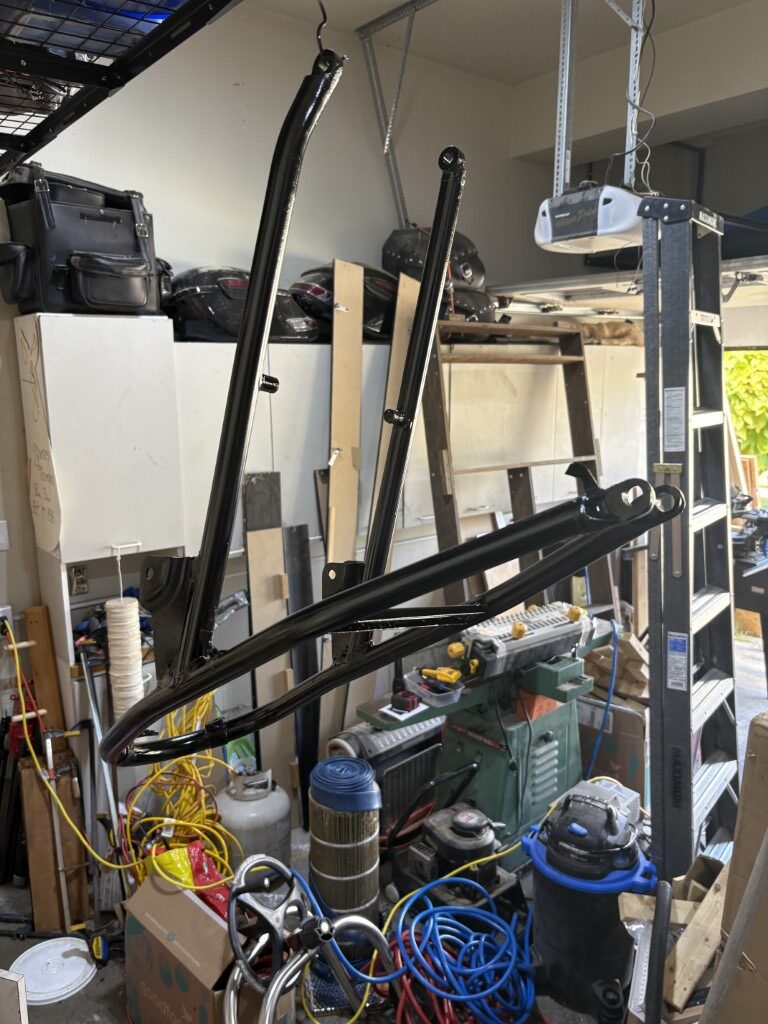
I had a wee bit of choice when it came to the frame. Earlier on, I’d broken it down into its three main bits — the front loop, rear section, and swing arm. One tempting option was to have it sandblasted and powder coated. I even got a quote for about $300. Not bad, but that’s a fair few pints of Guinness or a new set of gaskets, depending on your priorities. DIY saves money.
A few of my CVMG pals, always eager to offer “advice” (especially when it’s not their back doing the sanding), suggested I save the cash and just rattle-can it myself. “It’s mostly hidden when the bike’s together anyway,” they said — aye, the same logic used when choosing socks for a kilt.
And they’ve got a point — once the tank, engine, and wheels are back on, the frame’s about as visible as a haggis in the Highlands. But powder coat has its downside too: once it chips, you can’t just touch it up without it looking like a bad paint job on a pub wall.
At one of our CVMG meetings, I had a good blether with Bruce. He told me about his garage setup — and I swear it sounded like the Rolls-Royce of sheds. He’d just installed a two-stage compressor that could probably power a small jet, never mind a sandblaster.
Bruce’s done his own painting before and was generous with the tips — the man’s clearly sprayed more things than a Scottish midge in summer. Better yet, he offered to let me use his setup to sandblast my frame. After a bit of calendar juggling, I made the trip out to Thorndale last week, where I also picked up some primer he recommended from a local shop.
So now the plan’s set — the frame’s getting the DIY treatment. Let’s hope by the end it looks more “classic restoration” than “crime scene cleanup.”
Blasting Away – The Frame Gets a Proper Scrub
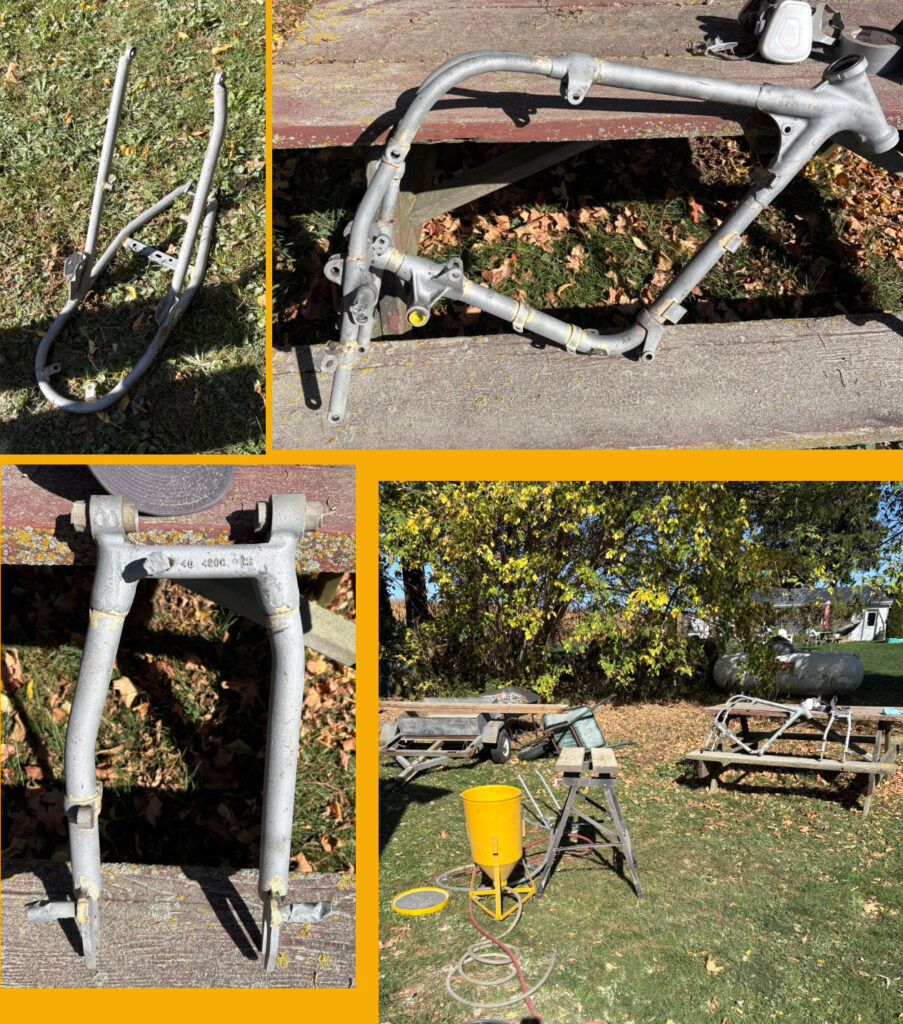
Below you can see the finished pieces — or as I like to call them, the “shiny survivors.” I went through a full 50-pound bag of glass bead and even dipped into a wee bit of Bruce’s stash to top up the hopper. (Aye, he caught me red-handed, but I told him it was for the good of British engineering.)
You can spot the setup in the lower right of the photo — a proper DIY sandblasting station on the trusty Workmate bench. By the time I was done, the top of that poor bench was cleaner than a freshly shaved Scotsman on wedding day.
The results were brilliant — the paint practically lept off the frame, and the brazing welds came through like gold veins in a miner’s dream. I’d plugged all the important holes and taped the threaded bits with duct tape (as any true craftsman would).
By the end of the day, I was covered head to toe in dust, deaf from the compressor, and grinning like a loon. But aye — this day was a grand success! Glass kept raining from my hair each time I scratched an itch.
Paint Like Ye Mean It
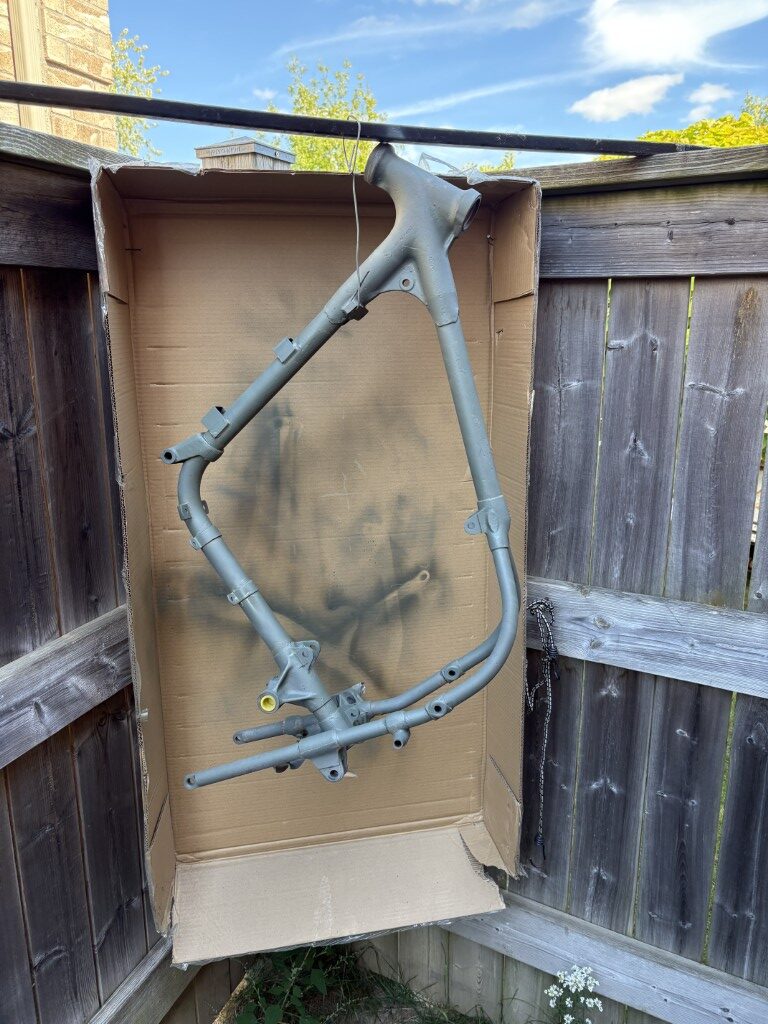
Next up, I cobbled together a state-of-the-art paint booth — right outside the garage, tucked neatly in the corner by the fence. A hockey stick served as my parts hanger (because this is Canada, after all), and I nailed a cardboard box to the fence to catch overspray. The neighbors must’ve thought I was either painting a masterpiece or opening a back-alley repair shop.
To my surprise — or perhaps against all odds — it actually worked a treat! With just one rattle can, I managed two coats, and they turned out rather decent (In My Own Humble Opinion, which of course is the only one that matters – next to E’s).
Now I’m convinced I can build a proper version of this “booth,” maybe even with walls that aren’t flapping in the wind. I’ll be spraying the frame in black next, with a few layers of clear to make it shine like a freshly polished sporran.
Aye, the future’s bright — brighter than the paint, even.
The Battle of the Bearing Races
Before I can get too carried away with paint and glory, there’s still the small matter of those blasted bearing races hiding up in the goose neck. They’re seated in there tighter than a miser’s wallet on payday. The inside diameter of the neck is smaller than the races themselves, so there’s no handy lip or edge to catch with a drift or puller — just smooth steel mocking me.
The plan? I’m teaming up with my neighbor to try the “welder trick” — a fine bit of mechanical sorcery where you run a bead around the inside of the race so it contracts and practically falls out. Or so the legends say. A couple of the CVMG lads swear by it, though they also said Triumphs don’t leak oil, so I’m taking it with a pinch of salt.
If all goes well, the races will drop out nicely, and if not, well… there might be some colorful language echoing down the street. Either way, it’s the next step before paint — and with a wee bit of luck (and maybe a fire extinguisher nearby), we’ll get it done. How To: Remove bearings with a welder
Aye, the primer’s on — and while it didn’t look like it covered perfectly in the photos, trust me, it’s consistent. (That’s my story, and I’m sticking to it.) The finish feels smooth, no bare patches, and everything’s sealed up nicely for the next stage.
I’m actually quite chuffed with how it turned out. The rattle can behaved itself for once, and I managed not to coat half the fence in green mist. Now I’m just waiting for a stretch of good weather to hit it with the black.
The plan calls for low humidity — which, judging by the last few weeks, shouldn’t be too hard to come by — and little to no wind. Nothing ruins a paint job like Mother Nature deciding it’s time for a dust storm. With a bit of luck, and maybe a calm day or two, I’ll finally get that lovely black finish on and follow up with a few coats of clear for good measure.
A Wee Bit of Sandblasting… Sort Of
I like to call it “sandblasting,” though technically I was using glass beads — but let’s not split hairs, eh? Same satisfying racket either way.
Next on the list are some nuts and bolts on the sheet metal that need to come off. A few will get the polite treatment, and the rest… well, that’s what grinders and nut splitters are for. Once the hardware is out of the way, it will be time for the wire wheel — a proper bit of elbow grease to get everything ready for paint. Nothing like a bit of steel-on-steel action to make a man feel alive.
Bit of Back-story: Over Christmas, I treated myself to a pair of Rupert’s books — one for the engine, and one for everything but the engine. (Because why make things easy and put it all in one?) They’ve been brilliant references for my B40 project, and I’ve even exchanged a few emails with the man’s team. A fine chap named Dave Smith replied with extra details — clearly the poor soul assigned to deal with daft questions from folks like me.
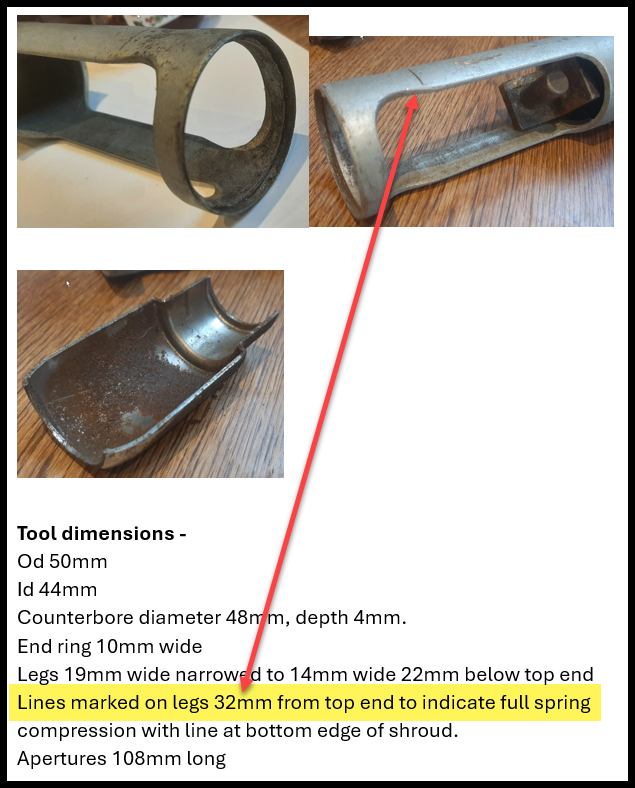
I’d reached out for more info on the tool used for dismantling the rear shocks — specifically, the one meant to remove the chrome collets. Mine, naturally, wasn’t working. (Because why would it?) I just wanted to confirm a few basic dimensions, but Dave went above and beyond — sent photos, measurements, and probably wondered how someone could overthink a spring compressor quite this much.
Screen shot of email body sent to me
The magic number, as it turns out, was 32 mm — that’s the proper compression point for the spring, or so the gospel according to Rupert says. I can’t say for certain, but I reckon I convinced myself it was fully compressed somewhere around 24 to 25 mm — optimism is a powerful tool, after all.
Thursday afternoon found me over at Mario’s, where the two of us gave it a proper go. With a bit more persuasion (and a few creative words), we edged closer to the 32 mm mark I’d scratched on my tool. Somewhere between 30 and 32 mm, one of the chrome collets finally surrendered — followed shortly after by the second, with just one more encouraging turn.
As for that minor counterbore some folks swear by — I’m fairly certain it serves no real purpose except to waste a bit of time and metal. I skipped it entirely, and my tool worked just fine, thank you very much.
The shock assembly (in all its glorious pieces) is shown to the left, and I can finally get on with cleaning it up. I gave the hydraulic portion a few test strokes — purely scientific, of course — and it seems to be working fine, no oil leaks in sight. The seals aren’t replaceable, but let’s be honest, at this age I’m barely replaceable either.
Now comes the great debate: do I settle for a good cleanup and maybe a bit of nickel plating to make them look respectable again, or do I fork out roughly $175 for a shiny new pair? My wallet says “polish it,” but my pride says “treat yourself.” We’ll see which one wins — odds are, it’ll be the cheaper voice in my head.
And on that triumphant note — naturally, the universe had to balance things out. My trusty compression tool decided to retire early, failing spectacularly while I tried to tackle the next shock. Aye, nothing says “progress” quite like ending the day with a pile of parts and a broken tool.
So, it’s back to the drawing board (and the grinder) to rebuild the compression assembly — stronger, smarter, and hopefully daft-proof this time. Until then, the last shock will just have to sit there looking smug.
Stay tuned — because if history’s any guide, the next update will feature either triumph or more swearing… possibly both.
The above is the parts diagram for the front forks. Getting the oil seal housing to unthread from the oil tube was the real battle. It needed a proper “special tool” to engage with the internal nut and twist it free. So I made one—because clearly BSA thought I’d have a full machine shop hidden in my garage. Files, grinding wheels and a hacksaw maybe.
Today was the day. I clamped the sliding tube in the vise so the welded nuts stopped it from spinning, slid the tool into place, and gave it a heave with my trusty plumber’s pipe wrench. With a creak, a groan, and maybe a few muttered words my grandmother wouldn’t approve of—it finally broke free. A wee victory!
Ideally, the tool would have a neat little T-handle welded on top. But in my case? The pipe wrench was my kilted Highland dance partner for the day. Functional if not elegant.
The second fork was a bit more stubborn. No surprise there—like brothers, one’s always more difficult than the other. I wandered over to the neighbour’s with it, applied a bit of gentle heat (translation: persuaded it with fire), and with some extra persuasion it finally let go. Another win.
With the circlip removed, the shot slid right out of the sliding tube. Off came the nut at the end, followed by bushings, shims, clip ring, and the oil seal housing. It all came apart like haggis at a Burns supper—messy, but satisfying.
Now all the parts are laid out in their own boxes, ready for inspection. New seals will be a must, but the rest will get a thorough cleaning before deciding what’s salvageable.
New seals will be a must, so two can be ordered right away. The rest will get a proper cleaning and close inspection before I decide what’s fit for service and what’s headed for the bin.
At least nothing went flying across the garage today—so I’ll call that Scottish progress.
This image shows the Donnybrook Legion, where the London Branch Swap Meet was held. Plenty of parking was available—though it filled up quickly at times, the turnover kept things manageable. With the Legion open and the sun shining, it turned out to be a great day for the event.
Here’s a look down one of the aisles inside. The weather was fantastic, and between the traffic in the parking lot and the groups gathered to socialize, there was a lively atmosphere all around.
I went in hoping to track down some key parts, but British bike components were in short supply this year. Still, I did make a promising connection—someone who may have a set of WM2-18 rims with good chrome for my BSA. He didn’t have them with him, but I’ll be giving him a call to arrange a trip out to Wyoming, Ontario (about 45 minutes away). He mentioned one rim has excellent chrome. They’re rear wheels, and I’ll need to confirm if the hubs are the same as mine. Fortunately, I really only need the rims; I can clean up my hubs and rebuild with stainless steel spokes (about $80 a set). It’ll all depend on the price he’s asking. For comparison, Italian chrome rims run about $150, while English chrome sets are closer to $250. Are the English ones shinier? Maybe—but unless they sparkle like the Crown Jewels, I think I can live with Italian.
A friend also reminded me to inspect my hubs carefully—specifically the brake drums. If the drums have been machined oversize, that could be a real problem during inspection. Since I don’t know the full history of the wheels, I’ll need to check the specs carefully. It’s a bigger concern for the front hub since the drum is integral, whereas the rear uses a separate bolt-on drum. Looks like I’ll be hunting down the factory spec for a ’61 BSA B40.
One unexpected bonus: Dave Gibson kindly donated a spare B40 head he had sitting on a shelf. My current head needs a fin repaired and has a stud that must be reset, so having a spare gives me some peace of mind. Mario and I still intend to reuse the original, but having a backup eases some of the risk.
Outside of bikes, the weekend was a bit busy as well. My wife and I drove my mother-in-law back to Toronto for her flight to Scotland. She’s gone for till the next visit (2.5 weeks went quick), which means the household will be noticeably quieter—although I’m sure when she gets there, Glasgow will be complaining about the increased noise levels! On the way back we picked up a little 4×4 trailer I’d left with a friend for hauling landscape materials. It also is crying for attention as I hadn’t seen it in 4+ years.
Now that that’s sorted, I can focus on the next tasks: building tools for the front and rear shocks, arranging that trip to Wyoming for the rims, and hopefully getting access to a friend’s sandblaster to prep the frame and sheet metal for paint. Plenty to keep me busy—though as my Scottish relatives would say, “that’ll keep ye oot o’ the pub, laddie.”
At the end of the day, this project isn’t just about chrome and torque specs — it’s about carrying a bit of family history forward on two wheels. So even if the next post finds me with more excuses than progress, just remember: like a proper heirloom, this BSA rebuild will take patience, persistence… and probably a pint or two along the way.